Why Broken Glass Needs Special Handling
Broken glass is dangerous because the hazard is not always visible. Large shards are obvious, but small fragments can hide in carpet, under appliances, inside trash bags, or along a driveway. Glass dust and tiny slivers can also be left behind after the bigger pieces are removed. Loose broken glass can:- Cut hands, feet, or legs
- Puncture trash bags
- Injure waste workers
- Scatter during transport
- Damage tires
- Harm pets or wildlife
- Contaminate recycling loads
- Create unsafe cleanup conditions
Step 1: Protect Yourself First
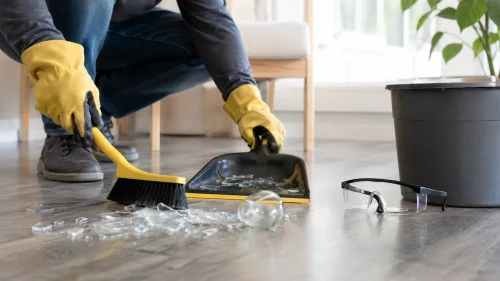 Before touching broken glass, put on proper protection. At minimum, use thick gloves, closed-toe shoes, and eye protection. For a large break, long sleeves and long pants are smart because shards can bounce or slide farther than expected.
Use tools instead of bare hands whenever possible. A broom and dustpan can collect larger pieces. A damp paper towel, disposable cloth, or piece of tape can help pick up smaller fragments. If glass is in carpet, use caution and avoid pressing your hands into the fibers.
Do not use a household vacuum for large shards. Glass can damage the vacuum, tear the hose, or leave sharp pieces inside the machine. Vacuuming may help with tiny fragments only after larger pieces have been removed, and only if the vacuum is appropriate for the job.
Step 2: Pick Up Glass in Stages
Clean broken glass in stages so you do not miss small pieces. Start by keeping people and pets away from the area. Put on gloves and shoes. Pick up or sweep the largest pieces first. Then check farther from the break than you think is necessary. Glass can travel under cabinets, tables, appliances, rugs, and furniture. A practical cleanup order is:- Remove large shards.
- Sweep the immediate area.
- Use a damp towel for small slivers.
- Check under nearby furniture and appliances.
- Inspect shoes, broom bristles, and the dustpan.
- Contain the glass in a rigid package.
- Wipe the area again if needed.
Step 3: Package Broken Glass Safely
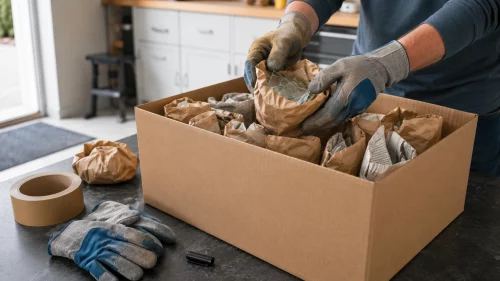 Broken glass should be placed in something that resists punctures. A thin grocery bag is not enough.
Good options include:
- A cardboard box
- A small rigid plastic container
- A coffee can or similar container with a lid
- A heavy paper bag placed inside a box
- Several layers of newspaper inside a sturdy container
Step 4: Know What Glass Can Usually Be Recycled
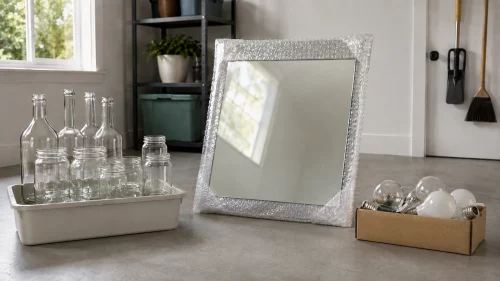 Glass recycling rules vary by city, county, hauler, and processing facility. The most commonly accepted glass items are container glass, meaning bottles and jars from food and beverages.
EPA’s glass material data says 3.1 million tons of glass containers and packaging were recycled in 2018, for a recycling rate of 31.3 percent. That category is different from many household glass products that look recyclable but are not accepted in ordinary bottle-and-jar programs.
Commonly accepted glass may include:
- Clear glass bottles
- Brown glass bottles
- Green glass bottles
- Food jars
- Beverage jars
Step 5: Know What Glass Usually Does Not Belong in Curbside Recycling
Many non-container glass items should not go into regular glass recycling because they have different melting points, coatings, treatments, or contaminants. They can reduce the quality of recycled glass or create safety problems at sorting facilities. Items often excluded from curbside glass recycling include:- Window glass
- Mirrors
- Drinking glasses
- Wine glasses
- Crystal
- Ceramics
- Porcelain
- Pyrex or oven-safe glass
- Light bulbs
- Fluorescent tubes
- Windshields
- Tempered glass
- Glass cookware
- Glass from picture frames
- Broken mixed glass
How to Dispose of Window Glass and Mirrors
Window glass and mirrors are commonly rejected from curbside recycling. They are flat glass, not container glass, and mirrors may have reflective backing that changes how they are handled. For small pieces, wrap and label them before putting them in the trash if local rules allow. For large pieces, call your local waste authority, transfer station, or building-material recycler. Some facilities accept construction glass or window units separately, while others require ordinary disposal. If glass comes from a renovation, keep it separate from wood, drywall, metal, and other debris when possible. EPA construction and demolition guidance lists glass among materials generated during construction, renovation, and demolition projects, but building materials are handled through local facility rules rather than ordinary household recycling. For broader remodel debris planning, see our guide to construction debris removal.How to Dispose of Light Bulbs
Light bulbs need special attention because different bulbs contain different materials. Incandescent and halogen bulbs may be allowed in regular trash in many areas, but they should be wrapped so they do not break loose in the bag. LED bulbs may be accepted through electronics recycling or special collection programs depending on location. CFLs and fluorescent tubes are different because they contain mercury. EPA recommends using available local recycling options for CFLs, fluorescent bulbs, and other mercury-containing bulbs rather than disposing of them in regular household trash. Do not mix fluorescent bulbs with ordinary broken glass. Set them aside for the proper household hazardous waste or bulb recycling program.How to Dispose of Glass From a Cleanout
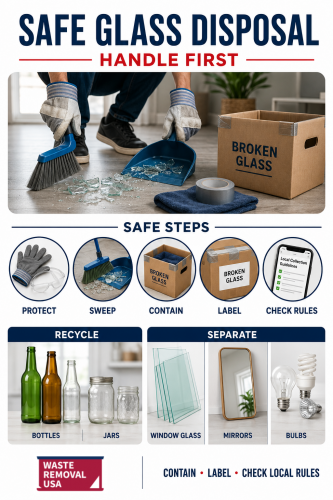 Home cleanouts often include many kinds of glass at once: picture frames, mirrors, drinking glasses, table tops, cabinet doors, light fixtures, storm windows, glass shelves, bottles, jars, and broken decor.
Sort glass into categories:
- Recyclable bottles and jars
- Broken glass for safe disposal
- Mirrors and flat glass
- Light bulbs
- Electronics or appliances with glass
- Reusable items
- Donation-quality items
Can Glass Go in an On-Site Debris Container?
Glass may be allowed in an on-site debris container if the provider and disposal facility accept it, but it should still be handled carefully. Broken glass should not be tossed in loose where it can cut workers, puncture bags, or scatter during loading. Before placing glass with project debris, ask:- Is glass accepted?
- Are mirrors accepted?
- Is window glass accepted?
- Are light bulbs excluded?
- Does broken glass need to be wrapped?
- Are there limits on large panes or table tops?
- Should glass be kept separate from other debris?