Why Do Fluorescent Tubes Need Special Disposal?
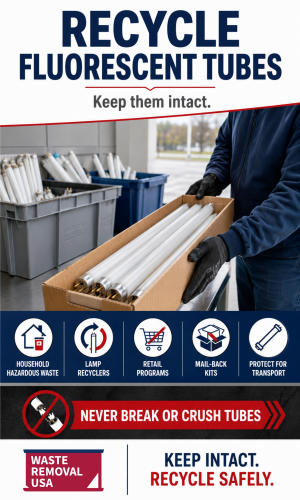 Fluorescent tubes produce light using mercury vapor inside a sealed glass tube.
That includes common linear lamps such as:
- T5 tubes
- T8 tubes
- T12 tubes
- U-shaped fluorescent lamps
- Circline lamps
- High-output fluorescent lamps
How Do You Dispose of Fluorescent Tubes?
For most households, use this order:- Keep the fluorescent tube unbroken.
- Place it back in the original packaging or another protective container.
- Find a local program that specifically accepts linear fluorescent tubes.
- Confirm quantity limits, fees, and hours.
- Transport the tubes carefully.
- Deliver them intact for recycling.
Where Can You Recycle Fluorescent Tubes?
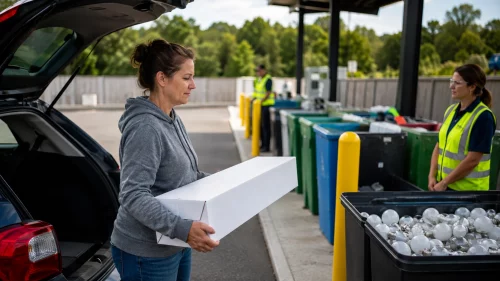 Fluorescent tube recycling is available through several types of programs.
Household Hazardous Waste Programs
Start with your city or county solid-waste department. Many communities operate:- Permanent household hazardous waste facilities
- Periodic collection events
- Special lamp-recycling days
- Regional drop-off facilities
Local Lamp Recyclers
Specialized recyclers process fluorescent tubes and other mercury-containing lamps. These programs can be particularly useful when you have:- Numerous 4-foot tubes
- 8-foot lamps
- Commercial quantities
- Several different lamp types
Recycling Locators
If you are searching where to recycle fluorescent tubes near me, EPA recommends the Earth911 search service as one way to identify possible local collection locations. Use the Earth911 recycling search and enter your ZIP code and lamp type. Always call the listed facility before arriving. Directory information can change, and a facility that accepts compact fluorescent bulbs may not accept long linear tubes.Do Hardware Stores Recycle Fluorescent Tubes?
Some stores participate in lamp-recycling programs, but do not assume every hardware or home-improvement store accepts fluorescent tubes. This distinction is important. A retailer may accept:- Compact fluorescent bulbs
- 4-foot fluorescent tubes
- 8-foot fluorescent tubes
- Commercial quantities
Can You Recycle Fluorescent Tubes Through a Mail-Back Program?
Yes. Prepaid mail-back recycling can be useful when nearby collection options are limited. These programs typically work by providing a container designed for spent lamps. The basic process is:- Order the appropriate recycling kit.
- Store spent tubes in the supplied container.
- Follow the program’s quantity and packaging instructions.
- Seal the container when full.
- Ship it according to the provider’s instructions.
How Should Fluorescent Tubes Be Stored Before Recycling?
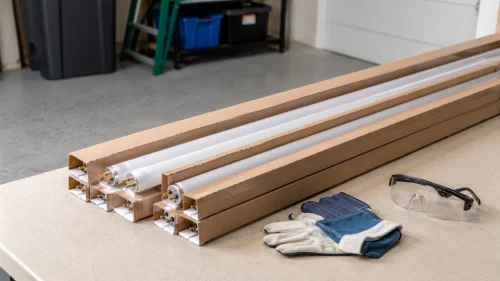 Keep used tubes intact and protected against impact.
Whenever possible, reuse the packaging from the replacement lamps.
Otherwise, use an appropriately sized sturdy container that prevents the tubes from rolling around or striking one another.
Store fluorescent tubes:
- Indoors
- In a dry area
- Away from children
- Away from pets
- Away from vehicle traffic
- Where heavy objects cannot fall on them
How Should You Transport 4-Foot Fluorescent Tubes?
Long fluorescent tubes are fragile, so prepare them before driving to the recycler. Use:- Original lamp boxes
- Protective fluorescent-lamp cartons
- Another sturdy container designed to keep tubes separated and stable
- Throw loose tubes into a pickup bed.
- Stack heavy debris over them.
- Bend them to make them fit.
- Intentionally break them into shorter pieces.
How Do You Destroy Fluorescent Tubes?
You generally should not intentionally destroy fluorescent tubes. EPA specifically advises that fluorescent lamps should not be crushed as part of ordinary removal or demolition because doing so can release mercury. Keep them intact and send them to an appropriate recycling or disposal program. Commercial lamp crushers exist in certain regulated waste-management settings, but those systems involve environmental rules and are not a household method for getting rid of fluorescent tubes. For homeowners, intentionally breaking tubes creates an unnecessary mercury cleanup problem.What Should You Do if a Fluorescent Tube Breaks?
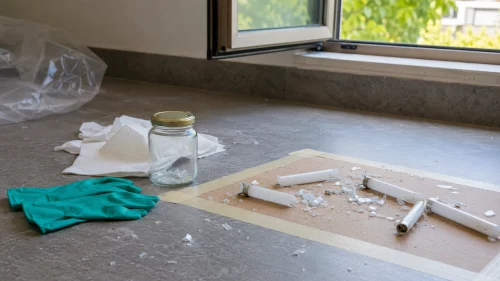 An accidentally broken fluorescent tube requires different handling because some mercury may be released when the glass breaks.
EPA’s current broken fluorescent bulb cleanup instructions apply to linear fluorescent tubes as well as CFLs.
First, Clear and Ventilate the Room
EPA recommends:- Have people and pets leave the room.
- Avoid walking through the breakage area.
- Open a window or exterior door.
- Air out the room for approximately 5–10 minutes.
- Shut off a central forced-air HVAC system temporarily, if present.
Do Not Immediately Vacuum
EPA advises against vacuuming during the initial cleanup because vacuuming can spread mercury-containing powder or mercury vapor. Instead, carefully collect visible glass and powder using:- Stiff paper or cardboard
- Sticky tape for small fragments
- Damp paper towels or disposable wet wipes on hard surfaces
Contain the Debris
Place the broken glass, powder, tape, and cleanup materials in a glass jar with a metal lid or an appropriate sealable plastic bag. Move the contained material outside to a protected location until you determine the local disposal requirement. Wash your hands afterward. Check with the local waste agency because some communities require broken mercury-containing bulbs to go to an appropriate collection facility.Can Fluorescent Tubes Go in an Ordinary Cleanup Container?
Do not place intact fluorescent tubes into a general project cleanup container unless the service provider has specifically confirmed that mercury-containing lamps are accepted. They can break during:- Loading
- Compaction
- Transportation
- Unloading
- Material processing
Are Fluorescent Tubes Legally Hazardous Waste?
The answer depends partly on who generated them and where the waste is located. Under federal rules, mercury-containing fluorescent lamps generated by businesses can qualify for management under the Universal Waste Rule. EPA defines lamps under these regulations to include fluorescent tubes and several other mercury-containing lighting products. Read EPA’s universal waste guidance for the federal framework. Households have a federal household hazardous waste exemption, but state and local requirements can be stricter. Some jurisdictions prohibit mercury-containing lamps from ordinary disposal even when they came from a household. Always check local rules.What Are the Fluorescent Tube Disposal Rules for Businesses?
Businesses should not simply follow household disposal instructions. A commercial property, school, warehouse, retail store, office, apartment-management operation, or contractor can generate enough fluorescent lamps to trigger specific waste-management requirements. Depending on the lamps and jurisdiction, requirements can address:- Waste determination
- Universal-waste classification
- Packaging
- Labeling
- Storage
- Accumulation time
- Employee handling
- Transportation
- Approved recycling or disposal destinations
What Are the Fluorescent Tube Disposal Rules in Texas?
Texas distinguishes between household and regulated business waste. The Texas Commission on Environmental Quality includes lamps within its universal-waste program and states that fluorescent tube-style lamps can qualify for management under those rules. Texas prohibits disposal of regulated hazardous-waste lamps in municipal solid-waste landfills, although specific household and very-small-generator exemptions can apply. For households, TCEQ says recycling remains the preferred option and recommends checking local household hazardous waste programs or lamp-recycling resources. Review TCEQ’s current universal waste guidance if the lamps come from a business or other non-household source. Texas residents can also use TCEQ’s household hazardous waste guidance to locate appropriate household options.Can Fluorescent Tubes Be Put in Household Trash?
Do not assume they can. EPA recommends recycling fluorescent bulbs through available collection options rather than putting them in regular household trash. However, federal household rules do not create a nationwide landfill prohibition for every residential fluorescent lamp. State and local rules may be stricter and can require recycling. That means the correct answer depends on your address. Before using household trash:- Check the state environmental agency.
- Check your city or county waste department.
- Look for a fluorescent tube recycling program first.
What Materials Are Recovered Through Fluorescent Light Recycling?
Fluorescent light recycling allows processors to separate several lamp components. EPA notes that virtually all components of fluorescent bulbs can potentially be recycled, including:- Glass
- Metals
- Other lamp materials