What Is the Cheapest Way to Create Backyard Privacy?
The cheapest backyard privacy solution is usually a targeted screen placed only where privacy is needed. Outdoor curtains, freestanding panels, lattice, trellises, tall container plants, and strategically placed shrubs can all block views without the cost of enclosing an entire yard. For the best value, think in layers:- Use an immediate screen where you need privacy now.
- Add plants that will fill in over time.
- Reuse an existing fence, porch, pergola, or patio structure whenever possible.
- Focus spending on one or two high-visibility areas instead of the whole property.
1. Add a Freestanding Privacy Screen
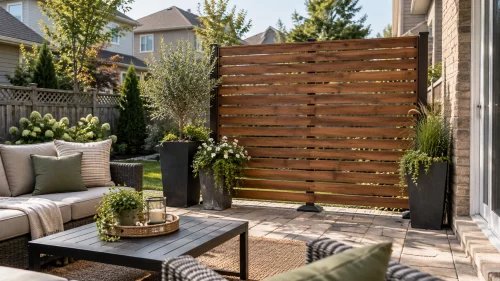 A freestanding screen is one of the simplest backyard privacy ideas on a budget because it requires little site preparation and can be placed exactly where needed.
Wood slat panels, composite panels, metal screens, or weather-resistant fabric screens can shield a patio, hot tub, dining area, or lounge space. A narrow screen may be enough to block the view from a neighboring window or sidewalk.
Freestanding screens are also useful when you do not want to attach anything permanently to the house or existing fence.
Choose a design with a stable base and make sure it is suitable for local wind conditions. Tall, lightweight panels can become unstable if they are not properly supported.
2. Hang Outdoor Curtains Around a Patio or Pergola
Outdoor curtains can create privacy quickly for relatively little money, especially if you already have a covered patio, porch, pergola, or other structure that can support a rod or cable. Curtains let you close off only the exposed side of the space and tie them back when privacy is not needed. They can also soften the look of a hardscape-heavy patio. Use fabric intended for outdoor exposure, and avoid positioning loose material near grills, fire pits, heaters, or other heat sources. Hardware should be secured well enough to handle wind and the weight of wet fabric. For many homeowners, this is one of the easiest cheap backyard privacy ideas to install in an afternoon.3. Use Lattice Panels for Partial Screening
Lattice offers a balance between privacy and openness. It blocks direct sightlines without making a small yard feel completely enclosed, and it can work as a stand-alone panel or as an extension around a patio. Wood lattice is easy to paint or stain, while vinyl and composite versions generally require less ongoing maintenance. For additional coverage, pair lattice with climbing plants suited to your climate. Before attaching lattice to an existing fence or adding height to a boundary structure, check local zoning, neighborhood, and homeowners association rules. Height limits and setback requirements vary by jurisdiction.4. Build a Simple Trellis and Grow Vines
A trellis can turn a narrow strip of ground into a vertical privacy screen. It is especially useful beside decks, patios, side yards, and small urban spaces where a wide hedge would take up too much room. The plant choice matters as much as the trellis. Select vines that are appropriate for your climate, available sunlight, soil conditions, and the strength of the support. Some vigorous vines can overwhelm lightweight structures or spread beyond the intended area. The USDA Plant Hardiness Zone Map can help you identify your zone before choosing perennial plants, but hardiness is only one factor. Sun exposure, moisture, mature size, and local invasive-species guidance should also influence the decision.5. Create a Mixed Shrub Privacy Screen
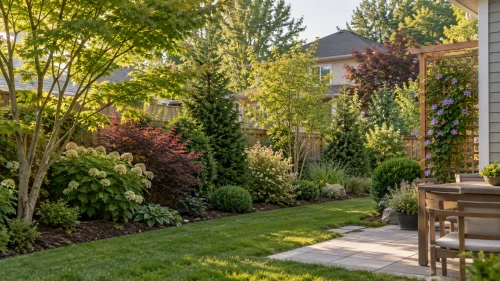 A living privacy screen can take longer to establish than a fence, but it can become one of the most attractive long-term solutions.
Instead of planting one tightly spaced row of a single species, consider a mix of shrubs and small trees appropriate for your region. The University of Maryland Extension recommends mixed privacy screens because plant diversity can make the planting more resilient to pests, disease, drought, and other stresses.
A mixed screen can also look more natural. Combine evergreen plants for year-round coverage with deciduous shrubs or small trees that add flowers, fall color, or seasonal interest.
Review the mature height and width of each plant before buying. Crowding fast-growing plants may create privacy sooner, but it can also create long-term pruning, disease, and space problems.
For more planning ideas, see the University of Maryland Extension guidance on plants for mixed privacy screens.
6. Use Tall Planters to Screen a Seating Area
Large containers provide privacy without permanently changing the landscape. Place several along the edge of a deck or patio and fill them with tall grasses, upright shrubs, or other container-friendly plants. This works particularly well when the unwanted view begins above a low fence or railing. Raising plants in containers gives them an immediate height advantage. Before adding very large planters to an elevated deck or balcony, consider the combined weight of the container, wet soil, plant, and water. When structural capacity is uncertain, ask a qualified professional before creating a heavy row of containers.7. Add Ornamental Grasses for Seasonal Privacy
Tall ornamental grasses can create movement, texture, and partial screening without the visual weight of a solid wall. Their usefulness depends heavily on climate and species. Some remain upright well into winter, while others die back or are cut down seasonally. That makes grasses better for summer and fall privacy in some regions than for year-round screening. Choose non-invasive plants that are suitable for your location. Native grasses can be a good starting point, but the best choice will vary widely across the country. Grasses work especially well as a second layer in front of a fence or behind a seating area where complete visual blockage is not necessary.8. Be Careful About Using Bamboo for Privacy
Bamboo is often promoted as a fast backyard privacy plant, but it is not a good universal recommendation. Running bamboo spreads through underground rhizomes, and several species are invasive in parts of the United States. Once established, it can be difficult and expensive to contain or remove. Some jurisdictions also regulate certain bamboo species. If you are considering bamboo, first check your state and local invasive-plant guidance. Learn whether the plant is a running or clumping type and whether it is appropriate for your region. The University of Maryland Extension’s guidance on containing and removing bamboo illustrates how aggressive running types can become. In many yards, a mixed hedge, trellis with a well-behaved vine, or tall container planting is a lower-risk privacy solution.9. Upgrade an Existing Fence Instead of Replacing It
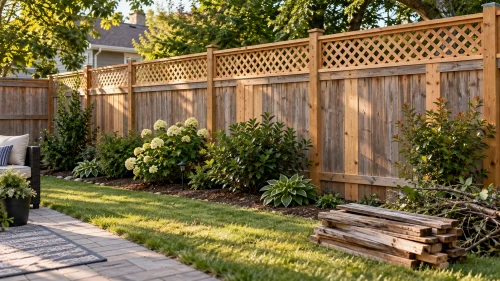 If you already have a structurally sound fence, improving it may cost far less than starting over.
Depending on the fence design and local rules, you might:
- Repair missing or warped boards.
- Stain or paint weathered wood.
- Add approved lattice or decorative screening.
- Plant shrubs in front of open sections.
- Place a trellis where a neighboring sightline remains exposed.
10. Use Reclaimed Wood Carefully
Reclaimed lumber can reduce material costs and give a privacy screen a distinctive look, but only if the wood is suitable for reuse. Avoid boards that are rotten, badly split, structurally weak, or contaminated with unknown coatings or chemicals. Nails, screws, staples, and hidden metal hardware should be removed or accounted for before cutting or rebuilding. A reclaimed-wood screen is best used as a decorative privacy feature rather than a structural retaining element. When the project involves posts, footings, or a substantial wall, use materials and construction methods appropriate for the load and local conditions. If your project includes replacing an old outdoor structure, these DIY home improvement ideas can help you plan the work before demolition starts.11. Rearrange Furniture to Block Sightlines
Sometimes the cheapest privacy improvement costs nothing. Move a dining table, sectional, umbrella, storage bench, or tall-backed seating arrangement so the furniture itself interrupts a direct view. An existing patio umbrella can sometimes block a second-story sightline more effectively than a short fence. This strategy works best when privacy is needed in one activity zone rather than across the entire yard. Combine the furniture layout with a planter or narrow screen for more coverage. Before purchasing anything, spend a few days observing the yard from both standing and seated positions. The sightline that feels exposed while standing may disappear once you sit down.12. Create a Small Private Zone Instead of Screening the Whole Yard
A common budget mistake is trying to make every inch of a backyard private. Instead, create one secluded destination. A 10-by-10-foot patio, small deck corner, hammock area, reading space, or outdoor dining zone may be all you need. Use two or three privacy elements together:- A screen behind the seating area
- Tall planters on one side
- An umbrella or pergola overhead
- Shrubs or grasses around the perimeter
13. Add a Pergola for Overhead and Side Privacy
A pergola can help when the problem is not simply a view through the property line but an elevated view from a neighboring home. The structure itself does not create complete privacy, but curtains, shade fabric, lattice panels, or appropriate climbing plants can make the space feel much more enclosed. A pergola is generally more expensive than curtains or a freestanding screen, so it is not the first choice for the tightest budgets. It can make sense, however, when you also want shade, a defined outdoor room, or a long-term landscape feature. Because pergolas are structures, check local permit, setback, wind-load, and property-line requirements before building.14. Use a Shade Sail Strategically
Shade sails are designed primarily for shade, but careful placement can reduce some elevated or diagonal views into a patio. They are most useful when neighboring windows overlook the yard from above. A sail positioned at the right angle can make a seating area feel more sheltered without blocking airflow at ground level. Shade sails create significant tension at their anchor points, so use appropriate supports and installation. For a lower-cost option, a patio umbrella may achieve a similar visual result in a much smaller space.15. Layer Plants at Different Heights
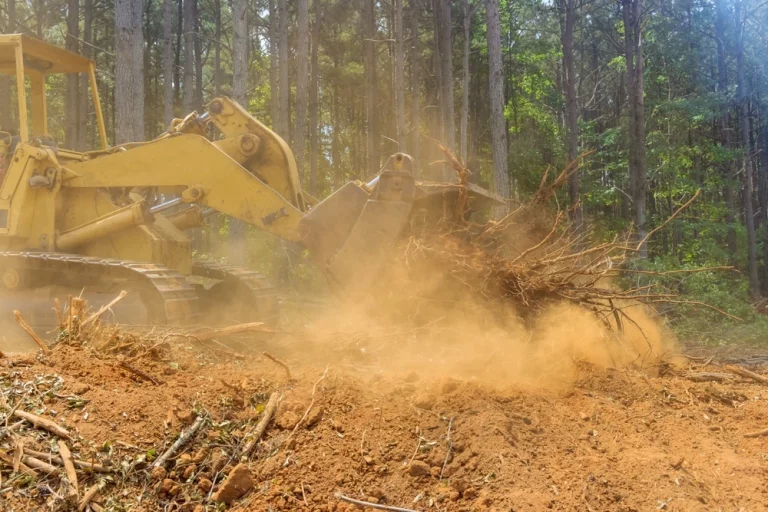
A layered landscape often creates better privacy than a single row of identical plants. Place taller shrubs or small trees toward the back, medium shrubs in front, and grasses or lower plantings at the edge. This creates depth and can obscure gaps that would remain visible in a single-row hedge. Before planting, account for mature width. Plants that look widely spaced at the nursery may eventually fill a much larger area. Choosing plants for their mature size can reduce future pruning and replacement costs. When an older landscape must be cleared first, Waste Removal USA offers practical guidance for yard debris removal and garden waste disposal.16. Use a Retaining Wall Only When the Site Actually Needs One
A retaining wall can change elevation and sometimes improve privacy, but it should not be treated as a simple decorative screen. Retaining walls hold back soil and may need drainage, engineered design, or permits depending on their height, location, soil conditions, and loads above the wall. Requirements vary by jurisdiction. If your yard is already sloped and needs grade correction, a properly designed retaining wall may allow you to create a raised planting bed that improves screening. Building a wall solely to gain privacy, however, is usually more expensive and complex than using plants or a screen. For substantial grade changes, walls near property lines, or sites with drainage and slope concerns, consult the local building department and an appropriate professional before construction.Before You Dig or Build, Check These Four Things
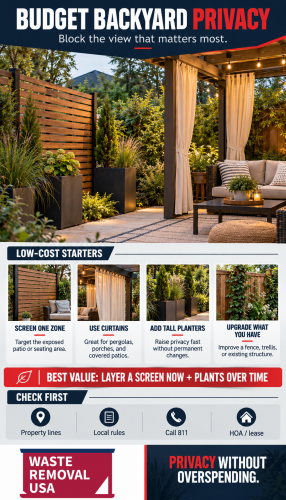 Even inexpensive backyard privacy projects can create expensive problems if they are placed incorrectly.