Why You Should Never Pour Cooking Oil Down the Drain
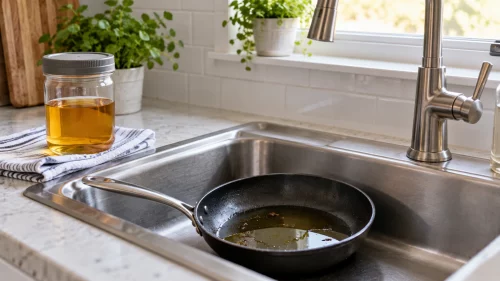 Liquid cooking oil may appear harmless when it is still warm.
The problem develops after it enters the plumbing system.
Fats, oils, and grease can coat the inside of pipes and combine with other material inside sewer systems. Over time, that buildup can restrict wastewater flow and contribute to backups and sewer overflows.
EPA identifies fats, oils, and grease as materials that can clog pipes and pumps in both public sewer systems and wastewater-treatment facilities.
Hot water does not solve the problem.
Hot water may temporarily keep some grease liquid while it passes through part of your household plumbing, but the material eventually cools farther downstream.
Dish soap does not make pouring large quantities of oil into the sink appropriate either.
The simplest rule is to keep cooking oil out of the plumbing system entirely.
The same applies to homes with septic systems. EPA specifically advises homeowners not to put cooking grease or oil down drains connected to septic systems.
Let Used Cooking Oil Cool Before Handling It
Before deciding whether to reuse, recycle, or discard oil, allow it to cool to a safe handling temperature. USDA notes that deep-frying oil can exceed 400°F during cooking. Never try to move a pot or fryer full of dangerously hot oil simply because cleanup has started. Hot oil can cause severe burns and create a fire hazard if spilled. Allow the fryer or pan to cool according to the appliance manufacturer’s instructions. Once the oil is cool enough to handle safely, transfer it slowly into an appropriate container using a funnel if necessary. A container used for collection should be sturdy, leak-resistant, and capable of being securely closed.Can Used Cooking Oil Be Reused?
Yes, frying oil can sometimes be reused if it has remained in good condition. USDA does not recommend a universal number of uses because oil deterioration depends on several factors, including the oil itself, cooking temperature, food being fried, contamination, and storage. Oil used for relatively clean foods may remain usable longer than oil containing large amounts of breading or food particles. USDA recommends straining frying oil through cheesecloth or a sieve before storing it. For storage, place the filtered oil in a sealed, light-proof container. USDA says reused frying oil can be stored for up to three months and recommends refrigeration for best quality. See the USDA’s deep-fat frying food-safety guidance for additional information.How Do You Know When Frying Oil Should Be Discarded?
 Do not rely solely on the number of times the oil has been used.
Evaluate its condition.
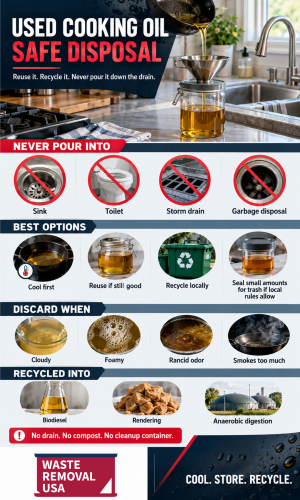
Oil should be discarded when it begins showing signs of deterioration such as cloudiness, persistent foaming, a foul or rancid odor, unpleasant taste, or excessive smoking under normal frying conditions.
Significant darkening can also accompany deterioration, although color alone does not tell the entire story.
Food particles left in oil can accelerate breakdown, which is another reason to filter reusable frying oil after it cools.
When in doubt about the quality of old cooking oil, replacing it is the safer choice.
Can You Mix Different Used Cooking Oils?
If you are saving oil for culinary reuse, keeping oils separated is generally more practical. Different oils have different flavors, smoke points, and previous cooking histories. Oil that was used to fry strongly flavored food can also carry those flavors into the next dish. If the oil is being collected only for recycling, the recycler may accept multiple types of vegetable cooking oil together. Do not assume that automatically. Collection programs may have their own rules concerning vegetable oil, animal fats, water contamination, food scraps, and containers. Ask before combining material.Where Can You Recycle Cooking Oils?
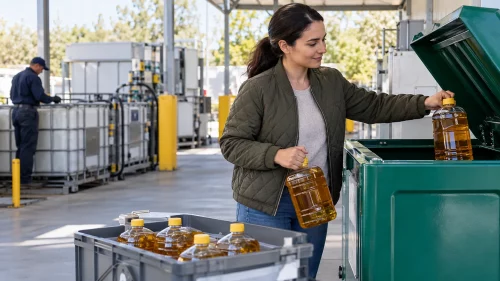 If you want to recycle cooking oils, begin with your local solid-waste department, recycling program, or municipal sanitation authority.
Available programs differ dramatically by location.
Some communities offer permanent collection sites. Others use seasonal events, food-scrap programs, transfer stations, or specialized cooking-oil collection locations.
Restaurants and other food-service businesses often have access to specialized grease recyclers that provide collection containers and scheduled pickup.
EPA identifies several productive uses for collected fats, oils, and grease.
Recovered material may be sent to rendering operations, processed into biofuel, or used in anaerobic digestion.
Recycling is particularly useful when you regularly generate more oil than is practical to discard through ordinary household trash.
How Is Used Cooking Oil Recycled?
Used cooking oil can become a feedstock rather than waste. Depending on the recycling operation, collected oil may be filtered and processed for uses such as:- Waste cooking oil can serve as a renewable feedstock for biodiesel production.
- Fats and oils can enter rendering processes that convert recovered material into ingredients for other products.
- Anaerobic digestion. Some facilities process organic material in oxygen-free digesters that generate biogas and digestate.
- Industrial products. Recovered oils may also be used in manufacturing processes, including certain soap products.
How to Store Used Cooking Oil for Recycling
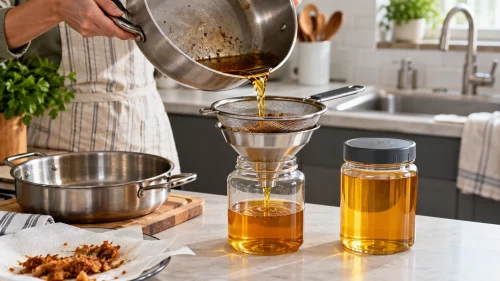 If you collect oil over time, allow each batch to cool before adding it to the storage container.
Avoid contaminating recyclable cooking oil with unrelated substances.
Do not add:
Motor oil, antifreeze, solvents, cleaning products, water, or other chemicals to a cooking-oil recycling container.
Those substances can interfere with recycling and may turn an otherwise usable material into a disposal problem.
Keep the lid tightly closed and store the container upright where it cannot easily tip, leak, or be reached by children or pets.
Follow any container instructions provided by the recycler.
Commercial kitchens should follow the requirements of their cooking-oil collection company and applicable local sewer or grease-management program.
Can Small Amounts of Cooking Oil Go in the Trash?
Where local waste rules allow it, USDA recommends placing unwanted cooking oil in a sealable container before putting it in household trash. First allow the oil to cool completely. Then transfer it into a disposable container with a secure lid. Do not pour loose oil directly into a garbage bag. A leaking bag can contaminate carts, trucks, floors, and other material. For solid fats, allow the material to cool and solidify before scraping it into an appropriate disposable container. Waste Removal USA’s guide to disposing of bacon grease covers similar handling for animal fats. Recycling remains preferable when a practical local collection option exists, especially for larger quantities.Don’t Pour Cooking Oil Outside
The backyard is not an appropriate disposal site for leftover frying oil. Do not pour it onto:- Soil
- Grass
- Landscape beds
- Driveways
- Streets
- Storm drains