

Start With a Moving Timeline
The earlier you start, the more options you have. A local apartment move may require less preparation than relocating a full household across several states, but the same basic principle applies: handle decisions first and boxes second. Use this moving timeline as a framework rather than a rigid schedule.| Time Before Move | Main Moving Tasks |
| 8+ weeks | Set a budget, choose the move type, research movers, inventory major belongings, begin decluttering |
| 6–8 weeks | Get estimates, confirm dates, review contracts, gather records, decide what will not move |
| 4–6 weeks | Start packing low-use rooms, arrange travel, plan utilities, handle donations and disposal |
| 2–4 weeks | Confirm movers, submit address changes, transfer services, pack most belongings |
| Final week | Finish packing, prepare essentials, clean, confirm logistics, photograph valuable items |
| Moving day | Supervise loading, verify paperwork, complete final walkthrough, keep documents with you |
| Delivery day | Supervise unloading, check inventory, document damage or missing items |
| First week after | Unpack essentials, update remaining accounts, check safety equipment, finish cleanup |
8 Weeks Before Moving: Build Your Moving Plan
Begin by deciding how the move will work. Will professional movers handle the entire household? Are you renting a truck? Will you pack yourself and pay movers only for transportation? Do you need temporary storage? Are vehicles traveling with you or separately? Create one central place for documents. A physical binder works, but a cloud folder or digital notebook may be easier to access from multiple devices. Store estimates, contracts, inventories, receipts, reservation confirmations, utility information, school records, travel plans, and important contact information together. Set a preliminary moving budget that includes transportation, packing supplies, travel, storage, time away from work, cleaning, pet arrangements, deposits, utility setup, and cleanup costs. Do not rely only on the advertised moving price. Stairs, long carries, elevators, storage, packing services, additional inventory, difficult parking, and other circumstances can change the final cost depending on your agreement.Declutter Before You Pay to Move Things
One of the easiest ways to simplify the moving process is to reduce what goes onto the truck. Start in storage-heavy areas such as garages, basements, attics, closets, sheds, and spare rooms. These spaces often contain belongings that have not been used in years. Separate items into four basic decisions: keep, sell, donate, and dispose. Be realistic. A low-value piece of furniture that does not fit the new home may cost more in space and moving labor than it would cost to replace later. Waste Removal USA’s decluttering tips can help you work through possessions systematically. Larger whole-house projects may also benefit from the planning approach in our home cleanout guide. Do not wait until moving day to discover that a garage full of unwanted material still needs somewhere to go.6 to 8 Weeks Before Moving: Choose the Right Moving Company
Hiring a mover deserves more scrutiny than simply comparing online prices. For an interstate move, the Federal Motor Carrier Safety Administration recommends getting written estimates from multiple movers or brokers and verifying that the company is properly registered. FMCSA’s steps for selecting an interstate mover explain how to check registration, complaint history, insurance information, and a company’s U.S. DOT number. Requirements for moves entirely within one state vary. Check your state or local consumer-protection agency for licensing requirements that apply to intrastate movers.Use a Moving Company Checklist
Your moving company checklist should answer who is actually transporting your belongings, not just who sold you the move. A mover transports household goods. A broker arranges transportation with another company. Interstate movers and brokers are both subject to FMCSA registration requirements, but their roles are different. Before hiring an interstate mover or broker, verify the company, get a written estimate, understand whether the estimate is binding or non-binding, review pickup and delivery expectations, ask how claims and disputes are handled, and determine what liability option you are choosing. FMCSA’s official moving checklist is a useful companion for interstate moves.Understand Your Moving Estimate
Do not treat an informal rate quote as a complete estimate. FMCSA requires interstate movers to provide written estimates of transportation and other applicable charges. An estimate should be based on an actual or permitted virtual inspection of the household goods. A binding estimate generally sets the amount owed for the listed shipment and services, although adding belongings or services can result in a revised estimate. A non-binding estimate is not a guaranteed final price. For covered interstate moves, FMCSA’s 110% rule limits how much a mover can demand at delivery based on the non-binding estimate, although additional legitimate charges can still be addressed under applicable rules. Read the FMCSA guidance on binding and non-binding estimates before signing an interstate moving agreement. Never sign blank or incomplete moving documents.Understand Valuation Protection Before Moving Day
Do not assume the word “insurance” means everything you own will automatically be replaced at full value. For interstate moves, federal rules require movers to offer two liability options: Full Value Protection and Released Value. Under Full Value Protection, the mover is generally responsible for the replacement value of lost or damaged goods subject to the applicable terms, declared values, and exceptions. Released Value comes at no additional charge but provides far less protection. FMCSA currently describes it as no more than 60 cents per pound per article. That means a lightweight but expensive item could receive very little compensation if it is damaged under Released Value. Review the FMCSA explanation of mover liability and protection, check whether your homeowners or renters policy provides any coverage during a move, and consider whether separate coverage is appropriate.4 to 6 Weeks Before Moving: Start Packing Strategically
Start with things you will not need before moving day. Seasonal decorations, books, wall decor, seldom-used cookware, spare linens, hobby supplies, and storage-room contents are usually easier to pack early than daily essentials. Use smaller boxes for dense items such as books and larger boxes for lighter bulky belongings. Overloading large boxes with heavy items makes them harder to carry and more likely to fail. Label each box with its destination room and a general description of the contents. Numbering boxes and keeping a simple inventory can make it easier to notice a missing carton during delivery. For especially valuable items, record identifying information and photograph their condition before packing. Keep important documents, medications, jewelry, irreplaceable keepsakes, keys, financial information, and anything needed during travel with you rather than burying them in the moving shipment.Be Careful With Items Movers May Not Transport
Ask your moving company for its prohibited-items policy before packing the garage, workshop, shed, or utility room. Potentially problematic materials can include fuels, propane cylinders, certain paints and solvents, pesticides, pool chemicals, compressed gases, and other flammable or hazardous products. Do not conceal restricted material inside a moving box. If your pre-move cleanup uncovers old household chemicals, separate them from ordinary trash and follow local disposal requirements. Waste Removal USA’s household chemical disposal guide explains common categories that may require special handling. Old computers and electronics may also have local donation or recycling options rather than needing to travel to the new home. See our guide to getting rid of old computers for more options.Transfer Utilities Without Assuming a Universal Deadline
There is no single perfect deadline for every utility company. Contact electricity, natural gas, water, sewer, internet, trash, security, and other providers early enough to learn their scheduling requirements. For the old home, confirm when service should end. Avoid shutting off essential utilities too early if you still need lights, heat, cooling, water, internet, or cleaning access. For the new home, aim to have essential services active by the time you receive possession. If the move crosses utility territories, you may be closing one account and opening another rather than simply transferring service. Keep confirmation numbers and final meter readings or account information where appropriate.Submit Your Change of Address
Mail forwarding is useful, but it should not replace directly updating important accounts. USPS allows customers to submit an official change of address online or at a Post Office. Its change-of-address guidance also recommends notifying organizations that regularly send mail. Update addresses with employers, financial institutions, insurance providers, lenders, subscription services, government agencies, healthcare providers, schools, professional licensing organizations, and other important senders as appropriate. Be cautious about websites that imitate USPS change-of-address services or charge unnecessary fees.Update Insurance Before the Move
Moving can affect more than the protection applied to belongings on the truck. Contact your homeowners or renters insurer to discuss the transition from the old property to the new one and whether any coverage overlaps are needed. If you are buying a home, make sure the required property policy begins at the correct time for closing or possession. Auto insurance should also reflect the new garaging address when required. Rates, coverage requirements, and insurer availability can change when moving to a different state. Keep proof of insurance and important policy information accessible during travel rather than inside the moving truck.Understand the Current Federal Tax Rules
The tax treatment of moving expenses has changed, so older moving guides can be misleading. For most civilian taxpayers, ordinary moving expenses are not federally deductible in 2026. The IRS currently allows qualifying deductions for members of the Armed Forces on active duty who move because of a military order and permanent change of station. Beginning in 2026, certain employees or new appointees of the intelligence community can also receive special treatment for qualifying relocations. See the IRS moving-expense guidance for current eligibility. Keep receipts when they are needed for employer reimbursement, personal records, qualifying tax treatment, or potential moving claims, but do not assume ordinary moving expenses will create a federal tax deduction.2 to 4 Weeks Before Moving: Handle Family Logistics
If children are changing schools, confirm the enrollment process and determine how academic, special-education, health, and other necessary records will transfer. If the move is long distance, refill necessary prescriptions with enough time to cover travel and the transition to new healthcare providers. Keep essential medication with you. For pets, update identification information and gather veterinary records. Check requirements if you are traveling by air or crossing destinations with animal-entry rules. Plan sleeping arrangements carefully if household belongings will arrive after you do. This is also the time to finalize hotels, flights, vehicle plans, storage, childcare, pet care, elevator reservations, loading access, parking requirements, and building move-in procedures.Final Week: Pack an Essentials Kit
The goal of the essentials kit is to avoid searching through 40 boxes on the first night. Keep the items you will need during travel and immediately after arrival separate from the main shipment. A useful essentials kit can include medications, identification, moving documents, phone chargers, toiletries, basic clothes, children’s necessities, pet supplies, basic cleaning products, toilet paper, a few kitchen essentials, bedding, simple tools, and anything required for work the next morning. Do not put irreplaceable documents or valuables into a box simply because it is labeled “essentials.” Keep those items personally controlled. Finish packing the rest of the house and clearly identify anything that is not supposed to go onto the truck.Prepare the Old House for Moving Day
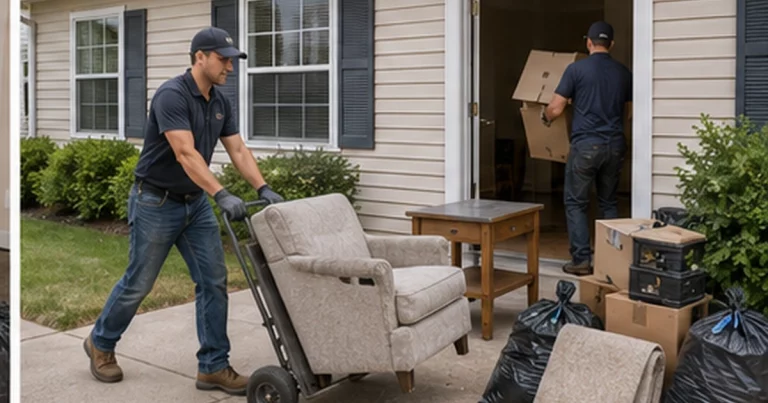
Clear hallways, stairs, entryways, and loading routes before movers arrive. Remove tripping hazards and protect floors or vulnerable surfaces where appropriate. Disassemble furniture that you have agreed to prepare yourself and place hardware in labeled bags. Keep children and pets away from heavy lifting and moving-equipment areas. Photograph the condition of valuable furniture, electronics, artwork, or other significant items before they are loaded. Complete as much cleaning as practical before the final day. An empty room is easier to clean than one still filled with boxes. For heavily cluttered garages, our garage cleanup guide can help you work through accumulated material before the final loading date.Moving Day: Follow the Paperwork
For an interstate professional move, FMCSA recommends being present while the mover inventories the shipment and reviewing the estimate, bill of lading, inventory, and other documents before signing. The bill of lading is the moving contract and a receipt for the shipment. Keep your copy with you. Walk through the inventory with the mover and address questions about the recorded condition of belongings before loading is complete. Make sure the driver or mover has accurate destination information and knows how to contact you during transit. Before the truck leaves, conduct a complete walkthrough of the property. Check closets, cabinets, attic access, basement rooms, garage shelves, outdoor storage, behind doors, appliances, and any area that could hide a forgotten box. Photograph the empty condition of the property when useful for lease, sale, or security-deposit records.If You Are Moving Yourself
A DIY move replaces the moving-company coordination with vehicle, equipment, lifting, and transportation responsibilities. Choose a truck with enough capacity without assuming the largest option is automatically best. Learn how the rental company’s equipment operates before loading begins. Distribute weight appropriately and secure furniture and boxes so they cannot shift during transport. Avoid stacking heavy items on fragile cartons. Use suitable dollies, furniture pads, ramps, straps, and lifting help rather than attempting to carry oversized furniture alone. Plan parking and access at both properties. A truck that fits easily at a suburban driveway may be difficult to position at an apartment, urban property, or narrow residential street. Also account for fuel, mileage, tolls, hotels, equipment rental, insurance options, labor help, and the value of your time when comparing a DIY move with professional service.Delivery Day: Check Before Signing
Be present for delivery or designate a trusted representative. Direct boxes and furniture to their intended rooms to reduce unnecessary carrying later. Compare delivered items with the moving inventory. Note missing or visibly damaged items before signing documents when possible, and photograph damage promptly. FMCSA recommends supervising unloading and noting damaged or missing goods on the inventory before signing. Keep contracts, inventories, receipts, photographs, and correspondence until the shipment is complete and any claims are resolved. Do not discard damaged items involved in a potential claim until you understand the mover’s claims process.Unpack in the Right Order
Start with function rather than decoration. Set up sleeping areas, bathrooms, essential kitchen items, medication, pet needs, children’s necessities, work equipment, and basic clothing first. Then move into the rooms that support normal daily routines. Decorative items, books, collectibles, and nonessential storage can wait. Break boxes down as you unpack and follow local cardboard recycling requirements. Keep packing materials you can reasonably reuse, but avoid filling a new garage with empty boxes simply because they might someday be useful. If belongings immediately seem wrong for the new space, create a donation or disposal area instead of forcing everything into permanent storage.Check the New Home During the First Week
Walk through the property systematically after the immediate unpacking is under control. Confirm that doors and windows lock properly and that smoke alarms and carbon monoxide alarms are present where required and operating according to their manufacturer instructions. Locate the electrical panel, main water shutoff, and other important building controls. Check appliances, plumbing fixtures, heating and cooling equipment, garage doors, and anything that may not have been fully tested during the move. If you are renting, document any existing damage according to the lease or property manager’s move-in procedure. Update any remaining addresses and establish local healthcare, school, vehicle, licensing, or government services required by the move.Plan Cleanup Before It Becomes Another Moving Task
Moving tends to uncover unwanted furniture, broken shelving, damaged household goods, old storage materials, and years of accumulated clutter. Handle usable items first through donation, sale, or reuse when practical. Keep electronics, chemicals, batteries, fuels, and other special-handling materials separate from ordinary cleanup waste. For a major pre-move purge, downsizing project, estate cleanout, or post-move cleanup, Waste Removal USA can help you choose an appropriate cleanup container size for accepted material. Planning disposal before the final week prevents unwanted belongings from becoming the last thing left in an otherwise empty house.Make the Moving Process Easier by Planning in Order
The most useful moving list is not simply a collection of everything that eventually needs to happen. It puts moving tasks in an order that prevents one unfinished job from creating five new problems. Choose how you are moving, establish the budget, verify any professional mover, reduce what you are taking, and then begin packing. Handle utilities, addresses, records, insurance, travel, and delivery plans before the final days become hectic. On moving day, keep your paperwork and essentials with you, supervise the shipment, and complete a final walkthrough before leaving. Waste Removal USA can help with the accepted household debris generated during a large decluttering project or move so that unwanted material does not follow you to your new home.Do You Like Waste Removal USA Blogs? Add us to your Google Preferred Resources list and stay up to date on our latest post!
Choose Waste Removal USA as a Preferred Source to see more of our fresh, relevant articles in Google Top Stories and help WRUSA stand out in your everyday feed. Click below to keep our latest waste removal tips and insights easier to find.
Frequently Asked Questions About Moving
Find answers to common questions






















©2026 Waste Removal USA, Waste Removal USA LLC, and wasteremovalusa.com All Rights Reserved