How Do You Start a Garage Clean Out?
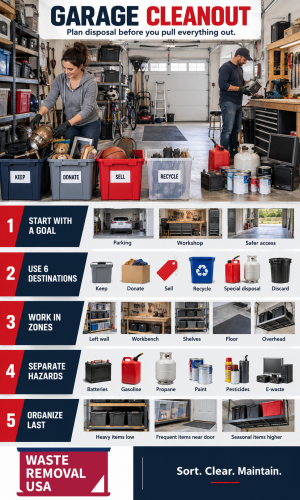 Start by deciding what you want the garage to do when the project is finished.
Possible goals include:
- Parking one or more vehicles
- Creating a workshop
- Storing lawn equipment
- Organizing sports gear
- Making seasonal storage accessible
- Clearing safe walking paths
- Reclaiming an overcrowded workbench
Assess the Garage Before Moving Everything
Walk through the space before touching anything. Look for:- Unstable stacks
- Broken glass
- Sharp metal
- Leaking containers
- Pest activity
- Water damage
- Damaged electrical cords
- Fuel containers
- Propane cylinders
- Batteries
- Unknown chemicals
- Doors
- Electrical panels
- Water heaters
- Furnaces
- Shutoff valves
- Garage-door controls
Decide Where Unwanted Items Will Go First
One of the biggest garage cleanout mistakes is sorting everything and only afterward asking how to get rid of it. Create disposal categories before the project starts. A useful system is:- Keep
- Donate
- Sell
- Recycle
- Special disposal
- Ordinary discard
How Do You Clean Out a Garage Full of Junk?
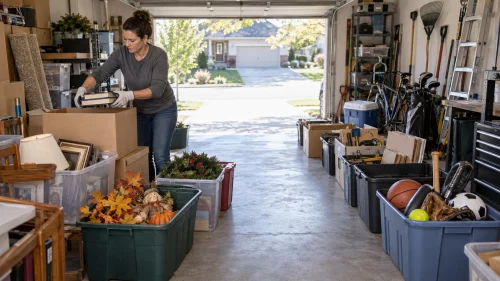 For a heavily cluttered garage, divide the space into sections.
Possible sections include:
- Left wall
- Right wall
- Workbench
- Back wall
- Shelving
- Floor storage
- Overhead storage
- You can see progress.
- Walkways remain usable.
- Categories stay organized.
- You are less likely to abandon the project midway.
- Weather is less likely to ruin belongings temporarily placed outside.
Should You Empty the Entire Garage?
Sometimes. Emptying everything can work well when:- The garage is relatively small.
- You have several helpers.
- Weather is dependable.
- A driveway or staging area is available.
- Disposal is already arranged.
- The garage is packed.
- You are working alone.
- Valuable items are mixed with junk.
- Weather could change.
- The driveway must remain usable.
Sort Items by Category Before Buying Storage
Do not buy shelves and bins before knowing what you are keeping. First group similar belongings. Common categories include:- Hand tools
- Power tools
- Automotive supplies
- Lawn equipment
- Gardening supplies
- Sports gear
- Camping equipment
- Holiday decorations
- Household overflow
- Paint and home-repair products
- Five snow shovels
- Three half-used socket sets
- Multiple garden hoses
- Several nearly empty containers of the same product
Don’t Use the One-Year Rule Too Rigidly
The source suggested that an item unused for a year is probably safe to discard. That works for some belongings but not every garage item. A snow blower may sit unused during a mild winter. Emergency equipment may rarely be used by design. Seasonal camping gear may only come out once every year or two. Instead, ask:- Do I still use this?
- Does it work?
- Would I buy it again today?
- Do I own a duplicate?
- Is there a specific reason I am keeping it?
- Does it have a designated storage location?
- Is the storage space worth what this item provides?
Sell Valuable Items Early
Items worth selling can quickly become a second form of clutter if they sit in a “sell someday” pile for months. For worthwhile items:- Photograph them.
- List them promptly.
- Set a reasonable price.
- Establish a deadline.
- Reduce the price
- Donate it
- Recycle it
- Dispose of it appropriately
Donate Usable Items
Donation can work well for items in genuinely usable condition. Possible candidates include:- Hand tools
- Shelving
- Sporting goods
- Household items
- Garden equipment
- Storage bins
- Broken equipment
- Chemicals
- Open paint
- Damaged furniture
- Certain large items
Separate Garage Hazardous Materials
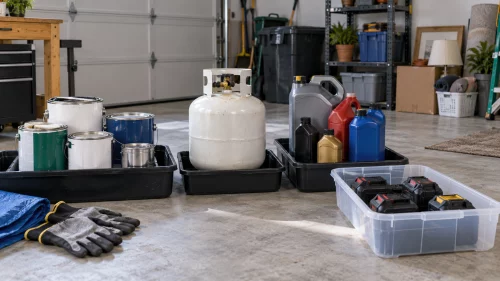 Garages often contain some of the most disposal-sensitive items in a home.
EPA identifies household products that may be ignitable, corrosive, reactive, or toxic as potential household hazardous waste.
Common garage examples include:
- Paint
- Paint thinner
- Solvents
- Pesticides
- Herbicides
- Automotive fluids
- Motor oil
- Cleaners
- Gasoline
- Automotive batteries
- Pour chemicals onto the ground.
- Dump them into storm drains.
- Mix leftover chemicals together.
- Put leaking containers into ordinary cleanup material without checking the rules.
What Should You Do with Old Batteries?
Sort batteries separately. This is particularly important for lithium-ion and rechargeable batteries found in:- Cordless drills
- Leaf blowers
- Lawn equipment
- Portable lights
- Electronics
- Battery chargers
What About Gasoline and Propane?
Do not casually mix fuel containers or propane cylinders into a garage cleanout. The U.S. Fire Administration recommends storing materials such as:- Gasoline
- Oil
- Paint
- Propane
- Varnish
- Local household hazardous-waste programs
- Propane exchange or cylinder programs
- Local fire or solid-waste guidance
Handle Oily Rags Carefully
Rags containing certain oils, stains, or solvents can create a fire hazard if piled together improperly. USFA advises keeping oily rags in airtight containers and away from heat sources. If you uncover old oily rags during the garage cleanout, do not simply toss a warm pile into a cardboard box. Follow the product and local disposal guidance for the material involved.What About Electronics and Fluorescent Bulbs?
Keep electronics and specialty lamps separate as well. Old electronics may contain:- Rechargeable batteries
- Circuit boards
- Metals
- Other materials better suited to electronics recycling
How Do You Clean the Garage Once It Is Decluttered?
Clean only after most sorting and removal are complete. Work from the top downward.Step 1: Remove Cobwebs and Dust
Start with:- Ceiling corners
- Upper shelving
- Garage-door tracks where appropriate
- Wall-mounted storage
Step 2: Wipe Shelves and Work Surfaces
Clean shelving before placing kept items back.Step 3: Sweep the Floor
Remove:- Dirt
- Leaves
- Sawdust
- Small debris
Step 4: Address Stains
Use a cleaner appropriate for the actual stain and floor surface. Do not mix cleaning chemicals.Step 5: Allow the Garage to Dry
Dry surfaces before returning cardboard boxes or other moisture-sensitive storage.How Do You Organize a Garage After Cleaning It Out?
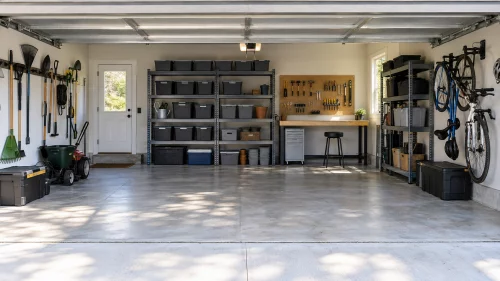 Assign every major category a home.
A practical garage layout might include:
Frequently Used Items
Keep near:- Entry doors
- Workbench
- Main access area
Seasonal Items
Store higher or farther back.Heavy Items
Keep low. Do not place heavy equipment on high shelves where it could fall.Long-Handled Tools
Use properly secured wall racks or hooks.Small Tools
Use:- Drawers
- Cabinets
- Pegboards
- Labeled bins
Chemicals
Store according to product instructions and away from children, pets, heat, and ignition sources. Organization should make the garage safer, not merely more visually tidy.Use Vertical Storage Carefully
Wall storage can free significant floor space. Good candidates include:- Bicycles
- Garden tools
- Folding chairs
- Sports equipment
- Ladders
- Rated for the load
- Properly anchored
- Installed according to manufacturer instructions
What About Overhead Garage Storage?
Overhead racks can work well for lightweight or seasonal belongings, but weight matters. Use manufacturer-rated systems attached to appropriate structural framing. Avoid storing extremely heavy objects directly above:- Vehicles
- Walkways
- Frequently occupied work areas
- Garage-door tracks
- Door movement
- Lighting
- Required clearances
Keep the Garage’s Main Functions Clear
Once everything is organized, protect the space you worked to reclaim. If the garage is intended for parking, keep parking areas open. If it contains a workshop, maintain clear working space around:- Tools
- Benches
- Electrical equipment
- Water heaters
- Furnaces
- Electrical panels
- Other equipment requiring service access
Should You Put a Smoke Alarm Inside a Garage?
Do not automatically install an ordinary smoke alarm inside a garage just because you are reorganizing it. Garage conditions can differ from living spaces, and local building codes and alarm manufacturers determine appropriate fire-detection equipment and placement. The International Residential Code specifies smoke-alarm locations within dwelling units and separately addresses carbon monoxide alarms for homes with attached garages. Some applications use heat detection rather than ordinary smoke detection in garage environments. Follow:- Local building/fire code
- Alarm manufacturer instructions
- Professional guidance
How Do You Get Rid of Junk in a Garage During a Large Cleanout?
Start by removing special-disposal materials from the general stream. Then separate:- Donations
- Scrap metal
- Cardboard
- Recyclables
- Ordinary unwanted household material
- Batteries
- Fuels
- Propane cylinders
- Paint and solvents
- Pesticides
- Electronics where locally restricted
- Other hazardous materials
How Do You Maintain a Clean Garage?
A garage is easier to maintain when everything has a designated location. After the major cleanout:- Put tools away after use.
- Break down empty shipping boxes.
- Remove donations promptly.
- Deal with broken equipment instead of storing it indefinitely.
- Return seasonal items to their labeled areas.
- Sweep when dirt accumulates.
- Review shelves a few times each year.