What Are the Best Front Porch Seating Ideas?
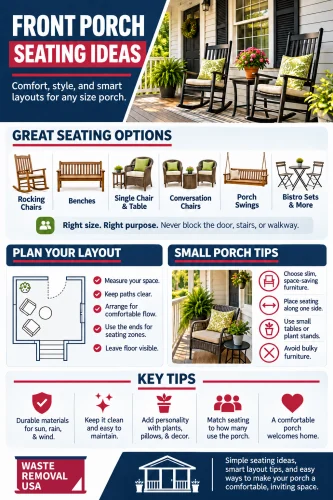 The best front porch seating ideas are the ones that match the porch’s actual size and purpose. A front porch does not need a full outdoor living-room set to feel comfortable.
Good options include:
- A pair of rocking chairs
- A narrow outdoor bench
- One comfortable chair with a side table
- Two compact conversation chairs
- A porch swing on properly designed structural support
- A small loveseat
- A compact bistro-style seating arrangement
- Built-in seating designed as part of the porch
- Folding or stackable chairs for occasional guests
How Do You Plan a Front Porch Furniture Layout?
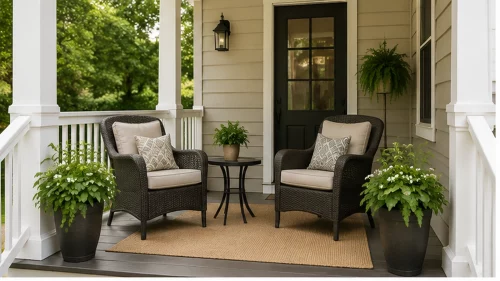 A successful front porch furniture layout starts with circulation rather than decoration. People should be able to reach the front door, use the steps, open the door fully, and move around the furniture without squeezing through narrow gaps.
Measure:
- Total porch width and depth
- Front-door width and swing
- Distance to stairs
- Railing locations
- Column locations
- Window locations
- Electrical outlets
- Porch ceiling height
- Areas exposed to rain
- Any required clear walking route
How Much Seating Does a Front Porch Really Need?
The number of porch seats should reflect how many people regularly use the space rather than the maximum number you might occasionally entertain. A porch used by two people most days does not necessarily need six permanent chairs. For occasional gatherings, consider adding lightweight or folding seats that can be stored elsewhere. This preserves open space during normal use while allowing extra seating when needed. Too much furniture can:- Hide attractive porch architecture
- Make cleaning difficult
- Block the entrance
- Reduce curb appeal
- Create tripping hazards
- Make a small porch feel even smaller
What Seating Works Best for a Small Front Porch?
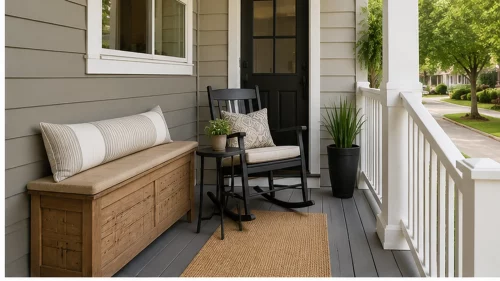 Seating for a small front porch should have a compact footprint and leave the entrance open.
A single chair with a side table may work better than trying to force two chairs into a very narrow space. A slim bench placed against a wall can offer seating without projecting as far into the walkway as deeper lounge furniture.
Other small front porch sitting area ideas include:
- A backless bench
- One rocking chair
- Two narrow-profile chairs
- A storage bench
- Folding chairs
- Stackable outdoor chairs
- A small corner bench
- A compact chair with a plant stand instead of a table
How Should You Arrange Seating on a Narrow Porch?
A narrow front porch usually works best with seating parallel to the house. Place a slim bench, chair, or pair of compact chairs along the wall while preserving the route from the steps to the door. If the front door sits near one end of the porch, the opposite end may provide a natural sitting area. This keeps people who are relaxing on the porch away from the main entrance. Use small side tables instead of full-size coffee tables. A stool-sized outdoor table may provide enough surface for a drink without occupying the center of the porch. Avoid placing furniture directly against siding where cushions, chair backs, or moisture may damage the finish.What Front Porch Seating Works for a Large Porch?
A larger porch gives you more flexibility, but the furniture still needs organization. Instead of lining every chair against the house, create intentional seating groups. For example, you might use:- Four chairs around a central table
- A loveseat facing two chairs
- Two rocking chairs near the entrance and another seating group farther away
- A porch swing paired with chairs
- Separate reading and conversation areas
What Is a Good Front Porch Seating Arrangement for Conversation?
Conversation seating works best when people can face one another without twisting their chairs. Two chairs angled slightly toward each other with a small table between them create one of the simplest arrangements. For four people, consider two pairs of chairs arranged around a low central table. On a deeper porch, a loveseat can face two chairs. Avoid spreading seats so far apart that conversation feels awkward. Also consider what people will see while seated. A front porch may overlook the street, garden, yard, or neighborhood. Orienting at least some seating toward that view can make the porch more enjoyable.Are Rocking Chairs Good Front Porch Seats?
Rocking chairs remain popular front porch seats because they encourage relaxed sitting and work with many architectural styles. They are especially appropriate for:- Traditional homes
- Farmhouse-style porches
- Craftsman homes
- Cottage porches
- Wide covered porches
Is a Porch Swing a Good Seating Option?
A porch swing can create an inviting focal point, but it is different from ordinary freestanding furniture because it places a moving load on the structure above it. Do not hang a porch swing from decorative ceiling boards, thin trim, or framing that has not been verified to support the load. The swing, mounting hardware, structure, and clearances all need to work together. If you are uncertain about the ceiling framing, attachment method, or weight capacity, have the structure evaluated before installation. A freestanding swing frame may be an alternative where the porch has sufficient floor space and load capacity.Can You Use a Hanging Chair on a Front Porch?
A hanging chair has the same basic structural concern as a porch swing. The visual size may be smaller, but the attachment point still experiences dynamic loads as the chair moves. Never assume an exposed porch beam is suitable simply because it looks substantial. Confirm that:- The framing can support the load
- The attachment hardware is appropriate
- The chair has adequate movement clearance
- The suspension does not interfere with lighting or fans
- The chair does not swing into railings or walls
What Materials Are Best for Front Porch Seating?
The best material depends on how protected the porch is. A deep covered porch may expose furniture mainly to humidity and indirect weather. An uncovered or shallow porch can receive rain, snow, direct sunlight, and large temperature swings. Common outdoor seating materials include:Powder-Coated Metal
Powder-coated aluminum and steel can provide a clean modern appearance. Aluminum is relatively lightweight and does not rust in the same way as ordinary steel, though finishes and hardware still require maintenance.Teak and Other Exterior-Suitable Woods
Certain woods can work well outdoors when they are appropriate for the application and maintained according to their needs. Wood appearance can change with exposure, so decide whether you want to maintain the original finish or allow natural weathering.Synthetic Wicker
All-weather synthetic wicker can provide the traditional appearance associated with woven porch furniture while offering better outdoor durability than many natural indoor wicker products.Plastic and Composite Furniture
Modern outdoor furniture made from recycled plastic or composite materials can be durable and low-maintenance. Some pieces imitate painted wood while requiring less refinishing. Whatever material you choose, check the manufacturer’s outdoor-use guidance rather than assuming furniture is weather resistant because it is marketed as casual seating.How Do You Choose Cushions for Front Porch Seating?
Outdoor cushions should be made for exterior use. Indoor upholstery can absorb moisture, fade, mildew, and deteriorate quickly on a porch. Look for cushion materials designed to handle:- UV exposure
- Humidity
- Moisture
- Temperature changes
- Repeated cleaning
What Modern Front Porch Seating Looks Best?
Modern front porch seating usually emphasizes simple shapes, restrained colors, and uncluttered layouts. Popular design elements include:- Straight-lined benches
- Low-profile metal chairs
- Simple wood seating
- Neutral cushions
- Black or dark metal frames
- Minimal side tables
- Large planters
- Geometric outdoor rugs
How Can Front Porch Seating Match the Style of the House?
Furniture usually looks most natural when it relates to the architecture around it. For a traditional porch, rocking chairs, painted wood benches, or woven seating may feel appropriate. A farmhouse porch may suit straightforward wood or metal furniture with simple cushions. A midcentury-inspired house can work well with low-profile seating and clean geometric lines. A cottage porch may support a more relaxed mixture of chairs, plants, textiles, and vintage-style furniture. You do not need to create a strict theme. Use the architecture as a guide so the porch feels connected to the house rather than decorated as a completely separate room. Waste Removal USA’s front porch ideas for houses can provide additional inspiration for matching the entry to the home’s overall design.How Can You Make Front Porch Seating More Comfortable?
Comfort comes from more than cushions. Consider:- Seat height
- Seat depth
- Back support
- Armrests
- Shade
- Airflow
- Side tables
- Footrests
- Lighting
- Exposure to insects
- Privacy
- Street noise
How Do You Use Outdoor Rugs With Porch Seating?
An outdoor rug can visually define a front porch sitting area and make separate furniture pieces feel like one group. Choose a rug made for outdoor conditions and sized appropriately for the layout. In a small arrangement, the front legs of the chairs may sit on the rug. A larger seating group may work better when all major furniture sits partially or fully within the rug area. Keep rug edges out of main walking paths whenever possible. Make sure the rug lies flat and can dry properly. Water trapped beneath a rug can contribute to staining or deterioration of some porch surfaces. Periodically lift the rug and inspect the floor below it.How Should You Add Lighting Around Front Porch Seating?
Lighting should make the porch easier to use after dark without creating glare or electrical hazards. Existing porch fixtures may already provide enough general illumination. Additional options can include exterior-rated wall lights, approved decorative fixtures, or properly installed outdoor string lighting. Electrical Safety Foundation International guidance recommends using electrical products and extension cords marked for outdoor use, keeping connections out of standing water, and using GFCI protection for outdoor electrical applications. Extension cords should remain a temporary solution rather than permanent wiring. ESFI outdoor electrical safety guidance provides additional recommendations. Do not:- Staple or nail through electrical cords
- Pinch cords in doors or windows
- Run cords through major walking paths
- Leave damaged cords in use
- Use indoor lights outdoors
- Create permanent wiring from extension cords
Can You Add a Ceiling Fan Above Porch Seating?
A properly selected outdoor-rated ceiling fan can improve comfort on a covered porch, but installation requires more than attaching a fan to an existing light box. The electrical box and framing must be suitable for fan support, and the fan needs to be rated for the location’s moisture exposure. Clearances also matter. Blades should not interfere with walls, beams, lighting, or people using the porch. If the existing wiring or support structure is uncertain, have the installation evaluated by a qualified electrician or contractor.Should You Put a Fire Pit Near Front Porch Seating?
A fire pit should not be incorporated into a front porch furniture arrangement as though it were an ordinary coffee table. The U.S. Fire Administration recommends using fire pits, outdoor fireplaces, and similar fire features at least 10 feet from the home or anything that can burn. It also advises against using or storing grills on porches or balconies. See the USFA’s outdoor fire-safety guidance before planning an outdoor fire feature. A separate fire-pit seating area in an appropriate part of the yard is usually a better approach than placing open flame on a porch. Always follow local fire restrictions and the equipment manufacturer’s required clearances.How Can Plants Improve a Front Porch Sitting Area?
Plants can soften furniture arrangements and help connect the porch to the surrounding landscape. Use planters to frame the seating area rather than crowd it. For example:- Place one large planter beside a bench.
- Use a pair of planters near a seating group.
- Add hanging baskets where headroom allows.
- Use tall plants for partial visual screening.
How Can You Add Privacy to Front Porch Seating?
Front porch seating is naturally more visible than backyard seating, but small changes can create a greater sense of separation. Possible options include:- Tall plants
- Appropriately placed shrubs
- A freestanding privacy screen
- A trellis
- Outdoor curtains on a suitable covered porch
- Strategic furniture orientation
What Colors Work Well for Front Porch Seating?
Choose a limited color palette that complements the siding, brick, trim, roof, and front door. A neutral seating base makes it easy to change pillows and other accents seasonally. Common approaches include:- Neutral furniture with colorful cushions
- Black or charcoal frames with natural wood accents
- White seating with blue or green textiles
- Natural wood with cream or beige cushions
- Dark furniture against a light house exterior
Can Paint Refresh Existing Porch Furniture?
Yes, when the furniture is structurally sound and the material is suitable for refinishing. Clean it first and repair loose joints or damaged components before applying a new coating. Use products intended for the furniture material and expected exterior exposure. If you are sanding, scraping, drilling, or otherwise disturbing old painted porch surfaces on a home built before 1978, lead-based paint may be a concern. The EPA recommends lead-safe practices because renovation work can create hazardous lead dust. Review its current lead-safe renovation guidance for DIYers before disturbing older painted surfaces. Do not simply sand an unknown old finish aggressively to prepare it for repainting.How Do You Maintain Front Porch Seating?
Routine maintenance extends the life of outdoor furniture and keeps the porch looking intentional rather than neglected. A basic schedule can include:- Removing dirt and pollen
- Cleaning cushions as recommended
- Checking screws and fasteners
- Looking for rust
- Inspecting wood for splitting or rot
- Checking woven material for damage
- Allowing wet cushions to dry
- Cleaning beneath furniture
- Moving furniture to inspect hidden porch surfaces
- Protecting or storing pieces during severe weather
What Should You Do Before Adding Built-In Porch Seating?
Built-in seating can make efficient use of space, but it is no longer simply furniture once it becomes attached to the porch structure. Consider how the bench will affect:- Guardrails
- Stair access
- Required clearances
- Drainage
- Siding
- Structural loading
- Maintenance access
How Do You Update an Existing Front Porch Sitting Area on a Budget?
Start with the furniture you already own. A budget refresh can include:- Rearranging the layout
- Removing excess furniture
- Cleaning existing seating
- Repainting suitable furniture
- Replacing worn cushions
- Adding one outdoor rug
- Adding a small side table
- Introducing two coordinated planters
- Improving lighting
- Replacing damaged hardware
- Removing clutter
How Should You Handle Debris From a Porch Seating Makeover?
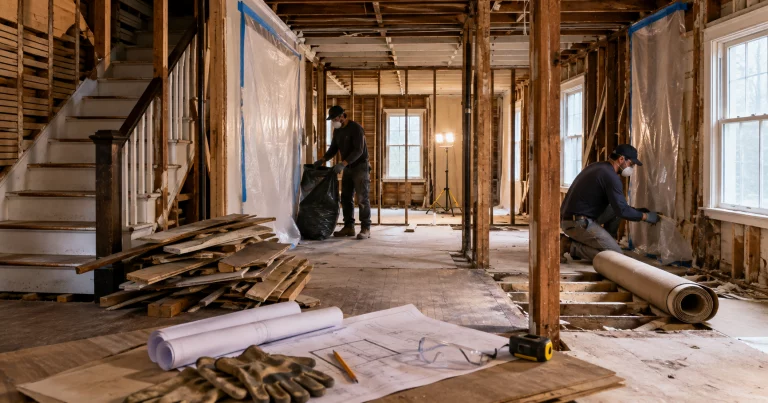
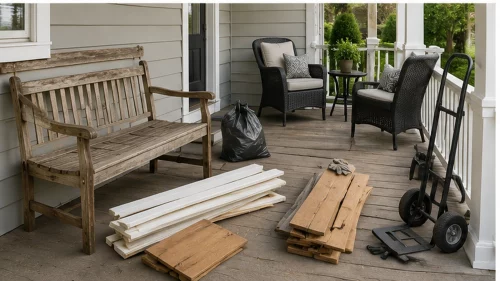 Furniture rearrangement creates little waste, but structural porch improvements can produce old decking, railings, trim, lumber, roofing materials, hardware, and damaged built-ins.
Separate reusable pieces before demolition starts.
Keep nails and screws controlled so they do not end up in the lawn, driveway, or walkway.
For some smaller porch renovation projects, Waste Removal USA’s 10-yard cleanup container may provide enough capacity for approved construction debris. The correct size depends on what is being removed, the material weight, and local loading requirements.
Do not mix paint, chemicals, batteries, or other restricted materials into an ordinary renovation load without confirming the correct handling method.