How Do You Make a Small Front Porch Look Better?
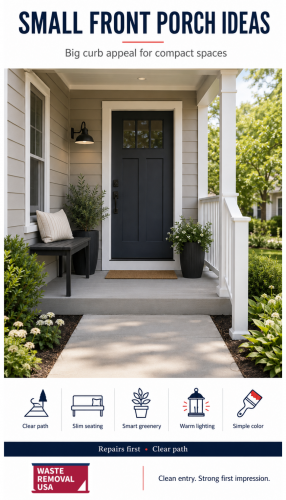 The easiest way to improve a small front porch is to simplify it. Remove items that do not support the entrance, repair visible damage, and create one clear focal point such as the front door, a pair of planters, or a compact seating area.
Start by looking at the porch from the street. Pay attention to the door, steps, railings, lighting, house numbers, plants, and anything that makes the entrance feel crowded. Small front porch curb appeal often improves more from removing visual clutter than from adding more decorations.
A simple plan might include a clean doormat, one or two planters, refreshed lighting, a painted door, and a small bench. These updates can make the porch feel finished without taking away valuable walking space.
How Do You Organize a Front Porch?
If you are wondering how to organize a front porch, begin with movement. The route from the steps or walkway to the door should remain open and easy to use. Remove packages, shoes, garden tools, toys, hoses, empty pots, and seasonal decorations that no longer need to be there. Move rarely used items to another storage area rather than trying to hide everything behind furniture. Then create simple zones. The doorway is the arrival zone and should remain open. A corner may hold seating. Another small area can hold plants or a narrow storage bench. Avoid placing décor where it narrows the stairs, blocks a railing, interferes with the door swing, or creates a tripping hazard. For a small porch, fewer larger pieces often look better than many tiny objects. Two coordinated planters usually create a cleaner look than a collection of mismatched containers crowded around the entrance.What Furniture Works Best on a Small Front Porch?
Furniture should match the scale of the porch. Measure the usable floor area before buying a chair, bench, table, or storage piece, and include the space needed for the front door to open fully. Good options for a small house porch include:- A narrow bench
- One compact outdoor chair and side table
- Two small chairs if the porch width allows
- A small bistro set on a wider porch
- A storage bench that combines seating and organization
- Folding or stackable outdoor seating
- A slim plant stand that uses vertical space
How Can Color Improve Small Front Porch Curb Appeal?
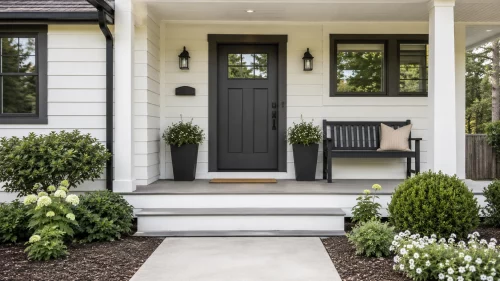 Color can give a small porch personality without using floor space. The front door is often the easiest place to make a noticeable change.
Choose a color that works with the siding, brick, stone, roof, trim, and other permanent exterior elements. A strong door color can create a focal point, while a softer neutral can make a narrow porch feel calmer and less crowded.
Repeat one or two accent colors in small details such as planters, outdoor cushions, or a doormat. Too many competing colors can make a small entrance look busy.
If you are scraping or sanding old painted surfaces on a home built before 1978, review the EPA’s lead-safe renovation guidance for DIYers before disturbing the paint. Renovation work on older painted surfaces can create hazardous lead dust, so surface preparation matters as much as the final color.
What Plants Work Well on a Small Front Porch?
Plants can add color, height, and softness without requiring major construction. The best choices depend on the amount of direct sun, local climate, wind, and how much room the porch provides. Use plant size strategically. A taller container can frame the door, while one smaller flowering plant can add seasonal color. Hanging plants can preserve floor space when they are attached to a suitable support. Choose containers with drainage holes and avoid allowing water to collect against wood decking, steps, or siding. Large planters can become very heavy once filled with wet soil, so place them only where the porch surface can safely support them. Keep plants trimmed away from handrails, stairs, door hardware, house numbers, and required walking areas. Greenery should make the porch more welcoming, not harder to use.How Can You Decorate a Small Porch Without Making It Feel Crowded?
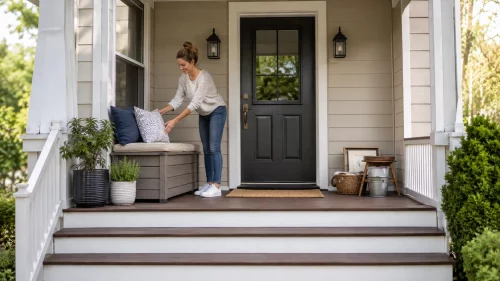 Use a limited number of decorative elements and let the home’s architecture do some of the work. A small porch may only need a doormat, planter, light fixture, seasonal wreath, and one seating element.
Outdoor rugs can visually define a seating area, but choose a size that lies flat and does not create a curled edge near a doorway or step. Use outdoor-rated cushions and textiles that can tolerate moisture and sunlight.
Wall-mounted décor can save floor space, but do not attach heavy items to siding or trim without knowing what is behind the surface. Decorative objects should also stay clear of electrical equipment, vents, and door movement.
Seasonal decorating is easier when you have a simple base. Keep the furniture and planters consistent, then change a wreath, pillow cover, or small accent instead of rebuilding the entire display every few months.
What Lighting Is Best for a Small Front Porch?
Good porch lighting improves both appearance and visibility. The goal is to illuminate the door, steps, and approach without overwhelming a small façade with too many fixtures. An existing wall light may only need cleaning, a suitable replacement bulb, or an updated fixture. Solar pathway lights can help define the walkway when they provide adequate illumination for the location. Decorative battery-powered or outdoor-rated lighting may also add atmosphere without permanent wiring. Any product connected to electricity outdoors should be rated for outdoor use. The Electrical Safety Foundation International’s home electrical safety guidance recommends GFCI protection where electricity and water may come into contact and notes that extension cords are temporary, not permanent wiring solutions. If you want a new hardwired light, additional receptacle, ceiling fixture, or another permanent electrical change, use a qualified electrician and check local permit requirements.How Can You Use Vertical Space on a Small Porch?
Vertical space is valuable when floor space is limited. Wall-mounted planters, narrow shelving designed for outdoor use, hanging baskets, tall plants, and appropriately mounted decorative elements can draw the eye upward. Do not overload porch posts, railings, ceiling trim, or siding with heavy items. Hanging chairs, swings, large baskets, and suspended planters require attachment points capable of supporting the actual load. A simple trellis beside the porch can provide greenery without taking up much floor area. If a trellis or privacy panel is substantial enough to act like a fence, wall, or structural element, check local requirements before installation.What Architectural Details Can Improve a Small House Porch?
Small house front porch ideas often work best when they reinforce the home’s existing architecture. Updated house numbers, door hardware, lighting, trim, brackets, railing details, and paint can make the entrance look more intentional. Do not add decorative brackets, columns, or railings in ways that imply structural support when they are not designed for that job. Existing structural parts should remain accessible for inspection. If railings or steps are loose, damaged, or deteriorated, repair comes before decoration. Changes to guards, stairs, decks, porch framing, roofs, and other structural components may require permits. The International Code Council recommends contacting the local building department before beginning construction because permit requirements depend on the project and local code. Its consumer building-safety guidance specifically lists residential work such as decks and renovations among projects that commonly require permits.Can You Build a Small Front Porch Yourself?
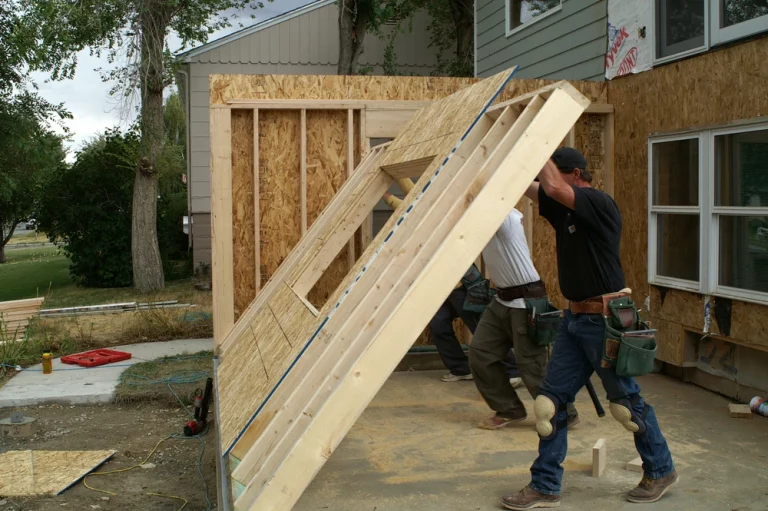
You may be able to build a small front porch yourself if local rules allow it and you have the necessary construction knowledge, but building a porch is very different from decorating one. A new porch can involve footings, foundations, framing, stairs, guards, handrails, roof loads, flashing, water drainage, attachment to the house, and electrical work. A porch that looks simple from the street may still carry significant structural loads. Before you build a small front porch, contact the local building department and determine what plans, permits, setbacks, inspections, and structural requirements apply. If the porch includes a new roof, structural attachment to the house, major stair work, or unfamiliar framing, professional design or construction help may be the safer choice.What Porch Design Works Best for a Small House?
A good porch design for a small house should look proportional to the façade. The porch should support the entrance rather than visually overpowering the home. Keep rooflines, columns, railings, trim, and colors consistent with the home’s architectural style. A small cottage may suit a simple covered entry with traditional posts, while a contemporary house may look better with cleaner lines and fewer decorative details. Symmetry can work well on a compact façade, but perfect matching is not required. One bench balanced by a large planter can look just as intentional as identical planters on both sides of the door. Waste Removal USA’s covered front porch ideas can help homeowners compare layouts when the project involves more than a simple decorating refresh.How Do You Add Privacy to a Small Front Porch?
Privacy can be difficult on a front porch because the entrance still needs to feel open and visible. Instead of fully enclosing the space, use partial screening where appropriate. Tall plants, a small trellis, or outdoor curtains on a covered porch can soften views without turning the front entry into a closed room. Keep visibility and safety in mind. Do not block house numbers, lighting, the walkway, stairs, or the ability to see someone approaching the door. Dense plants should not create hiding areas directly beside the entrance. If you want to fully screen the porch, treat that as a larger enclosure project involving framing, door placement, weather exposure, and possible permit requirements.What Are Good Budget Ideas for Small Porches?
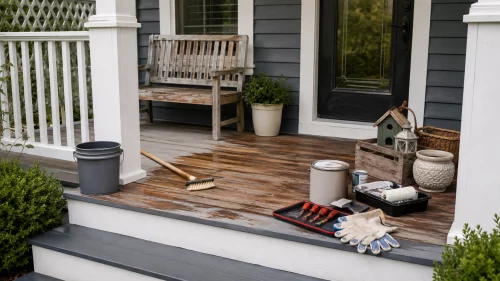 Budget-friendly outdoor ideas for a small porch usually focus on cleaning, paint, repair, rearrangement, and reuse rather than new construction.
Try:
- Appropriately cleaning the porch surface
- Repainting or staining sound wood
- Refreshing an existing bench
- Reusing durable planters
- Replacing a worn doormat
- Adding one coordinated outdoor rug
- Updating exterior-rated lighting
- Repainting the front door
- Replacing damaged or dated house numbers
- Adding one or two plants
- Removing decorations that make the entry look cluttered