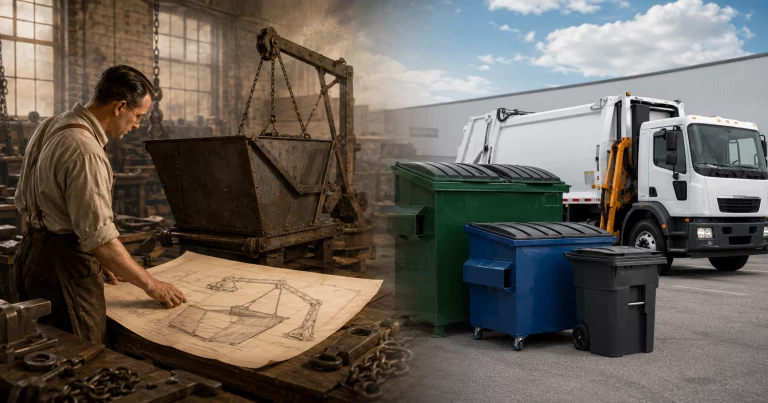
What Is Included in Trampoline Removal?
Trampoline removal may sound like one task, but it usually includes several steps. The more steps involved, the higher the cost may be. A typical trampoline removal project may include:- Clearing access to the trampoline
- Removing the safety net
- Taking off poles and padding
- Removing springs
- Separating the mat
- Breaking down the metal frame
- Carrying pieces out of the yard
- Sorting metal from fabric and plastic
- Loading materials
- Hauling items for disposal or recycling
- Cleaning up small leftover parts
Average Trampoline Removal Cost
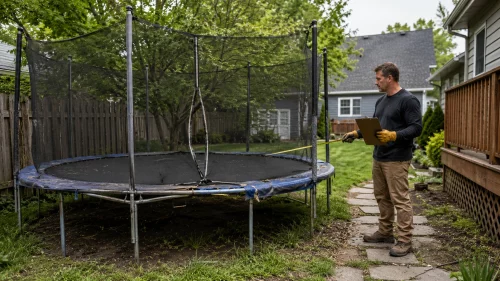 A realistic trampoline removal cost estimate often starts around $130 for smaller, straightforward jobs. Many full-service removals fall in the $150 to $300 range, especially when the trampoline must be dismantled, carried out of a fenced backyard, loaded, and hauled away.
Costs may be higher when:
- The trampoline is large
- The frame is rusted
- Springs are stuck
- Net poles are bent
- Access is tight
- The trampoline is surrounded by weeds
- The yard is muddy or sloped
- The removal requires extra labor
- Disposal or recycling fees are higher locally
- The trampoline is part of a bigger backyard cleanup
Cost Factor 1: Trampoline Size
Size is one of the biggest cost factors. A small exercise trampoline or kids’ trampoline may be simple to carry. A full-size backyard trampoline can have a large frame, dozens of springs, safety poles, netting, foam padding, anchors, ladders, and bulky mat material. Common backyard trampoline sizes include:- 8-foot
- 10-foot
- 12-foot
- 14-foot
- 15-foot
- Rectangle or oval trampolines
- In-ground trampolines
Cost Factor 2: Condition and Safety
A newer trampoline in good condition is usually easier to disassemble. An old trampoline can be more difficult and more dangerous. Watch for:- Rusted springs
- Bent frame sections
- Torn mat fabric
- Rotten foam padding
- Broken net poles
- Missing bolts
- Sharp metal edges
- Loose anchors
- Sun-brittle plastic
- Wasps or pests
- Weeds growing through the frame
Cost Factor 3: Disassembly Labor
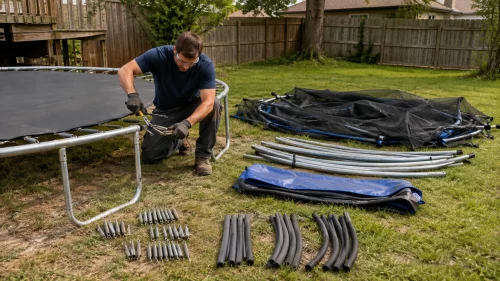 Disassembly is often the most time-consuming part of trampoline removal. Springs can be tight. Bolts can rust. Frame sections can stick together. Safety nets and poles can be awkward. A trampoline that was easy to assemble years ago may not come apart easily after weather exposure.
DIY disassembly may save money if you have the right tools and enough time. Useful tools may include work gloves, eye protection, spring puller, socket set, adjustable wrench, pliers, rubber mallet, penetrating oil, and heavy-duty bags for small parts.
Work in order:
- Remove ladder and accessories.
- Take down the safety net.
- Remove net poles and padding.
- Remove springs carefully.
- Fold or roll the mat.
- Separate frame sections.
- Sort metal, fabric, foam, and plastic.
- Sweep or magnet-scan for small metal parts.
Cost Factor 4: Yard Access
Access affects labor and price. A trampoline in an open front yard is easier to remove than one behind a narrow gate, up a hill, across soft ground, or behind landscaping. Access problems may include:- Narrow gates
- Stairs
- Fences
- Muddy ground
- Long carry distance
- Sloped yards
- Tree roots
- Overgrown weeds
- Tight alley access
- Limited parking
- HOA or street restrictions
Cost Factor 5: Disposal and Recycling
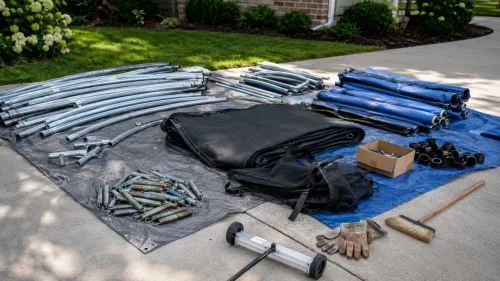 Trampolines are mixed-material items. The metal frame and springs may be recyclable where local scrap or metal recycling options exist. The mat, netting, foam pads, plastic caps, and straps may not be accepted in the same stream.
EPA encourages reducing, reusing, and recycling materials where possible, including donating usable items and checking local recycling options before disposal.
Sort trampoline materials into:
- Metal frame
- Springs
- Net poles
- Mat
- Safety net
- Foam padding
- Plastic caps
- Ladder
- Anchors
- General trash
DIY Trampoline Removal vs. Hiring Help
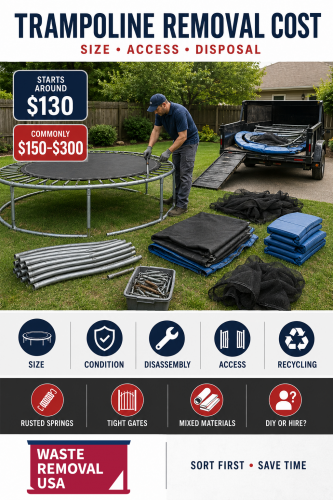 DIY trampoline removal can lower costs if the trampoline is safe to handle and you have the time, tools, and transportation. Hiring help may make more sense if the trampoline is large, rusted, unsafe, difficult to access, or part of a bigger cleanup.
DIY may work when:
- The trampoline is small
- The frame is not rusted
- You have basic tools
- You can safely lift the pieces
- You have a vehicle or trailer
- Local disposal options are clear
- The trampoline is large
- Springs are rusted or stuck
- The frame is bent
- You cannot safely lift pieces
- Access is difficult
- You need the yard cleared quickly
- The project includes other bulky outdoor debris
Trampoline Removal Philadelphia
If you are looking for trampoline removal Philadelphia, check local bulk item rules before assuming the trampoline can go out with regular trash. The City of Philadelphia’s residential bulk collection program says residents can schedule bulk item pickups for up to four items per appointment. A trampoline may need to be dismantled before pickup or disposal. Because local rules can change and bulky outdoor items may have size or material restrictions, Philadelphia residents should confirm current acceptance requirements before putting trampoline parts at the curb. For larger cleanups in the area, Waste Removal USA’s Philadelphia service page can help homeowners compare debris container options for broader home or yard projects.Trampoline Removal Virginia Beach
If you are searching for trampoline removal Virginia Beach, start with the city’s current trash and recycling information. The City of Virginia Beach public works page includes bulky/large item pickup, landfill and resource recovery center information, household hazardous waste information, and alternative disposal options. Before setting out trampoline pieces, confirm whether the city accepts dismantled trampoline parts, how they must be prepared, and whether metal pieces should be handled separately. For larger property cleanups, Waste Removal USA’s Virginia Beach service page can help with local cleanup planning.Can You Get Free Trampoline Disposal Near Me?
Free trampoline disposal near me is possible, but it depends on condition and local options. A working trampoline may be easier to give away than one that is rusty, torn, or missing parts. Possible free or low-cost options include:- Giving away a usable trampoline locally
- Offering frame parts for scrap metal reuse
- Checking municipal bulky item pickup
- Separating metal for recycling
- Posting usable parts for repair projects
- Asking local recreation groups if they need replacement parts
When a Trampoline Is Part of a Bigger Backyard Cleanup
Sometimes the trampoline is only one piece of a larger yard project. You may also be removing broken patio furniture, branches, old toys, torn outdoor rugs, rotted wood, damaged fencing, planters, leaves, or storm debris. In that case, plan the whole cleanup instead of treating the trampoline separately. Separate metal from yard debris and general trash. If the project includes branches, leaves, weeds, and outdoor material, our active yard debris removal guide can help with sorting and cleanup planning. For larger residential cleanups, Waste Removal USA’s home cleanup container options may be useful when there is more than a trampoline to remove.How to Lower Trampoline Removal Cost
You may be able to reduce removal cost by doing some preparation before pickup or hauling. Ways to lower cost include:- Clear a path to the trampoline.
- Remove toys, furniture, and yard clutter nearby.
- Take photos before requesting a quote.
- Measure the trampoline size.
- Remove easy accessories yourself.
- Separate metal from fabric and plastic.
- Place small parts in a bag or box.
- Check municipal bulky item rules first.
- Ask whether disassembly is included in the estimate.
- Combine removal with other approved cleanup items only when it lowers the total cost.