How Much Does It Cost to Go to the Dump in 2026?
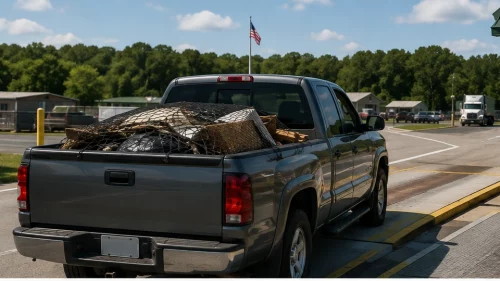 For a small residential load, you might pay approximately $10 to $40 as a minimum or flat fee at some public facilities. Larger bulk loads are frequently charged by weight, with current public examples ranging from roughly $40 to around $100 per ton, while certain regions and materials can cost significantly more.
These are not national averages.
Consider three current public examples:
| Public Facility | Example 2026 Disposal Pricing |
| Orange County, Florida | $9 minimum; $54.20/ton regular garbage; $41.10/ton construction and demolition material |
| Larimer County, Colorado | $20 car/SUV; $37 pickup or cargo van; $56.50/ton for certain large-container waste plus applicable surcharge |
| Fairfax County, Virginia | $21 for 1–5 bags; $98/ton bulk trash with $39 minimum; $109/ton for limited brick, concrete, dirt, rocks, toilets, sinks, and tubs with $49 minimum |
What Is a Landfill Tipping Fee?
A tipping fee is the charge a disposal facility assesses for accepting waste. The fee is commonly quoted per ton, although minimum charges may apply. For example, if a facility charges $60 per ton and your load weighs 1,000 pounds, the weight-based portion would equal half a ton, or $30. If the facility has a $40 minimum charge, however, you would still pay $40. This is why bringing a very small load to a weight-based facility does not always produce a very small bill. The facility needs to cover:- Staffing
- Heavy equipment
- Environmental controls
- Leachate management
- Landfill gas systems
- Scales
- Roads
- Regulatory compliance
- Long-term facility management
How Do Dumps Calculate What You Owe?
Most public disposal facilities use one or more of four basic systems.Weight-Based Pricing
Your vehicle is weighed when you enter. After unloading, it is weighed again. The difference is the weight of the material you disposed of. For example: Truck entering: 6,000 pounds Truck leaving: 5,200 pounds Waste weight: 800 pounds Because 800 pounds equals 0.4 ton, a $75-per-ton tipping fee would equal $30 before minimum charges, taxes, environmental fees, or special-material surcharges.Vehicle-Based Pricing
Some facilities charge a fixed price based on vehicle type. Categories may include:- Passenger car
- SUV
- Minivan
- Pickup
- Cargo van
- Trailer
- Moving truck
Volume-Based Pricing
Some sites calculate the amount of waste in cubic yards. A facility may estimate: Length × width × height ÷ 27 = cubic yards Volume pricing is especially common for trailers or trucks where scales are not used.Item-Based Pricing
Certain objects receive a separate fee regardless of the rest of the load. Examples can include:- Mattresses
- Refrigerators
- Tires
- Propane cylinders
- Televisions
- Appliances
- Furniture
Why Do Landfill Disposal Fees Vary So Much?
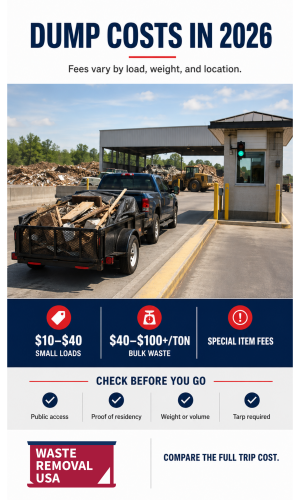 Landfill disposal fees reflect local operating conditions.
Costs can be influenced by:
- Available landfill capacity
- Real estate prices
- State regulations
- Local taxes
- Environmental requirements
- Transportation distance
- Labor expenses
- Facility ownership
- Material-processing costs
- Recycling programs
What Is the Difference Between a Landfill and a Transfer Station?
A landfill is the final disposal site for municipal solid waste and other approved materials. A transfer station is an intermediate facility. Waste arrives at the transfer station in:- Cars
- Pickup trucks
- Collection trucks
- Small commercial vehicles
How Much Does It Cost to Take a Pickup Truck to the Dump?
A pickup truck might cost around $30 to $40 at a facility using simple vehicle-based pricing, but it can cost considerably more when the truck is weighed. For example, Larimer County’s current schedule charges a standard pickup truck or cargo van a $37 flat fee under its applicable load rules. At a weight-based facility, however, the truck itself does not determine the bill. The weight of the debris does. A pickup filled with lightweight household furniture could weigh much less than the same truck filled with:- Concrete
- Dirt
- Roofing
- Tile
- Plaster
- Brick
Does a Trailer Cost More at the Dump?
Often. Trailers may be charged by:- Weight
- Cubic yard
- Length
- Axle count
- Material type
What Materials Cost More to Dump?
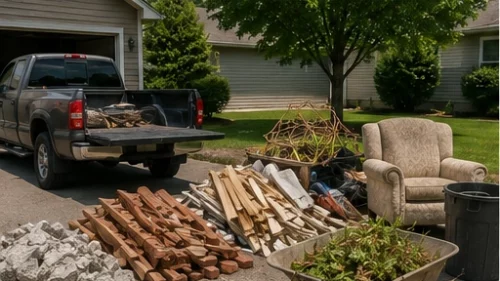 Heavy or special-handling materials frequently have different rates.
Concrete, Brick, Dirt, and Rock
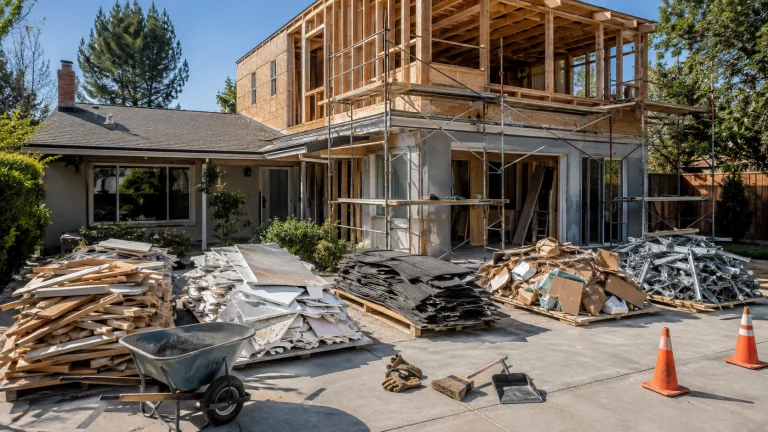
Dense material can become expensive because even a small volume weighs a great deal. Fairfax County’s current residential rate for limited amounts of brick, concrete, dirt, and rocks is $109 per ton with a $49 minimum. If you are removing a patio, foundation, driveway, or similar material, review Waste Removal USA’s concrete disposal guide before assuming it should be mixed with ordinary household debris.Tires
Facilities frequently charge by tire or by ton. Orange County, Florida, currently charges $2 each for up to eight qualifying passenger tires, while larger tire loads use a different pricing structure.Refrigerators and Air Conditioners
Refrigerant-containing appliances often have additional processing fees.Mattresses
Some facilities charge by mattress rather than weight.Yard Waste
Source-separated yard waste may have a different fee from household garbage. Keeping it separate can sometimes reduce disposal costs.What Happens if You Bring a Mixed Load?
Mixing materials can cost more. Orange County, Florida, explicitly states that mixed loads are charged at the higher applicable tonnage rate. For example, loading yard material together with household trash may eliminate a lower yard-waste rate. The same issue can occur with:- Concrete and household trash
- Recyclable metal and general debris
- Clean wood and garbage
- Yard debris and construction material
How Much Does It Cost to Dump a Cleanup Container?
People searching how much does it cost to dump a dumpster are usually asking about the disposal portion of a large container-based cleanup. At the landfill level, these loads are generally weighed and charged by the ton. Larimer County’s 2026 schedule, for example, lists certain roll-off waste at $56.50 per ton plus applicable surcharges, with a one-ton minimum. The homeowner’s cleanup-container price works differently. Your service may include:- Delivery
- Pickup
- A specified rental period
- A weight allowance
- Disposal
- Transportation
Why Does Weight Matter So Much?
One cubic yard of household furniture and one cubic yard of concrete occupy the same amount of space. They do not weigh anything close to the same amount. This is why disposal planning needs to consider volume and weight. Heavy project materials include:- Concrete
- Brick
- Dirt
- Roofing
- Plaster
- Tile
- Stone
- Certain flooring materials
Are There Minimum Dump Fees?
Yes, and minimum charges are one reason small dump trips sometimes feel expensive. Current examples include:- Orange County, Florida: $9 minimum
- Fairfax County, Virginia: $39 minimum for bulk household trash
- King County, Washington: minimum charges apply to self-haul disposal
What Other Fees Can a Dump Charge?
The tipping fee may not be your only expense. Possible charges include:- Environmental surcharges
- State fees
- Special-item fees
- Appliance fees
- Tire fees
- Mattress fees
- Unsecured-load penalties
- Nonresident fees
- Commercial-user rates
- Minimum charges
What Are the Hidden Costs of Going to the Dump Yourself?
The true cost of rubbish removal includes more than the scale-house receipt.Fuel
A landfill or transfer station may be 20, 30, or more miles away. Several trips can consume substantial fuel.Time
A trip can include:- Loading
- Driving
- Waiting at the scale
- Unloading
- Weighing out
- Driving home
Vehicle Wear
Heavy loads affect:- Tires
- Brakes
- Suspension
- Transmission
- Fuel economy
Tarp and Load-Securement Equipment
You may need straps, a tarp, or other equipment to transport the load legally and safely.Labor
Furniture, construction debris, and other heavy materials can require more than one person to load and unload. Compare the entire project rather than the entry fee alone.When Does Driving to the Dump Make Sense?
Self-hauling works particularly well for:- A few bags of unwanted material
- One or two bulky items
- A small garage cleanup
- Source-separated recyclable material
- A small load that fits safely in your vehicle
- A facility located nearby
When Does Going to the Dump Stop Making Sense?
Self-hauling becomes less efficient when a project generates material continuously or requires several trips. Examples include:- Whole-home cleanouts
- Large garage cleanouts
- Basement cleanouts
- Moving cleanouts
- Major landscaping projects
- Remodeling
- Demolition
What Does a “Landfill Near Me” Search Not Tell You?
Finding the nearest facility is only the first step. Before driving there, check:- Does it accept the public?
- Does it accept your address or county?
- Is proof of residency required?
- What materials does it accept?
- What are today’s operating hours?
- What are the current rates?
- Is there a minimum charge?
- Is the load charged by weight or volume?
- Does a trailer have different pricing?
- Does the load need to be tarped?
- What payment methods are accepted?
- Are special items charged separately?
Do You Need Proof of Residency at a Public Dump?
Sometimes. Municipal facilities are often supported partly by local taxes or utility fees, so some restrict discounted rates or access to local residents. Fairfax County, for example, requires proof of county residency to use its residential disposal program. Acceptable documentation may include:- Driver’s license
- Utility bill
- Property-tax statement
- Other government documentation
What Should Never Be Assumed to Be Ordinary Landfill Waste?
Do not automatically load every unwanted product together. Potentially special-handling materials include:- Paint
- Solvents
- Motor oil
- Pesticides
- Pool chemicals
- Propane cylinders
- Automotive batteries
- Rechargeable batteries
- Fuels
- Unknown chemicals
Can Batteries Go to the Dump?
Do not assume they can. EPA specifically states that lithium-ion batteries and devices containing them should not go in household garbage or ordinary recycling bins because damaged batteries can start fires. Use an appropriate battery recycler or household hazardous waste collection program. Separate rechargeable batteries before dumping junk from garages, workshops, home offices, toys, or electronics.What About an Old Toilet?
An old porcelain toilet may be accepted as construction material, inert material, or a bulky item depending on the facility. Pricing also varies. Fairfax County currently includes toilets, sinks, and bathtubs within its limited residential brick, concrete, dirt, and rock category at $109 per ton with a $49 minimum. Another facility may classify the same toilet differently. Remove water, detachable non-porcelain parts, and any prohibited material as required by the receiving site, and verify acceptance before loading it.How Much Is Waste Management Compared with a Dump Trip?
If by how much is waste management you mean recurring household trash service, that is a different cost from self-haul disposal. Household collection prices can include:- Weekly garbage collection
- Recycling
- Carts
- Yard waste
- Bulky-item service
- Local taxes or assessments
How Much Does Waste Management Cost for a Larger Project?
For a project cleanup, waste management costs can include:- Loading
- Transportation
- Disposal
- Container capacity
- Material weight
- Service duration
- Special handling
Can Recycling Reduce Your Dump Cost?
Sometimes. Before heading to the landfill, separate materials that have dedicated recycling options. Potential examples include:- Scrap metal
- Cardboard
- Certain electronics
- Clean concrete
- Yard debris
- Appliances
- Batteries
What Should You Expect When You Arrive at the Dump?
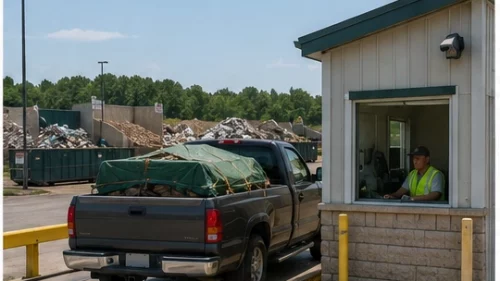 The process varies, but a weight-based facility usually works like this:
1. Enter the Scale House
Tell the attendant what you are carrying. You may need identification or residency documentation.2. Get Weighed
Stay in the vehicle unless instructed otherwise.3. Follow Directions to the Correct Area
Facilities may have different unloading zones for:- Garbage
- Metal
- Concrete
- Yard waste
- Appliances
- Other material
4. Unload
Follow facility safety rules and stay clear of heavy equipment.5. Return to the Scale
Your empty or lighter vehicle is weighed again.6. Pay the Disposal Charge
The difference between your inbound and outbound weights determines the amount of material disposed of when tonnage pricing applies. Keep your receipt if the disposal is connected to a business, renovation, rental property, or other project where documentation may be useful.How Can You Make a Dump Trip Cheaper?
Good preparation can lower the total cost.- Check rates first.
- Separate lower-cost waste streams.
- Recycle metal when appropriate.
- Donate usable belongings.
- Avoid several half-full trips.
- Secure and tarp the load.
- Do not mix prohibited materials.
- Check whether residency discounts apply.
- Verify special-item charges.
- Compare the nearest facility with other permitted local options.