Step 1: Wait for Official Clearance Before Entering
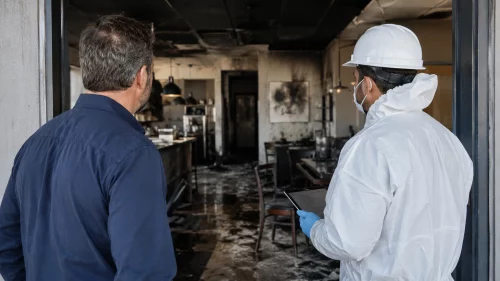 Do not enter the building until the fire department, building official, property owner, or other responsible authority says it is safe. A fire-damaged business can contain weakened floors, unstable ceilings, electrical hazards, gas hazards, water damage, hot spots, sharp debris, contaminated materials, and poor air quality.
Even if the fire looked small from outside, smoke, heat, and water may have traveled far beyond the burn area. A back office fire can affect inventory. A kitchen fire can affect ceiling cavities. A warehouse fire can affect racking, forklifts, stored chemicals, wiring, and roof structure.
Before entry, confirm:
- The fire is fully extinguished.
- Utilities are safe or shut off.
- The structure has been checked.
- No restricted investigation areas are being disturbed.
- Entry is approved by the proper authority.
- Workers have the right protective equipment.
Step 2: Contact Insurance and Start Documentation
Call your insurance carrier as soon as possible. Do this before throwing anything away unless the item creates an immediate safety hazard. The cleanup process should support the claim, not erase evidence. Document:- Burned areas
- Smoke-damaged rooms
- Water-damaged areas
- Damaged equipment
- Ruined inventory
- Broken windows and doors
- Damaged documents
- Lost furnishings
- Temporary security costs
- Emergency repairs
- Cleanup expenses
- Lost business access
Step 3: Secure the Property
Once emergency responders release the site, the building may need to be secured quickly. Broken windows, damaged doors, roof openings, and exposed inventory can create theft, weather, and liability risks. Common emergency protection steps include:- Boarding broken windows
- Covering roof openings
- Locking or fencing unsafe areas
- Posting warning signs where appropriate
- Turning off damaged utilities
- Moving undamaged inventory to a safe area
- Preventing unauthorized access
- Setting up temporary lighting or security
Step 4: Bring in the Right Inspectors
A business fire can affect many building systems. A visual look is not enough to confirm that the property is safe or repairable. Depending on the damage, inspections may be needed for:- Structural framing
- Roofing
- Electrical systems
- HVAC
- Plumbing
- Fire sprinklers
- Fire alarms
- Gas lines
- Elevators
- Commercial kitchen systems
- Racking or shelving
- Stored chemicals
- Asbestos, lead paint, or other regulated materials
Step 5: Separate the Site Into Cleanup Zones
A business fire cleanup works better when the site is divided into zones. Not every room needs the same treatment, and not every item should be handled the same way. Useful zones include:- Direct burn area
- Heavy smoke area
- Light smoke area
- Water-damaged area
- Unaffected or protected area
- Salvage area
- Disposal area
- Hazardous or unknown material area
- Employee-only restricted area
Step 6: Remove Standing Water and Start Drying
Many business fires include water damage from sprinklers, fire hoses, or suppression systems. That water must be addressed quickly because it can damage flooring, walls, wiring, documents, inventory, insulation, and equipment. Drying may require:- Water extraction
- Dehumidifiers
- Air movers
- Moisture meters
- Removal of wet porous materials
- Opening wall cavities where needed
- HVAC evaluation
- Mold prevention steps
Step 7: Handle Soot and Smoke Carefully
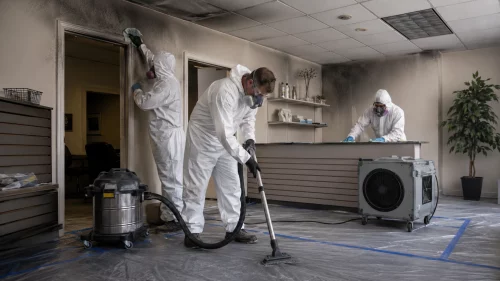 Soot is not ordinary dust. It can be oily, acidic, fine, and difficult to remove. Smoke residue can settle on walls, ceilings, inventory, vents, light fixtures, electronics, documents, textiles, and equipment.
Avoid wiping soot randomly across surfaces. Dry soot, oily soot, and protein-based smoke residue may require different cleaning methods. The wrong cleaning product can smear residue, set stains, or spread odor.
Professional smoke and soot cleanup may include:
- HEPA vacuuming
- Dry cleaning sponges
- Surface-specific cleaners
- Deodorization
- Air filtration
- Content cleaning
- HVAC duct evaluation
- Sealing or replacing damaged materials
Step 8: Decide What Can Be Salvaged
Not everything damaged by a fire must be discarded, but not everything can be saved. The decision depends on material type, exposure, business use, safety, cost, and insurance approval. Items that may be salvageable include:- Some metal fixtures
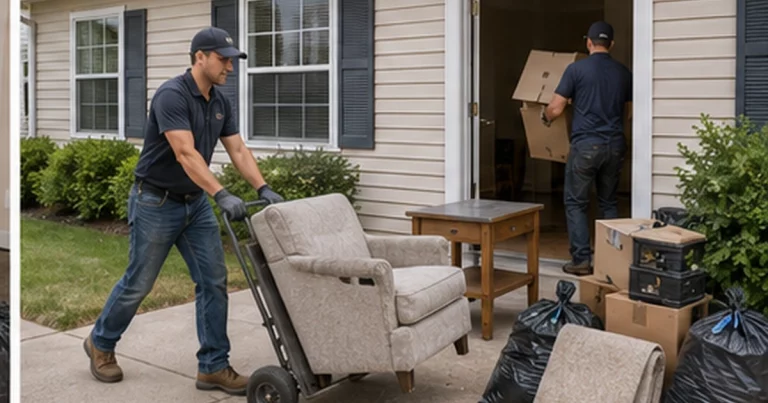
- Hard furniture
- Certain documents after professional drying
- Some electronics after evaluation
- Tools or equipment with light smoke exposure
- Inventory in sealed packaging, depending on product type
- Burned furniture
- Charred wood
- Saturated ceiling tile
- Smoke-embedded fabrics
- Damaged carpet and padding
- Contaminated food products
- Melted plastics
- Broken glass
- Unsafe shelving
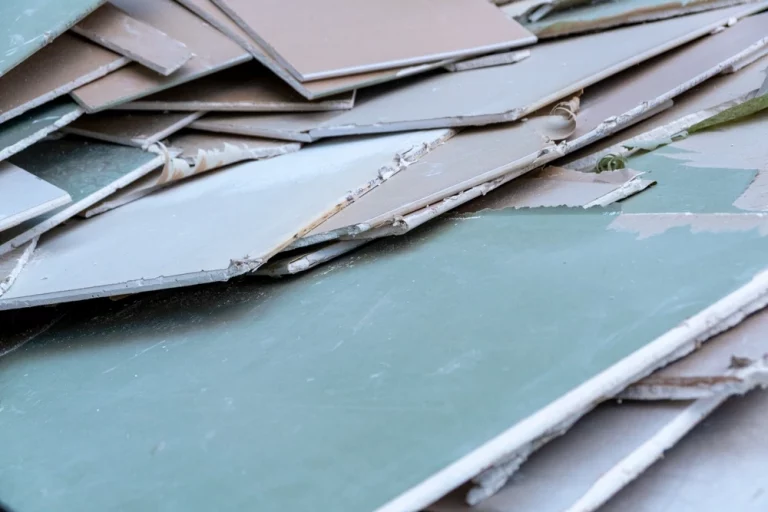
- Damaged drywall and insulation
Step 9: Plan Fire Debris Removal by Material Type
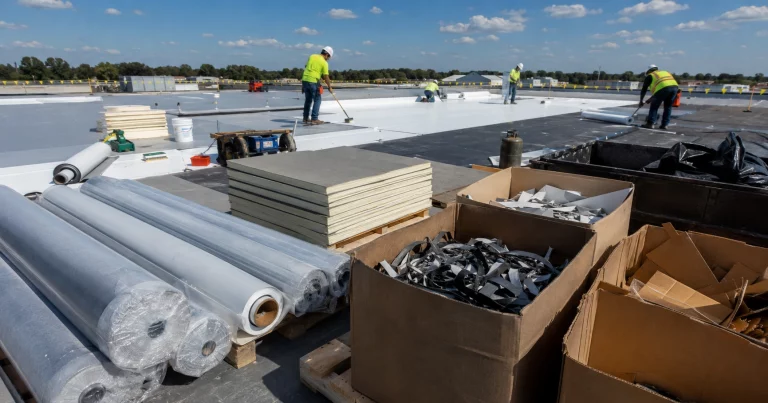
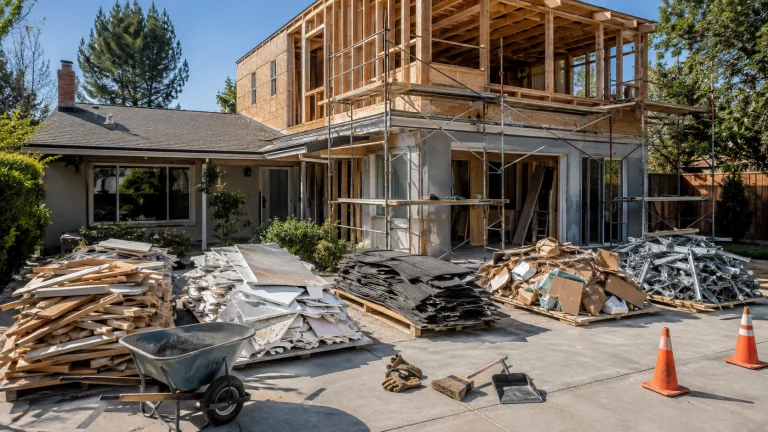
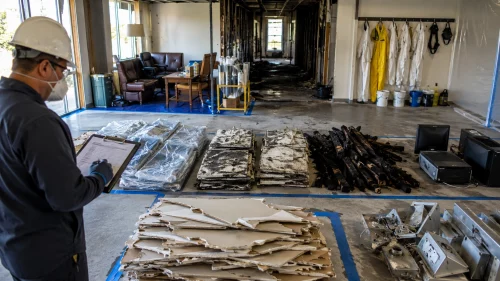 Fire debris is often mixed, heavy, sharp, wet, and contaminated with soot. It may include drywall, ceiling tile, metal, glass, carpet, office furniture, shelving, fixtures, packaging, charred wood, insulation, and damaged merchandise.
EPA explains that construction and demolition debris includes materials generated during construction, renovation, and demolition projects. Fire restoration debris often overlaps with those material streams once damaged building materials are removed.
Before loading anything, separate:
- Burned building materials
- Wet drywall and ceiling tile
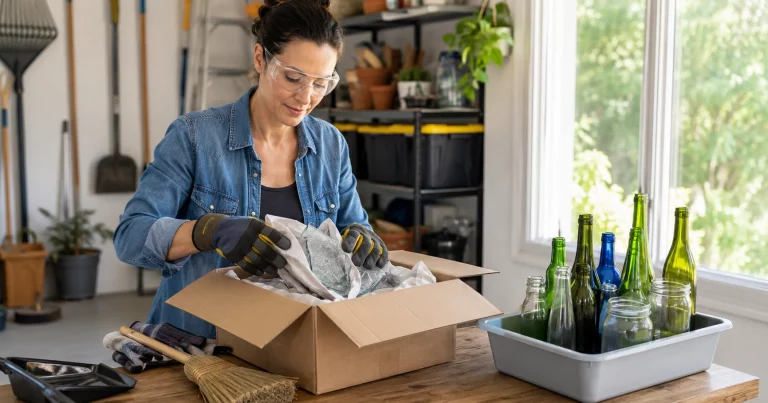
- Broken glass
- Metal fixtures
- Electronics
- Hazardous or questionable items
- Food, chemicals, or regulated inventory
- Salvageable items
- Insurance-review items
Step 10: Restore Utilities and Building Systems
Do not turn systems back on just because power or water is available. Fire, heat, soot, and water can damage equipment that appears intact. Have qualified professionals inspect:- Electrical panels
- Outlets and wiring
- HVAC units
- Ductwork
- Sprinkler systems
- Fire alarms
- Emergency lighting
- Plumbing
- Gas lines
- Commercial appliances
- Security systems
- Data and communications equipment
Step 11: Rebuild With Business Continuity in Mind
Restoration is not only about replacing damaged materials. It is about getting the business back to a safe, code-compliant, workable condition. During rebuilding, consider:- Temporary office or sales space
- Inventory replacement timing
- Employee access
- Customer communication
- Vendor deliveries
- Code upgrades
- Fire protection improvements
- Accessibility requirements
- Lease or landlord responsibilities
- Phased reopening
- Final inspections
Step 12: Update Fire Prevention and Emergency Planning
After cleanup, review what happened and what should change before reopening. OSHA’s emergency preparedness guidance explains that emergency action plans help organize employer and worker actions during workplace emergencies and that proper worker training can reduce injuries and facility damage. Review:- Fire alarms
- Extinguishers
- Sprinklers
- Hood suppression systems
- Exit routes
- Emergency lighting
- Electrical practices
- Storage of flammable materials
- Employee training
- Evacuation maps
- Shutdown procedures
- Emergency contacts
- Fire department access
Common Mistakes After a Business Fire
 Avoid these mistakes: