What Are Examples of Sustainability in Everyday Life?
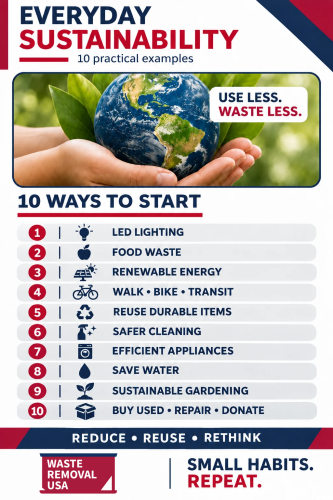
 Common sustainability examples in everyday life include:
- Switching to efficient lighting and reducing wasted electricity.
- Preventing food waste and composting appropriate scraps.
- Using renewable electricity or rooftop solar when practical.
- Walking, biking, using transit, or combining vehicle trips.
- Reusing bags, bottles, containers, and other durable products.
- Choosing cleaning products with safer ingredients.
- Selecting energy-efficient appliances when replacement is needed.
- Conserving water and installing efficient plumbing fixtures.
- Gardening in ways that conserve soil, water, and local resources.
- Buying used, repairing, donating, and reusing products before replacing them.
1. Use LED Lighting and Cut Unnecessary Electricity Use
Switching frequently used incandescent or older inefficient bulbs to quality LED lighting is one of the simplest examples of environmental sustainability at home. The U.S. Department of Energy notes that good-quality LED lighting typically lasts far longer than incandescent lighting. Longer life means fewer replacement lamps as well as lower electricity use. Review DOE’s LED lighting information when comparing products. Efficiency does not stop with the bulb itself. You can also reduce wasted electricity by:- Turning off lights in unused rooms.
- Using daylight when it provides enough illumination.
- Choosing task lighting instead of lighting an entire large room.
- Using timers or occupancy controls where they make sense.
- Avoiding unnecessary decorative lighting that remains on continuously.
2. Prevent Food Waste and Compost Appropriate Scraps
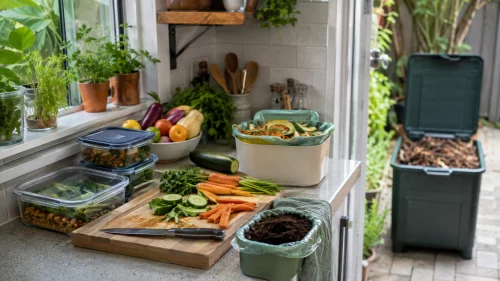 Composting is a strong example of sustainability, but preventing edible food from becoming waste should come first.
Plan meals, check the refrigerator before shopping, freeze food that will not be used in time, and store produce properly. These habits conserve the water, energy, land, labor, and transportation already invested in producing food.
When scraps cannot be eaten, composting can keep suitable organic material in productive use.
EPA describes composting as the managed aerobic decomposition of organic material into a soil amendment. Home compost piles can use materials such as:
- Fruit and vegetable scraps
- Coffee grounds and paper filters
- Crushed eggshells
- Dry leaves
- Grass clippings
- Untreated woody material
- Appropriate shredded paper and cardboard
3. Use Renewable Electricity or Solar When It Fits the Home
Using renewable energy is one of the most recognizable ecological sustainability examples, but rooftop solar is not appropriate for every property. The Department of Energy recommends evaluating factors such as roof condition, tree cover, solar exposure, electricity use, local rates, ownership plans, and financing before installing a home photovoltaic system. DOE explains that using solar power instead of conventional energy sources can reduce carbon and other air pollutants associated with energy production. Its Homeowner’s Guide to Solar can help homeowners evaluate whether a rooftop system makes sense. Solar is not the only option. Depending on your utility and location, you may be able to choose:- Community solar
- Utility renewable-energy programs
- Green power plans
- Renewable-energy certificates through qualifying programs
4. Walk, Bike, Take Transit, or Combine Vehicle Trips
Transportation choices provide practical sustainable living examples because reducing vehicle miles can reduce fuel use and emissions. EPA recommends walking or biking when practical, using public transportation, carpooling, and combining errands so fewer separate vehicle trips are required. See EPA’s transportation pollution-reduction guidance for additional ideas. You do not need to give up a vehicle completely. Try replacing the easiest trips first:- Walk to a nearby destination.
- Bike where safe infrastructure exists.
- Combine grocery shopping with another errand.
- Carpool to events.
- Use transit for suitable commutes.
- Avoid unnecessary idling.
5. Reuse Bags, Bottles, Containers, and Other Durable Items
 Reusable products can reduce demand for disposable items, but simply buying a reusable alternative does not guarantee an environmental benefit.
The key is repeated use.
A durable bag that stays in a closet after two shopping trips has not fulfilled its purpose. The same applies to reusable bottles, mugs, food containers, utensils, and storage products.
Instead of buying a large collection of “eco-friendly” replacements, use what you already own when it is safe and functional.
Practical examples include:
- Keep several reusable shopping bags in the vehicle or near the door.
- Carry a refillable water bottle.
- Reuse durable food-storage containers.
- Choose washable cloths for appropriate cleaning jobs.
- Reuse shipping boxes when practical.
- Decline unnecessary disposable utensils or accessories.
6. Choose Cleaning Products with Safer Ingredients
“Natural,” “green,” and “eco-friendly” are broad marketing terms and do not automatically prove that a cleaning product is safer for people or the environment. A more useful approach is to look for credible third-party criteria. EPA’s Safer Choice program evaluates the ingredients in qualifying cleaning and other chemical products against human-health and environmental standards. Products earning the label must meet the Safer Choice Standard. Use EPA’s Safer Choice product search when you want to find qualifying products. You can also reduce cleaning-related waste by:- Buying concentrates when they fit your needs.
- Using refill systems where practical.
- Following label directions so you do not use excessive product.
- Avoiding unnecessary specialty cleaners.
- Choosing durable cleaning tools.
- Using the correct amount of detergent.
7. Choose Energy-Efficient Appliances When Replacement Is Needed
Energy-efficient appliances are another practical example of sustainability, but the most sustainable decision is not always replacing every older appliance immediately. If an appliance is working well and uses a reasonable amount of energy, continuing to use and maintain it may avoid the materials and manufacturing associated with premature replacement. When an appliance truly needs replacement, compare energy use rather than purchasing on size or appearance alone. ENERGY STAR-certified products meet energy-efficiency specifications established by the U.S. Environmental Protection Agency. Current categories include refrigerators, freezers, dishwashers, clothes washers, dryers, dehumidifiers, heating and cooling equipment, and other household products. Explore ENERGY STAR-certified products before buying. Also consider size. An oversized refrigerator or additional freezer can consume more energy overall even if the individual product is efficient. Maintain appliances so they continue operating effectively, and use appropriate recycling programs when retiring refrigerators, electronics, and other products that require special handling.8. Save Water and Use WaterSense Fixtures
Water conservation is one of the easiest sustainability examples in everyday life because many improvements require little behavioral change. Start by fixing leaks. EPA estimates that the average family can waste thousands of gallons of water per year through household leaks. Check toilets, faucets, outdoor connections, and other plumbing periodically. When a showerhead needs replacement, consider a WaterSense-labeled model. WaterSense-labeled showerheads use no more than 2.0 gallons per minute and must also meet EPA performance criteria. EPA estimates that the average family can save about 2,700 gallons of water per year by installing WaterSense-labeled showerheads. Learn more through EPA’s WaterSense showerhead guidance. Other water-saving habits include:- Turn off the tap while brushing teeth.
- Run full dishwasher and laundry loads when practical.
- Water landscapes based on plant need rather than a fixed habit.
- Repair irrigation leaks.
- Choose climate-appropriate plants.
- Avoid using drinking-quality water unnecessarily for outdoor cleaning.
9. Garden With Soil, Water, and Local Ecology in Mind
Gardening can be a useful environmental sustainability example when it builds healthy soil, conserves water, reduces waste, and supports appropriate local plant life. Sustainable gardening may include:- Composting appropriate food and yard scraps.
- Using finished compost to improve soil.
- Mulching bare soil.
- Selecting plants suited to the local climate.
- Reducing unnecessary fertilizer use.
- Managing irrigation efficiently.
- Sharing tools that are used only occasionally.
- Growing some herbs, vegetables, or fruit where conditions are suitable.
10. Buy Used, Repair, Donate, and Reuse Before Replacing
 One of the most effective sustainable practices is extending the useful life of products that already exist.
Before buying new, consider whether you can:
- Repair the current item.
- Borrow something used only occasionally.
- Rent specialized equipment.
- Buy secondhand.
- Accept a hand-me-down.
- Purchase a refurbished product.
- Donate an unwanted item that remains usable.
- Sell it to someone who can use it.
- Repurpose materials safely.
What Makes a Practice Truly Sustainable?
A sustainable practice should reduce an impact without simply shifting the same problem somewhere else. Consider the entire life of the product or activity:Resources
How much material, water, land, and energy are required?Manufacturing
Does producing the item require significant raw materials or energy?Transportation
How far does the product or activity require people and materials to travel?Use
Does it save energy, water, fuel, or material during everyday operation?Durability
How long will it remain useful?Repairability
Can individual parts be fixed rather than replacing the entire product?End of Life
Can the material be reused, recycled, composted, or otherwise recovered? This is why sustainable examples often favor using existing products longer instead of continually purchasing replacements labeled as “green.”What Are the Three Main Areas of Sustainability?
Sustainability is commonly discussed through environmental, social, and economic dimensions.Environmental Sustainability
Environmental sustainability focuses on natural resources, pollution, ecosystems, waste, climate, water, and energy. Examples of environmental sustainability include renewable energy, water conservation, material reuse, composting, efficient transportation, and protecting natural systems.Social Sustainability
Social sustainability considers the well-being and resilience of people and communities. Examples can include safe working conditions, equitable access to resources, community participation, public health, and infrastructure that serves different populations.Economic Sustainability
Economic sustainability focuses on maintaining economic activity and livelihoods over the long term without consuming resources or creating risks in ways that undermine future stability. The three areas can overlap. A community garden, for example, can improve soil and reduce organic waste while also creating shared community space and access to locally grown food.Is Recycling the Best Example of Sustainability?
Recycling is useful, but it should not be the first strategy in every situation. Reducing consumption and reusing products often preserve more of the energy and resources already invested in an item. A practical order is:- Avoid unnecessary purchases and waste.
- Reduce the amount of material used.
- Reuse or repair items.
- Donate or sell useful products.
- Recycle accepted materials.
- Dispose of what cannot reasonably be recovered.
How Can You Start Living More Sustainably Without Spending Much Money?
Start with habits that save resources instead of buying products. Low-cost sustainability examples include:- Turn off unnecessary lights.
- Adjust heating and cooling responsibly.
- Prevent food waste.
- Use items you already own.
- Repair before replacing.
- Carry reusable bags.
- Walk or combine trips when practical.
- Fix water leaks.
- Borrow rarely used equipment.
- Donate usable items.
- Compost when you have an appropriate system.
- Follow local recycling rules.