Before Reusing Plastic Water Bottles
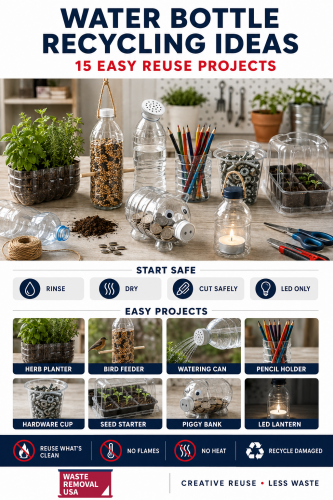
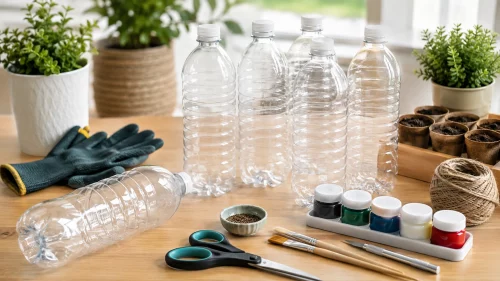 Before starting any water bottle reuse project, rinse the bottle, remove the label, and let it dry completely. Check for cracks, odors, sticky residue, sharp edges, or mold. If the bottle held anything other than water, wash it more carefully or choose a different bottle.
Use caution with:
- Hot liquids
- Food storage
- Open flames
- Sharp cuts
- Small caps around children
- Outdoor sun exposure
- Pet projects that may be chewed
- Projects meant to hold drinking water
1. Small Herb Planters
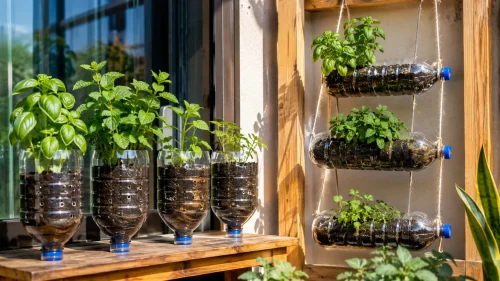 One of the easiest uses for water bottles is a small herb planter. Cut the bottle in half, poke drainage holes in the bottom, add soil, and plant herbs such as basil, mint, parsley, or cilantro.
This project works well on windowsills, patios, balconies, and small kitchens. Use the lower half of the bottle as the planter, or invert the top half into the bottom to create a simple self-watering style planter. Keep the planter on a tray so water does not leak onto the surface below.
2. Bottle Bird Feeder
A clean plastic bottle can become a simple bird feeder. Cut small openings near the lower portion of the bottle, insert a wooden spoon, dowel, or perch, and fill the bottle with birdseed. Hang it from a branch, hook, or garden stand. Keep the feeder clean and dry. If seed gets wet or moldy, empty and wash the bottle before refilling. A bottle feeder is a fun project, but it should be maintained like any other feeder so it does not become a mess in the yard.3. Water Bottle Watering Can
A plastic water bottle makes a quick watering can for houseplants, seedlings, or small garden beds. Use a nail, thumbtack, or small drill bit to poke several tiny holes in the cap. Fill the bottle, screw the cap back on, and gently squeeze or tilt it to water plants. This is one of the most practical things to do with water bottles because it does not require much decorating or equipment. Make smaller holes for delicate seedlings and larger holes for outdoor plants.4. Desk Pencil Holder
A bottle can become a pencil holder, marker cup, or craft-tool container. Cut the bottle to the height you want, smooth the edge with tape or folded paper, and decorate the outside with paint, fabric, paper, stickers, or twine. Use it for:- Pencils
- Markers
- Scissors
- Paintbrushes
- Rulers
- Glue sticks
- Craft sticks
5. Hardware Storage for Nuts, Bolts, and Screws
Plastic bottles are useful in garages and workshops because they are clear and lightweight. Cut off the top portion, smooth the rim, and use the bottom as a sorting cup for nuts, bolts, screws, washers, nails, wall anchors, or small hardware. You can also leave the bottle whole and use it to store one type of fastener at a time. Label the cap or side of the bottle, but avoid storing anything too heavy in thin plastic.6. Hanging Garden
A hanging garden is a creative way to reuse water bottles vertically. Cut openings in the sides of bottles, add drainage holes, fill with soil, and hang them with cord, wire, or sturdy hooks. Use hanging bottle gardens for:- Herbs
- Lettuce
- Small flowers
- Succulents
- Seed starts
- Patio plants
7. Seed Starter Pots
Small plastic bottles can work as seed starter pots. Cut off the top, add drainage holes, fill with seed-starting mix, and plant seeds according to packet directions. When the seedlings are ready to move, gently slide the soil and roots out. This is a good water bottle recycling idea for families, classrooms, and beginner gardeners. It also helps kids see how reuse, gardening, and waste reduction connect.8. Mini Greenhouse Covers
Cut the bottom off a clear plastic bottle and place the top portion over a seedling like a small protective dome. Remove the cap for airflow, or put the cap on temporarily during cold snaps if the plant still has ventilation during the day. These mini covers can help protect young plants from light wind and create a warmer microclimate. Do not leave them sealed in direct sun for long periods because heat can build quickly.9. DIY Drip Irrigation Bottle
For outdoor plants, a bottle can become a slow-release watering tool. Poke a few small holes near the lower sides or cap, fill the bottle with water, and place it near plant roots. Some gardeners bury the bottle partway in soil so water releases slowly. This works best for garden experiments and short-term watering help. Check the soil often. A bottle drip system is not a replacement for a properly designed irrigation system, but it can help with planters or small beds.10. Piggy Bank
A water bottle or larger plastic jug can become a homemade piggy bank. Cut a coin slot, decorate the bottle with paint or paper, and add paper ears, legs, and a tail if you want the classic pig shape. For a simpler version, decorate the bottle as a savings jar and label it for a goal, such as vacation, garden supplies, or craft money. Keep the cap secure so coins do not spill.11. Battery-Operated Lantern
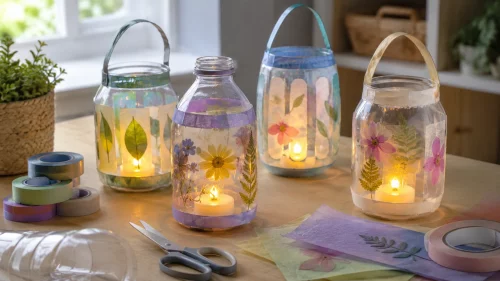 Plastic bottles should not be used with real candles. The U.S. Fire Administration’s candle fire safety guidance warns that candles are open flames and recommends battery-operated flameless candles as a safer option.
For a safer DIY lantern, cut decorative shapes in the bottle, add tissue paper or translucent craft paper, and place a battery-operated tea light inside. This can create a soft glow for parties, patios, classrooms, or kids’ crafts without an open flame touching plastic.
12. Decorative Lamp Shade for LED Lights
You can also reuse water bottles as decorative covers for low-heat LED string lights. Cut bottle bottoms into flower shapes, smooth the edges, and attach one around each LED bulb. This creates a colorful recycled craft display. Use only LED lights that stay cool. Do not place plastic near hot bulbs, open flames, heaters, or high-temperature fixtures.13. Simple Wasp Trap
A plastic bottle can be used as a simple outdoor wasp trap in areas where wasps are a nuisance. Cut off the top third of the bottle, invert it into the lower portion like a funnel, and add bait. Place it away from play areas, doors, patios, and pets. Use caution with this project. Traps can attract insects to the area, so placement matters. Empty and clean the trap carefully, and avoid using it where children or pets may disturb it.14. Pet Food Scoop or Temporary Feeder
A sturdy plastic bottle can become a pet food scoop. Cut the bottle at an angle, keep the handle area if the bottle shape allows, smooth the edge, and use it for dry pet food, birdseed, or garden soil. Be more cautious with homemade pet feeders. Some pets chew plastic, knock pieces loose, or swallow caps. If you make a bottle feeder, use it only under supervision and avoid sharp edges, loose parts, and flimsy plastic.15. Demonstration Water Filter
A bottle can be used for a classroom-style water filter demonstration. Cut off the bottom, invert the bottle, and layer coffee filter, activated charcoal, sand, and gravel. Pour cloudy water through the layers to show how filtration can remove some visible particles. Do not assume this makes water safe to drink. CDC’s emergency drinking water safety guidance says water can be made safer during emergencies through boiling, disinfecting, or filtering, and it warns that water contaminated with fuel, toxic chemicals, or radioactive materials cannot be made safe by boiling or disinfecting. Use bottle filters for education unless you are following verified emergency water treatment guidance.Recycling vs. Reusing Plastic Water Bottles
 Reusing plastic water bottles can be creative, but it is not always the best final destination. If you do not need a bottle project, recycle it correctly if your local program accepts it.
EPA’s plastics material-specific data explains that plastic products are measured across containers, packaging, durable goods, and other categories, and that EPA uses industry and recycling data to measure plastic generation, recycling, combustion, and landfilling. That bigger picture matters because a few crafts are helpful, but everyday plastic reduction and correct recycling make the larger difference.
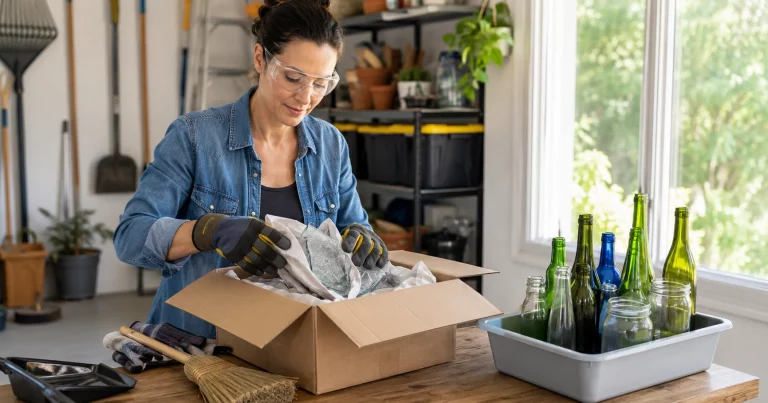
If your community uses single-stream recycling, our single-stream recycling guide explains why clean, accepted materials matter and why contamination can make recycling less effective. If you are also working with glass containers, our glass bottle disposal and reuse guide may help with separate reuse ideas.
When Recycling Is Better Than Reuse
Some bottles are not worth turning into projects. Recycle the bottle instead if it is crushed, cloudy, cracked, sticky, smelly, or hard to clean. Also recycle bottles when you already have enough organizers, planters, and craft supplies. Reuse should prevent waste, not create a drawer full of unfinished plastic projects. A good habit is to choose one project before saving bottles. Keep only the number you need, clean them right away, and recycle the extras. This keeps water bottle reuse practical instead of turning it into clutter.Safety Tips for Recycled Water Bottle Projects
Water bottle projects are simple, but safety still matters. Follow these tips:- Wash bottles before using them.
- Let bottles dry completely.
- Use adult supervision for cutting.
- Smooth sharp edges with tape.
- Avoid open flames.
- Use battery lights only.
- Do not store hot food or drinks in cut bottles.
- Keep caps away from small children.
- Do not use dirty bottles for pet projects.
- Recycle bottles you do not need.