What Counts as Dirt for Disposal?
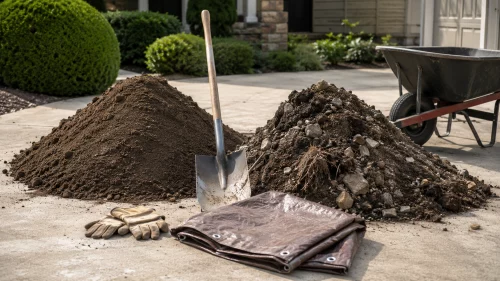 For disposal purposes, “dirt” is usually a broad term. It may include topsoil, fill dirt, clay, sand, excavated soil, garden soil, sod with soil attached, or soil mixed with rocks.
The first step is to identify what you actually have.
Clean Dirt
Clean dirt is soil that is free from trash, chemicals, oil, fuel, paint, treated wood, asphalt, concrete, insulation, household waste, and other contaminants. Clean dirt is the easiest to reuse or place because it may be useful as fill, grading material, landscaping material, or soil amendment depending on quality. Pennsylvania DEP explains that uncontaminated soil, rock, stone, gravel, brick, block, concrete, and used asphalt may be used as clean fill when separated from other waste. Local definitions vary, but the key idea is the same: clean fill must be uncontaminated and suitable for reuse.Mixed Dirt
Mixed dirt contains other materials such as rocks, roots, sod, mulch, gravel, broken pavers, brick pieces, or small construction debris. This material is harder to place because it may not qualify as clean fill. A load that is “mostly dirt” can still be rejected if it contains trash, plastic, treated lumber, chemicals, or too much organic material.Contaminated Dirt
Contaminated dirt may contain fuel, oil, chemicals, pesticides, heavy metals, paint residue, sewage, industrial material, or unknown waste. This material should not be taken to a standard dirt, rock, or clean-fill location. If the soil came from a former industrial area, fuel spill, old garage, pesticide storage area, fire-damaged site, or unknown dump area, stop and ask your local environmental agency what testing or handling may be required.Dirt Is Not the Same as Yard Waste
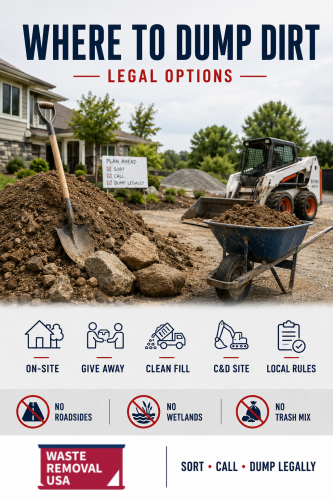 One common mistake is assuming dirt can go with yard waste. Yard waste usually means leaves, grass clippings, branches, brush, and plant material. Dirt, rocks, sod with heavy soil, clay, and gravel are often excluded.
This matters because yard waste programs are usually designed for composting or mulching. Too much dirt can contaminate compost piles, damage processing equipment, and add unnecessary weight.
If your project includes both soil and organic debris, separate them. Branches, leaves, weeds, and grass clippings may go through a yard waste program. Soil, rocks, gravel, and excavation material usually need a different destination.
For plant-heavy cleanup, see our guide to garden waste disposal. For broader outdoor cleanup, yard debris removal may also help.
How Rocks Change the Disposal Plan
Dirt mixed with rocks is heavier and harder to place than clean soil. Small stones may be fine at some facilities, but large rocks, river rock, gravel, boulders, and broken landscaping stone may need separate handling. If the material is mostly rock, it may be better to separate it from the soil. Clean stone and landscape rock can often be reused by homeowners, landscapers, garden centers, or people working on drainage and hardscape projects. Rocks may be useful for:- Drainage areas
- Walkways
- Garden borders
- Erosion control
- Dry creek beds
- Decorative landscape beds
- Backfill, if allowed
- Reuse by another homeowner
Legal Places to Dump Dirt Near You
There is no single answer that applies everywhere, but these are the most common legal places to dump dirt.1. Use Dirt Somewhere Else on Your Property
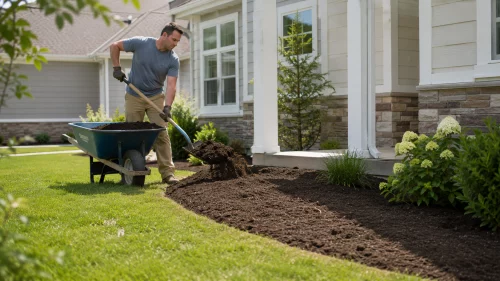 The easiest dirt disposal option is often not disposal at all. Clean soil may be reused on-site if it fits the property and does not create drainage or grading problems.
Possible on-site uses include:
- Filling low spots
- Building raised garden beds
- Leveling lawn areas
- Backfilling small holes
- Creating berms
- Improving grading away from the foundation
- Filling around landscape edges
- Supporting new plant beds
2. Give Away Clean Fill Dirt
Clean fill dirt is often useful to someone else. Homeowners, gardeners, small contractors, farmers, landscapers, and property owners may need soil for grading, low spots, raised beds, or non-structural fill. You can offer clean dirt through:- Local community groups
- Buy Nothing groups
- Marketplace listings
- Neighborhood apps
- Garden clubs
- Landscaping contacts
- Local farms
- Community gardens
- Clean fill wanted postings
3. Take It to a Clean-Fill Site
Some areas have clean-fill sites that accept uncontaminated soil, rock, stone, brick, block, concrete, or similar inert materials. These sites may use material for grading, reclamation, leveling, road base, or land improvement where allowed. Before going, ask:- Do you accept residential dirt?
- Do you accept dirt with rocks?
- Do you require the load to be screened?
- Do you accept sod or roots?
- Do you accept clay?
- Is there a fee?
- Do you require proof the soil is clean?
- Are there volume limits?
- What are the hours?
- Do you accept pickup trucks or only commercial haulers?
4. Use a Construction and Demolition Facility
If your dirt came from a construction, renovation, excavation, patio, driveway, or hardscape project, a construction and demolition facility may be an option. EPA explains that construction and demolition landfills receive debris such as roadwork material, excavated material, demolition waste, renovation waste, and site-clearance waste. This does not mean every C&D facility accepts every soil load. Some accept clean dirt. Some accept mixed dirt and rock. Some reject soil entirely. Some require separate loads for concrete, asphalt, brick, and dirt. Call before hauling and describe the material clearly. “Dirt” is not enough information. Say whether it includes rocks, sod, clay, roots, mulch, concrete, asphalt, brick, or trash. For related material planning, see construction debris removal, and where to dispose of concrete chunks near me.5. Contact Landscape Suppliers or Nurseries
Some landscape suppliers, garden centers, topsoil yards, and nurseries may accept clean soil, but many do not. They may only accept screened topsoil, clean fill, reusable stone, or specific materials. This option works best when the soil is clean and free of trash, weeds, roots, and debris. It may not work for clay-heavy soil, mixed sod, or dirt with too many rocks. Ask before loading. A landscape yard that sells clean soil may not want random excavated material because it could contain invasive weeds, chemicals, trash, or poor-quality fill.6. Ask Excavation, Grading, or Landscaping Contractors
Contractors sometimes know where clean fill is needed. A grading contractor, excavation contractor, or landscaper may be able to direct you to a permitted site, a current project that needs fill, or a local facility that accepts dirt and rock. This can be especially helpful for larger amounts. A few buckets of dirt can be reused in a garden. Several cubic yards may require equipment, hauling, and an approved receiving location. Make sure the contractor is using a legal disposal or reuse site. Illegal dumping can create liability, even when the material looks harmless.7. Check Municipal Drop-Off and Free Disposal Days
Some cities or counties offer special disposal events, public works drop-off sites, resident cleanup days, or transfer station access for certain materials. These programs vary significantly. A municipality may accept:- Small amounts of clean dirt
- Rocks
- Sod
- Concrete
- Brick
- Yard debris
- Construction debris
- Bulky waste
8. Use an Approved Heavy-Material Container
For larger residential projects, an approved heavy-material container may be appropriate when the provider and disposal facility allow dirt. Dirt is dense, so weight limits matter more than volume. Do not mix dirt with household junk, chemicals, appliances, or random renovation debris unless the provider specifically allows that load. A clean dirt load is often handled differently from mixed debris. If you use an on-site container, ask:- Is dirt allowed?
- Are rocks allowed?
- Can dirt and concrete be mixed?
- What is the weight limit?
- How high can the container be filled?
- Are there wet-soil restrictions?
- Does the load need to be clean fill only?
- Are there driveway protection requirements?
- How do i avoid driveway damage in general?
How Much Dirt Do You Have?
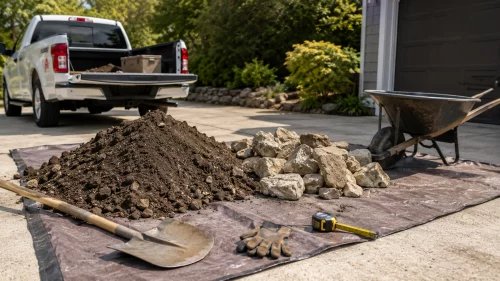 Dirt is usually measured by volume, often in cubic yards. One cubic yard is 3 feet long, 3 feet wide, and 3 feet tall, or 27 cubic feet.
A simple estimate:
- 3 feet × 3 feet × 3 feet = 1 cubic yard
- 6 feet × 3 feet × 1.5 feet = 1 cubic yard
- 10 feet × 5 feet × 1 foot = about 1.85 cubic yards
What Not to Do With Dirt
Avoid these dirt disposal mistakes:Do Not Dump Dirt on Vacant Land
Vacant land is still owned by someone. Dumping dirt without permission is illegal dumping, even if the dirt is clean.Do Not Dump Dirt Along Roadsides
Roadside dumping can block drainage, create runoff problems, damage vegetation, and lead to fines.Do Not Dump Dirt in Wetlands, Streams, or Drainage Areas
Soil can smother habitat, alter water flow, and increase sediment pollution. Never place dirt near waterways unless the project is permitted.Do Not Mix Dirt With Trash
Trash, plastic, treated wood, chemicals, and construction debris can cause a load to be rejected. Keep materials separate.Do Not Hide Contaminated Soil
If soil smells like fuel, contains paint, has chemical staining, or comes from a suspicious location, treat it as questionable. EPA household hazardous waste guidance warns that some household products can be toxic, reactive, corrosive, ignitable, or otherwise hazardous, and they should not be poured on the ground, into storm sewers, or down drains.What If the Dirt Might Be Contaminated?
Contaminated soil is a different problem from ordinary dirt disposal. Do not take it to a clean-fill site or offer it to someone online. Soil may be contaminated if it came from:- Fuel spills
- Old garages
- Industrial properties
- Auto repair areas
- Pesticide storage areas
- Fire-damaged sites
- Old painted structures
- Illegal dump areas
- Former gas stations
- Areas with chemical odors or staining