Can You Convert a Garage into a Bedroom?
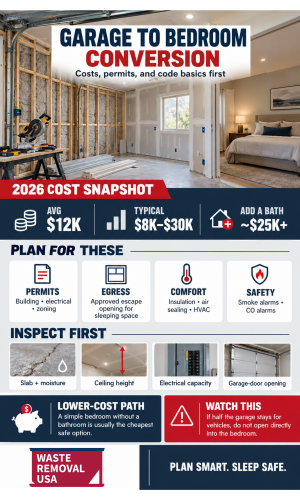 Yes, a garage can often be converted into a bedroom when zoning, parking requirements, building codes, and the existing structure allow it.
The project usually involves changing the garage from non-habitable space to conditioned living space.
That can require:
- Building permits
- Electrical work
- Insulation
- Air sealing
- Heating and cooling
- Finished walls and ceiling
- Appropriate flooring
- Emergency escape and rescue provisions
- Smoke alarms
- Windows or other approved openings
- Alteration of the garage-door opening
How Much Does It Cost to Convert a Garage into a Bedroom in 2026?
A straightforward garage-to-bedroom conversion costs around $12,000 on average in 2026, while individual projects can range roughly from $8,000 to $30,000 depending on the garage and scope. Major expenses can include:- Permits
- Garage-door removal or alteration
- Framing
- Windows
- Insulation
- Air sealing
- Electrical upgrades
- HVAC
- Drywall
- Flooring
- Trim and paint
What Is the Cheapest Way to Turn a Garage into a Bedroom?
The cheapest safe approach is usually to create a simple bedroom without adding a bathroom or extensively rearranging the structure. Control costs by:- Keeping the room open rather than adding several partitions
- Avoiding new plumbing
- Retaining usable existing windows
- Using standard-size windows and doors
- Keeping electrical modifications straightforward
- Choosing durable mid-priced flooring
- Using existing HVAC only when the system has adequate capacity
- Avoiding unnecessary structural changes
- Doing cosmetic finishing yourself when appropriate
What Should You Inspect Before Starting a Garage Bedroom Conversion?
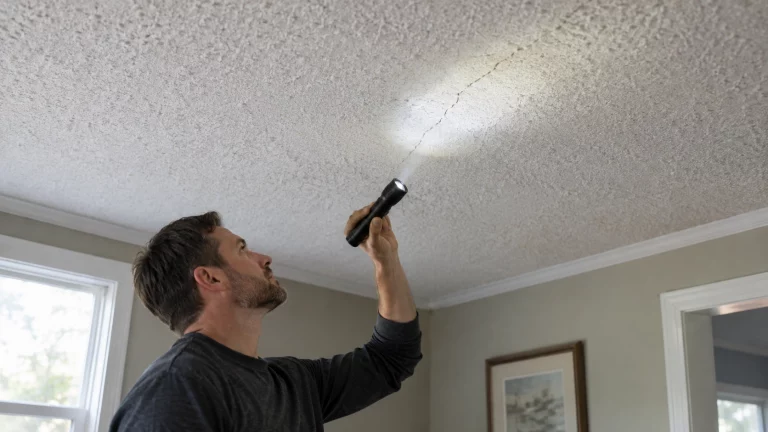
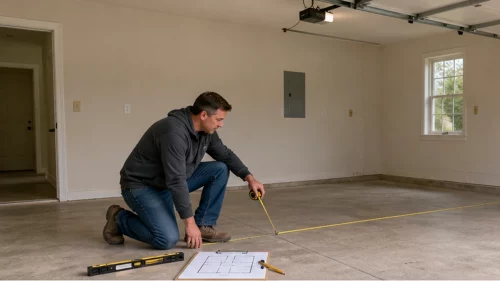 Evaluate the existing garage before designing the room.
Look at:
- Concrete slab
- Foundation
- Exterior walls
- Roof
- Ceiling height
- Garage-door opening
- Windows
- Entry doors
- Electrical panel and wiring
- Heating and cooling access
- Water intrusion
- Drainage
- Existing insulation
- Signs of insects or rodents
Do You Need a Permit to Convert a Garage into a Bedroom?
A permitted garage conversion is usually necessary when you are changing the use of the space and modifying structural, electrical, mechanical, or other building systems. The exact approvals vary by location. Possible permits include:- Building
- Electrical
- Mechanical
- Plumbing, if applicable
- Zoning or land-use approval
- Can this garage legally become habitable space?
- Is enclosed parking required?
- What building code is currently adopted?
- What inspections will be required?
- What emergency escape provisions apply?
- What insulation and energy requirements apply?
What Makes a Converted Garage a Legal Bedroom?
A bed and dresser do not automatically make a finished garage a legal bedroom. Requirements vary, but model residential codes address several characteristics of habitable sleeping rooms. Under the 2021 International Residential Code, for example, habitable rooms generally require at least 70 square feet of floor area, a minimum horizontal dimension of 7 feet, and a typical minimum ceiling height of 7 feet. Every sleeping room also generally requires an emergency escape and rescue opening. These model-code dimensions are useful for planning, but your locally adopted code controls the actual project. Review the International Residential Code building-planning provisions and confirm the locally adopted requirements with the building department.Does a Garage Bedroom Need an Egress Window?
A sleeping room generally needs an approved emergency escape and rescue opening under the IRC model code. That is commonly an operable exterior window, although an approved exterior door or another compliant opening may be possible depending on the design and local requirements. Do not shop for a window based only on its overall dimensions. Emergency openings are evaluated according to the actual clear opening when operated, along with other requirements such as height above the floor. This is particularly important when replacing the garage door with a wall and window. Design the opening around the applicable bedroom requirements from the beginning.Does a Bedroom Need a Closet to Be Legal?
Not necessarily. A common misconception is that every legal bedroom must have a built-in closet. The model International Residential Code does not establish a general bedroom-closet requirement. However, local regulations, housing programs, appraisal practices, market expectations, or other rules may treat closets differently. A closet is still useful and may improve resale appeal, but do not rely on it as the feature that determines whether the converted garage is legally a bedroom.What Should You Do with the Garage Door?
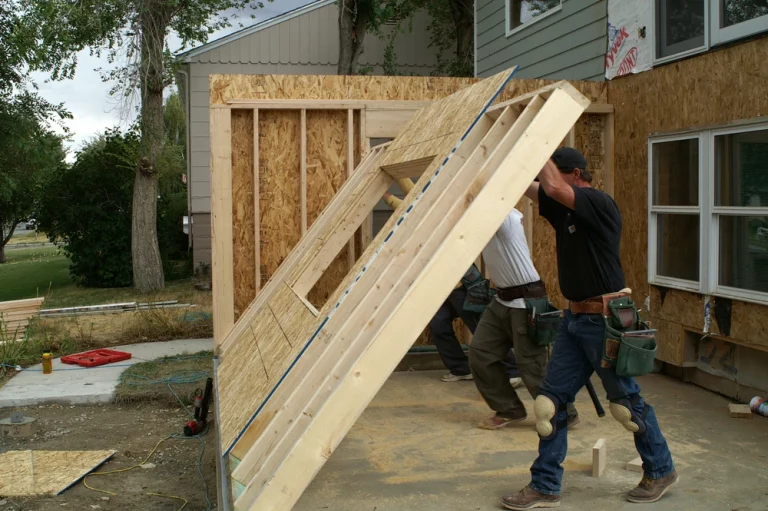
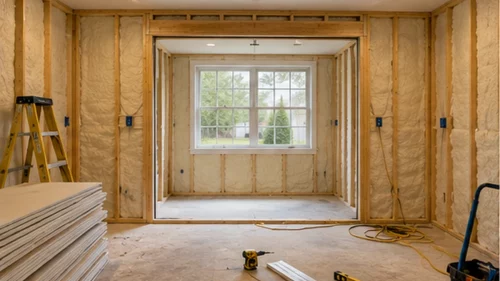 A permanent garage-to-bedroom conversion often removes the overhead door and replaces the opening with a framed exterior wall.
That new section may include:
- Structural framing
- Insulation
- Air barrier
- Water-resistive exterior layers
- Siding
- Windows
- Exterior door
How Should You Insulate a Garage Bedroom?
Once the garage becomes conditioned space, its walls, ceiling or roof, floor where applicable, doors, and windows become part of the home’s thermal enclosure. Insulation requirements depend on the local climate and adopted energy code. The Department of Energy recommends combining insulation with proper air sealing because insulation alone does not stop air leakage. Common leakage points include plumbing and electrical penetrations, framing joints, windows, doors, rim areas, and transitions between building components. See DOE’s insulation and air-sealing guidance when planning the thermal enclosure. Do not simply fill wall cavities and assume the garage will perform like the rest of the house.What If You Are Only Converting Half of the Garage?
A partial garage conversion deserves extra attention. If one side remains a vehicle garage while the other becomes a bedroom, the dividing assembly must maintain the required separation between garage and dwelling space. Under the model IRC, an opening from a private garage directly into a sleeping room is not permitted. That means you should not create a door that leads directly from the remaining vehicle garage into the new bedroom simply because it is convenient. Garage-to-dwelling walls, ceilings, openings, and penetrations can also have specific protection requirements. Have the separation detailed as part of the approved plans rather than treating it like a normal interior partition.How Do You Heat and Cool a Garage Bedroom?
A bedroom needs reliable temperature control rather than occasional heating or cooling. Possible systems include:- Extension of existing central HVAC
- New HVAC zone
- Ductless mini-split
- Another permanently installed system approved locally
What Electrical Work Does a Garage Bedroom Need?
An unfinished garage may not have enough receptacles, switches, lighting, or circuits for bedroom use. Electrical planning can include:- General receptacles
- Lighting
- Light switches
- Smoke alarms
- Carbon monoxide alarms where required
- HVAC equipment
- Ceiling fan
- Entertainment equipment
- Charging locations
What Smoke and Carbon Monoxide Protection Is Needed?
Sleeping areas receive special attention in residential fire-safety requirements. The model IRC requires smoke alarms:- In each sleeping room
- Outside each separate sleeping area
- On each story of the dwelling
Does a Garage Floor Need to Be Raised?
Not necessarily. Some garage conversions retain the existing concrete slab. Others install a raised floor. Reasons to raise the floor include:- Matching the elevation of the house
- Correcting slope
- Adding insulation
- Creating space for utilities
- Providing a warmer finished floor
What Flooring Is Best for a Garage Bedroom?
Choose flooring that works with the existing slab and moisture conditions. Possible options include:- Luxury vinyl plank
- Engineered flooring approved for concrete
- Carpet over a suitable assembly
- Tile
- Finished concrete
Should You Add a Bathroom to a Garage Bedroom?
A bathroom can turn the room into a more private guest or primary suite, but it can substantially increase the budget. Plumbing cost depends heavily on:- Location of existing drain lines
- Water supply
- Venting
- Slab construction
- Bathroom location
- Fixture layout
Can You Make a Garage Bedroom More Soundproof?
Yes. Sound control is particularly useful when the garage faces a street, driveway, or remaining garage bay. Possible improvements include:- Fibrous cavity insulation
- Proper air sealing
- Solid interior doors
- Quality windows
- Additional gypsum-board layers
- Resilient sound-control assemblies
Should You Add Skylights or Extra Windows?
Natural light can make a former garage feel much more like the rest of the house. A new window in the former overhead-door wall can serve both visual and functional purposes when appropriately designed. Skylights are possible, but they involve roof framing, flashing, water management, and structural considerations. Adding ordinary wall windows is often simpler and less expensive. Place windows based on:- Emergency escape requirements
- Privacy
- Exterior appearance
- Furniture layout
- Sun exposure
What Should Happen Before Drywall Goes Up?
Do not rush to close the walls. Before drywall, verify:- Framing inspection is complete where required.
- Electrical rough-in is complete.
- HVAC rough-in is complete.
- Plumbing rough-in is complete if applicable.
- Air sealing is complete.
- Insulation is installed correctly.
- Moisture problems are resolved.
- Required fire separation is complete.
- Window and door flashing is correct.
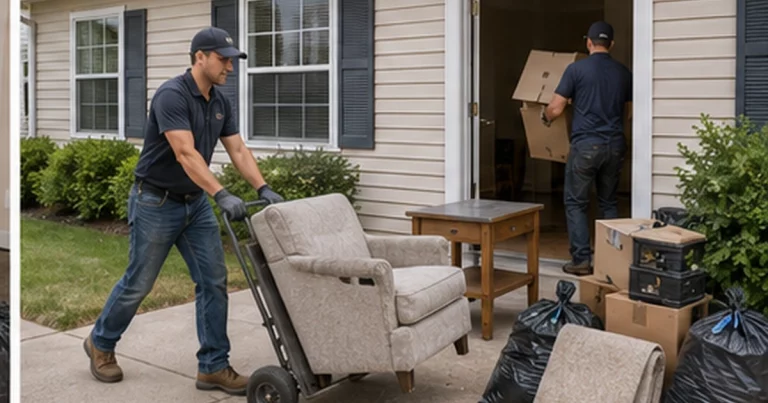
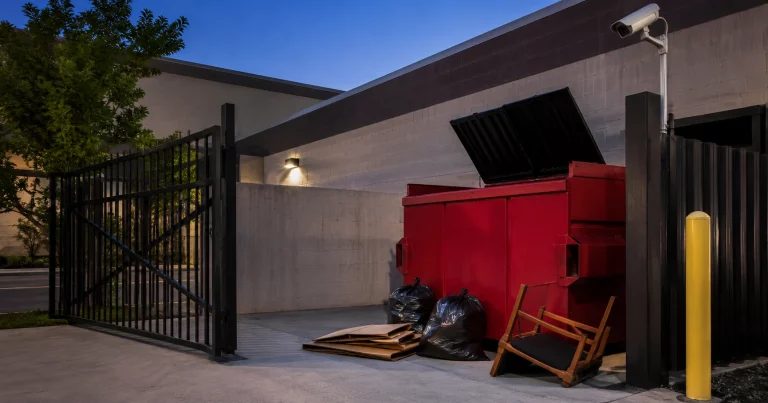
How Should Garage Conversion Debris Be Managed?
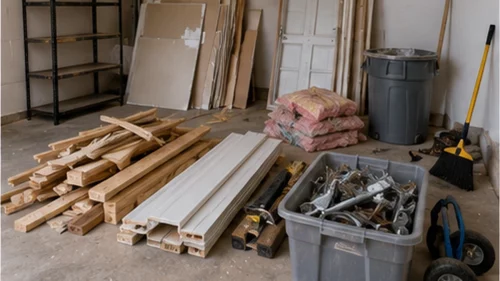 Turning a garage into a bedroom can generate:
- Old shelving
- Cabinets
- Garage-door components
- Drywall
- Insulation
- Wood framing scraps
- Flooring
- Trim
- Packaging
- Old fixtures