How Much Does a Bundle of Shingles Weigh?
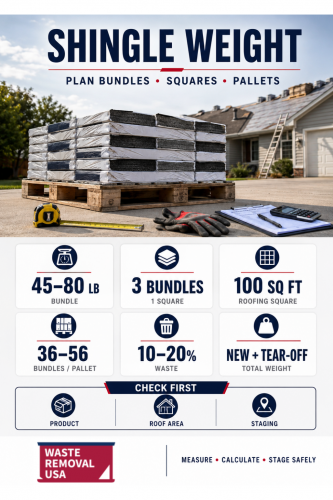
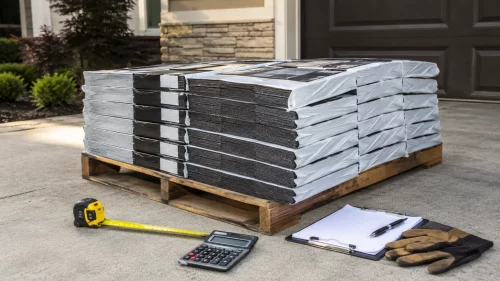 Most asphalt shingle bundles weigh somewhere between 45 and 80 pounds.
Typical ranges are:
| Shingle type | Approximate bundle weight |
| 3-tab asphalt shingles | 45–60 pounds |
| Architectural asphalt shingles | 60–80 pounds |
| Premium or designer asphalt shingles | 70–100+ pounds |
| Wood shingles or shakes | Varies by species and moisture |
| Slate, tile, or specialty roofing | Usually not planned like asphalt bundles |
What Is a Roofing Square?
A roofing square is 100 square feet of roof surface. Roofing materials are often estimated, ordered, and discussed in squares because roof surfaces are larger and more complex than a single room measurement. For example:- 1 roofing square = 100 square feet
- 10 roofing squares = 1,000 square feet
- 25 roofing squares = 2,500 square feet
How Many Bundles Are in a Square?
For many common asphalt shingles, three bundles make one roofing square. That means each bundle covers about one-third of a square, or roughly 33.3 square feet, when installed according to the manufacturer’s instructions. However, do not assume every product uses three bundles. Some premium shingles, designer shingles, or specialty products may require four, five, or even six bundles per square. Owens Corning specifications, for example, list three bundles per square for many Duration and Oakridge products, but also list four bundles per square for Duration MAX and six bundles per square for Woodcrest. This is why the product line matters. “Architectural shingles” is not a precise enough answer. Always confirm bundles per square for the exact product being installed.How Many Shingles Are in a Bundle?
 The number of individual shingles in a bundle varies by manufacturer and shingle design. Some products have 20 shingles per bundle. Others have 21, 22, 26, 27, or another count depending on dimensions and coverage.
IKO Dynasty lists 20 shingles per bundle, 33.3 square feet of coverage per bundle, and 100 square feet of coverage for three bundles. Owens Corning’s specification document shows that several products use 64 shingles per square, while others use 80 or 90 shingles per square depending on product type.
For planning a roofing project, coverage matters more than the individual piece count. It is usually better to ask, “How many squares does this roof need?” and “How many bundles per square does this product require?” rather than trying to count every individual shingle.
How Many Bundles of Shingles Come on a Pallet?
The number of shingle bundles on a pallet varies by manufacturer, product, warehouse, and shipment type. There is no single universal pallet count. Examples from current manufacturer data show why:- IKO Dynasty lists 56 bundles per pallet.
- IKO Cambridge lists 56 bundles per pallet.
- GAF’s Timberline HDZ environmental product declaration says each pallet contains 52 or 36 bundles depending on shipment type.
- How many bundles are on one pallet?
- How many squares does one pallet cover?
- What does the loaded pallet weigh?
- Can the delivery truck place it where needed?
- Can the roof, driveway, or staging area handle the load?
- Will partial pallets be wrapped or returned?
Why Shingle Weight Matters
Shingle weight affects more than delivery. It affects labor, safety, staging, hauling, tear-off planning, and debris disposal. Weight matters because:- Workers must lift and carry bundles safely.
- Roof loading must be controlled.
- Driveways and staging areas need protection.
- Delivery trucks need safe access.
- Old shingles become heavy tear-off debris.
- Disposal fees and load limits may depend on weight.
- Heavy materials can overload containers, trailers, or pickup beds.
How Much Does a Square of Shingles Weigh?
A square of asphalt shingles usually weighs about 150 to 240 pounds for many common products, but heavier architectural, designer, and specialty shingles may weigh more. A simple estimate:- 3-tab shingles: 3 bundles × 50 pounds = about 150 pounds per square
- Architectural shingles: 3 bundles × 70 pounds = about 210 pounds per square
- Heavier shingles: 4 bundles × 75 pounds = about 300 pounds per square
How to Estimate How Many Shingles You Need
 To estimate how many shingles you need, start with roof area, not home floor area.
Use this basic process:
- Measure each roof plane.
- Multiply length by width for each plane.
- Add the roof-plane areas together.
- Divide the total by 100 to get roofing squares.
- Add a waste factor.
- Multiply final squares by bundles per square.
- 2,000 ÷ 100 = 20 squares
- Add 10% waste = 22 squares
- 22 squares × 3 bundles per square = 66 bundles
Why Roof Pitch Changes the Number of Shingles
Roof pitch increases the actual surface area of the roof. A steep roof covers the same house footprint as a low-slope roof, but the roof plane itself is longer because it rises higher. That means two homes with the same floor size may need different amounts of shingles. Roof features also increase material needs, including:- Dormers
- Valleys
- Hips
- Ridges
- Chimneys
- Skylights
- Porch roofs
- Attached garages
- Multiple roof planes
- Cut-up transitions
How Much Waste Should You Add?
Most roofing estimates include waste. Waste covers cut pieces, starter courses, valleys, edges, mistakes, damaged pieces, and matching needs. Typical waste factors:- Simple roof: about 10%
- Moderate roof: about 12–15%
- Complex roof: about 15–20% or more
Planning for Old Shingle Tear-Off
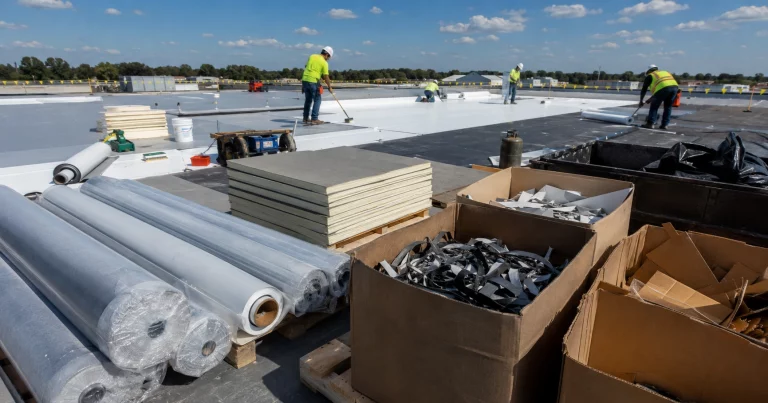
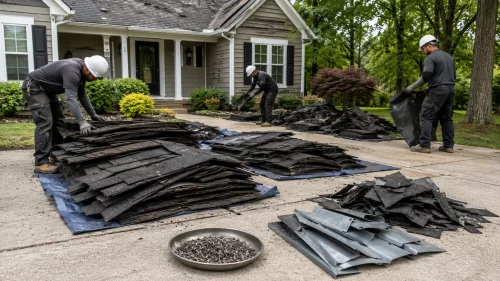 New shingles are only half the weight story. Old shingles removed from a roof can be heavier than expected because they may include old nails, underlayment, flashing, wet debris, extra layers, and broken pieces.
Tear-off material should be kept organized and loaded carefully. Asphalt shingles are part of the construction and demolition material stream. EPA construction and demolition material guidance identifies asphalt shingles among common C&D materials generated during construction, renovation, and demolition projects.
If the project includes other renovation debris, our construction debris removal guide can help with sorting.
Use a roofing debris container only for approved materials and confirm weight limits before loading. Roofing shingles are dense, and a container can become overweight before it looks full.
Transportation and Staging Tips
Shingles should be moved and stored carefully before installation. Use these tips:- Keep bundles flat.
- Store shingles on a level surface.
- Keep pallets dry when possible.
- Avoid placing full pallets on weak surfaces.
- Do not stack bundles where they block access.
- Protect driveways, pavers, and landscaping.
- Stage material close to the work without overloading the roof.
- Keep different products separated.
- Check bundle labels before installation.
- Follow manufacturer storage guidance.