Start by Choosing the Closet’s Main Job
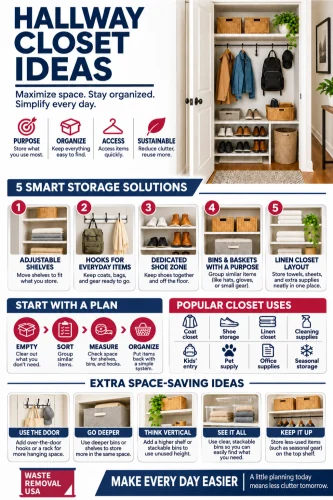 A hallway closet can do many things, but it cannot do everything well. Before organizing, choose the closet’s main purpose.
Common hallway closet uses include:
- Entryway coat closet
- Shoe and boot storage
- Linen closet
- Cleaning supply closet
- Kids’ backpack and school station
- Pet supply storage
- Craft closet
- Paper and office supply storage
- Overflow pantry storage
- Seasonal accessory storage
Empty the Closet Before Organizing It
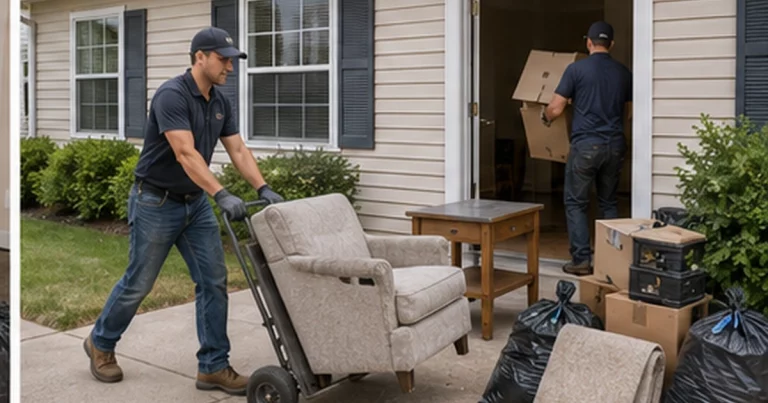
Trying to organize a full closet usually means shifting clutter from one shelf to another. Empty the closet first so you can see the actual space. As you remove items, sort them into clear categories:- Keep in this closet
- Move elsewhere
- Donate
- Recycle
- Special handling
- Trash
- Unsure
Measure Before Buying Storage
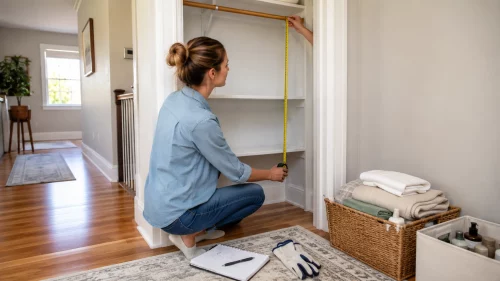 Once the closet is empty, measure the space. Measure width, depth, height, shelf spacing, rod height, door clearance, and floor space. Deep shelves, narrow doors, and awkward corners can change which storage products work.
Measure for:
- Shelf depth
- Shelf height
- Hanging rod height
- Door swing
- Floor clearance
- Space behind the door
- Wall space for hooks
- Baseboard or trim obstructions
1. Add Adjustable Shelving
Adjustable shelves are one of the most useful hallway closet upgrades. They let the closet change with the season, the household, and the items stored inside. Use shelves for:- Folded towels
- Extra sheets
- Baskets
- Hats and gloves
- Paper goods
- Games
- Cleaning supplies
- Craft bins
- Pet supplies
2. Use Hooks for Everyday Items
Hooks are ideal for items that need quick access. They are easier than hangers for children, guests, bags, leashes, hats, umbrellas, and lightweight jackets. Good hook locations include:- Inside side walls
- Back of the closet door
- Under a shelf
- Low height for children
- High height for adult coats or bags
3. Create a Shoe Zone
Shoes can take over a hallway closet quickly. The best shoe system depends on how many pairs need to live there and how often they are used. Options include:- Low shoe rack
- Stackable shoe shelves
- Boot tray
- Clear shoe boxes
- Over-the-door shoe organizer
- Cubby shelf
- Basket for sandals or slippers
4. Use Bins and Baskets the Right Way
Bins and baskets work best when each one has a clear purpose. They should not become mystery containers. Useful hallway closet bin categories include:- Winter hats
- Gloves and scarves
- Sunscreen and bug spray
- Pet leashes and bags
- Reusable shopping bags
- Lightbulbs
- Batteries
- Cleaning cloths
- Guest towels
- Craft supplies
- Seasonal decor
5. Turn a Hall Closet Into a Linen Closet
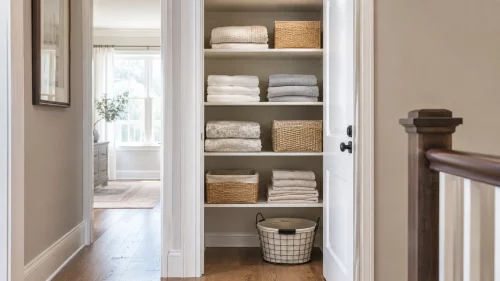 A hallway linen closet works best with consistent folding, limited categories, and shelves that are not overpacked.
Store sheets by size or room. Keep towel stacks short. Put bulky comforters, blankets, and off-season bedding on higher shelves or in breathable storage bags. Store each sheet set inside one pillowcase if you want sets to stay together.
A simple linen closet layout:
- Top shelf: seasonal bedding
- Upper shelf: extra blankets
- Middle shelf: sheets
- Middle shelf: towels
- Lower shelf: guest towels or cleaning cloths
- Floor: laundry basket or bulky items
6. Build a Mini Office or Supply Closet
A hallway closet near a kitchen, desk, or family command center can become a small office supply closet. This works especially well in homes without a dedicated office. Add shelves, small drawers, and bins for:- Printer paper
- Envelopes
- Stamps
- Pens and pencils
- Chargers
- Notebooks
- Manuals
- Tape and scissors
- Craft supplies
- School supplies
- Important papers
7. Use the Back of the Door
The back of the closet door is valuable space, especially in a small hallway closet. Use it for flat, lightweight, frequently used items. Good door-storage options include:- Over-the-door shoe pockets
- Hanging baskets
- Scarf organizer
- Cleaning tool holder
- Gift wrap organizer
- Dog leash hooks
- Small accessory pockets
8. Make an Entryway Grab-and-Go Station
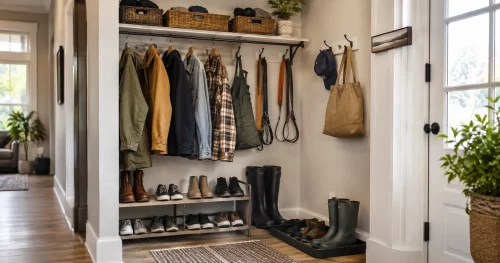 If the hallway closet is near the front door, build it around the items people grab on the way out.
Include space for:
- Coats
- Shoes
- Umbrellas
- Hats and gloves
- Backpacks
- Keys
- Dog leashes
- Reusable bags
- Sunglasses
- Seasonal items
9. Keep Donation and Recycling Simple
Hallway closets often hold items that are still usable but no longer needed. Coats, shoes, bags, linens, and small household items may be good donation candidates if they are clean and in usable condition. The IRS charitable donation recordkeeping tips explain that taxpayers should keep records for donated property and may need additional documentation for larger non-cash donations. If you plan to claim a deduction, keep a simple list and receipt. For items that are not donatable, check recycling rules. EPA’s How Do I Recycle Common Recyclables page recommends checking local recycling options for items such as electronics, bulbs, household hazardous waste, clothing, shoes, and other common materials. If the closet cleanout becomes part of a bigger cleanout, our active home cleanouts guide can help with sorting furniture, boxes, clothing, and household items by destination.10. Create a Seasonal Reset Routine
A hallway closet will not stay organized without maintenance. The easiest routine is a seasonal reset. At the start of each season:- Remove items that no longer belong.
- Move off-season gear higher or farther back.
- Check coats, shoes, gloves, and bags for damage.
- Donate usable items no one wears.
- Wipe shelves and vacuum the floor.
- Restock daily-use supplies.
- Adjust bins if categories changed.