How Do You Organize a Linen Closet?
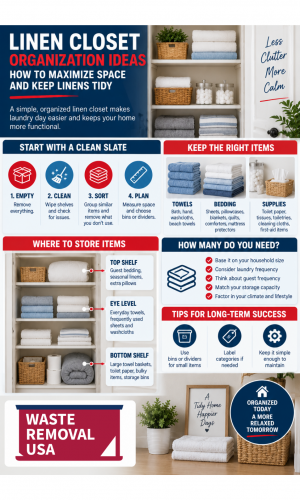 The easiest way to organize a linen closet is to empty it completely and rebuild the space around categories.
Use this basic process:
- Remove everything.
- Clean the empty shelves.
- Sort linens by type.
- Remove items you no longer use.
- Measure the available shelf space.
- Decide which items need bins or dividers.
- Put frequently used linens at eye level.
- Store bulky or seasonal items higher or lower.
- Label categories if several people use the closet.
- Maintain the system each time clean laundry is returned.
Start Linen Closet Organization by Taking Everything Out
It is difficult to organize a closet while working around existing stacks. Empty the entire space. Place everything where you can see it, such as:- Bed
- Dining table
- Clean floor
- Large folding table
- Dust
- Loose shelf brackets
- Peeling shelf liner
- Moisture staining
- Musty odors
- Insect activity
- Damaged shelving
- Poorly spaced shelves
What Should You Keep in a Linen Closet?
A linen closet works best when it primarily holds household textiles and closely related supplies. Common items include:- Bath towels
- Hand towels
- Washcloths
- Sheet sets
- Pillowcases
- Blankets
- Quilts
- Comforters
- Mattress protectors
- Guest linens
- Beach towels
- Toilet paper
- Tissues
- Extra soap
- Toiletries
- Cleaning cloths
- First-aid supplies
How Many Sets of Sheets and Towels Do You Need?
There is no universal number. Base your inventory on:- Household size
- Laundry frequency
- Guest frequency
- Storage capacity
- Climate
- Personal preference
Sort Everything Before Choosing Linen Storage
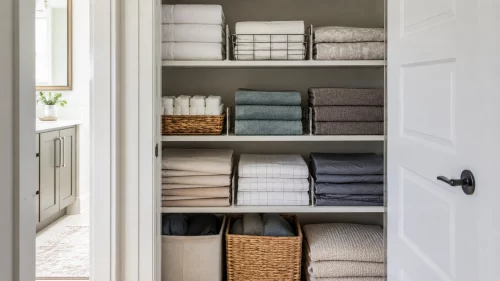 Create broad categories first.
For example:
Bedding
Separate:- Twin
- Full
- Queen
- King
- Guest bedding
Towels
Separate:- Bath towels
- Hand towels
- Washcloths
- Beach towels
Bulky Linens
Separate:- Comforters
- Quilts
- Blankets
- Mattress pads
Household Supplies
Separate any toiletries, paper products, cleaning cloths, or similar items you have decided belong in the closet. Once you see the actual quantity in each category, it becomes much easier to decide what type of linen closet storage you need.What Should Go at Eye Level in a Linen Closet?
Store the items you reach for most often between roughly waist and eye level. For many households, that means:- Everyday bath towels
- Frequently used sheet sets
- Washcloths
- Hand towels
What Should Go on the Top Shelf?
The highest shelf is best for lightweight items that are used less frequently. Examples include:- Guest blankets
- Seasonal bedding
- Extra pillows
- Beach towels during winter
- Holiday linens
- Spare comforters
What Should Go on the Bottom Shelf?
Lower shelves work well for heavier or bulky items. Possible uses include:- Large towel baskets
- Toilet-paper packages
- Extra blankets
- Storage bins
- Household supply refills
How Should You Store Sheet Sets?
One of the simplest linen closet organization ideas is to keep every sheet set together. Fold:- Fitted sheet
- Flat sheet
- Matching pillowcases
- Bed
- Mattress size
- Bedroom
- Household member
How Do You Fold a Fitted Sheet?
Fitted sheets do not have to look perfect. The goal is simply to create a stable shape that fits your shelf. A practical method is:- Hold the sheet by two corners.
- Tuck one corner into the other.
- Repeat with the remaining corners.
- Lay the sheet flat.
- Fold the elastic edges inward.
- Fold the sheet into a rectangle.
Is It Better to Roll or Fold Towels?
Either method can work.Folding Towels
Folding works particularly well on wide shelves. Advantages include:- Easy stacking
- Simple inventory
- Good use of shelf width
- Easy access to complete towel sets
Rolling Towels
Rolling can work well in:- Deep baskets
- Tall cubbies
- Narrow shelves
- Open shelving
How Can Shelf Dividers Improve Linen Closet Storage?
Shelf dividers help stop stacked towels and sheets from spreading across the shelf. They are especially helpful on long shelves where separate categories sit beside one another. For example: Bath towels | Hand towels | Queen sheets Without dividers, those stacks can gradually merge. With dividers, each category has a defined width. Shelf dividers are useful, but they are not essential for every closet. If your shelves are narrow enough that stacks remain stable naturally, additional organizers may only consume space.Should You Use Baskets or Clear Bins?
Both can work, but they serve different purposes.Baskets
Baskets are useful for items that are awkward to stack. Examples include:- Washcloths
- Hand towels
- Small toiletries
- Extra pillowcases
Clear Bins
Clear containers make it easy to see what is inside. They can work well for:- Guest toiletries
- First-aid supplies
- Small household refills
- Seasonal accessories
How Can You Organize a Small Linen Closet?
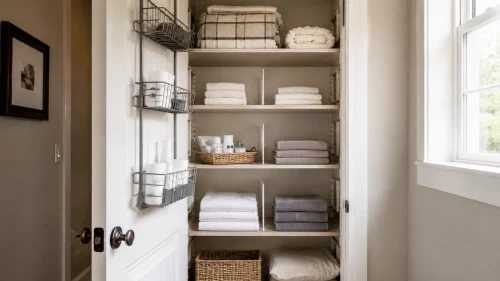 Small linen closet organization depends on using vertical space carefully and limiting inventory.
Start by asking what must live in the closet.
If space is limited, consider moving:
- Bulk toilet paper elsewhere
- Rarely used cleaning supplies
- Extra toiletries
- Large seasonal comforters
- Beach equipment
- Adjustable shelves
- Shelf dividers
- Shallow baskets
- Under-shelf baskets
- Door organizers
- Vertical dividers
How Do You Organize a Deep Linen Closet?
Deep closets create a different problem: unused space behind the front row. Do not create two unmarked layers of loose linens. Instead, use the back of deep shelves for:- Guest bedding
- Seasonal linens
- Extra inventory
Can You Use the Back of the Linen Closet Door?
Yes, if the door and surrounding clearance allow it. Door-mounted linen closet organizers can hold:- Washcloths
- Small towels
- Toiletry backups
- Cleaning cloths
- Lightweight bathroom supplies
Are Adjustable Shelves Worth It?
Adjustable shelving is one of the most useful upgrades when existing shelf spacing wastes vertical room. For example, a shelf holding folded towels may not need 18 inches of clearance. Reducing that gap could create room for another shelf. Before changing the linen closet system, measure the actual height of:- Folded towels
- Sheet stacks
- Baskets
- Toiletry containers
- Bulky bedding
What Is the Best Linen Closet Organizer?
There is no single best organizer. The most useful combination often includes only a few pieces:- Shelf dividers for linens
- One or two baskets for loose items
- A shallow bin for small supplies
- Door storage when needed
- Adjustable shelving where possible
- Fit the actual shelf dimensions
- Make items easier to reach
- Use vertical space well
- Be easy to clean
- Allow the household to put things away quickly
Should You Label Linen Closet Organizers?
Labels can help when multiple people use the closet or when several similar categories are stored together. Possible labels include:- Queen Sheets
- Twin Sheets
- Guest Towels
- Beach Towels
- Washcloths
- Extra Toiletries
How Should Blankets and Comforters Be Stored?
Fold bulky bedding so it fits the available shelf without being packed excessively tightly. Store frequently used blankets where they can be removed without disturbing other items. Seasonal comforters can go higher. Breathable bedding storage bags can help protect less frequently used linens from dust. Only store bedding after it is completely clean and dry. Avoid forcing delicate quilts, heirloom linens, or specialty bedding into tightly compressed storage for extended periods. Smithsonian conservation guidance for historic textiles recommends minimizing prolonged pressure and sharp folds when preservation is important. Everyday modern bedding should still follow the manufacturer’s care and storage instructions.Should You Vacuum-Seal Bedding?
Vacuum bags can save substantial space, but they are not ideal for every material. They may be useful for some durable synthetic bedding when the manufacturer permits compressed storage. Use more caution with:- Down products
- Feather bedding
- Delicate quilts
- Heirloom linens
- Materials that depend on loft
How Do You Prevent Musty Linens?
Moisture control matters more than adding fragrance. Store linens only after they are completely dry. If a closet repeatedly smells musty, investigate why. Possible causes include:- Plumbing leak
- Roof leak
- High indoor humidity
- Condensation
- Damp exterior wall
- Previously wet shelving
- Poor air circulation
Should You Use Scented Products in Linen Storage?
They are optional, not necessary. Clean, dry linens stored in a clean, dry closet should not require heavy fragrance. Strong scented products can also transfer fragrance to bedding and towels. If you prefer a mild scent, make sure any sachet or product:- Cannot leak
- Does not stain fabric
- Is kept away from children and pets
- Does not create excess moisture
Where Should Toiletries Go in a Linen Closet?
If the closet has enough space, small household backups can be grouped into shallow bins. Examples include:- Soap
- Shampoo
- Toothpaste
- Tissues
- Toilet paper
Should Medicines Be Kept in a Linen Closet?
Do not automatically use a bathroom-adjacent linen closet for medications. Many medicines have specific temperature, humidity, security, or child-safety instructions. Follow the product label and pharmacist guidance. If medicine storage is needed, use a location appropriate for the product and inaccessible to children or anyone for whom access presents a safety concern.How Should You Store Extra Pillows?
Pillows consume substantial space. Keep only the extras you realistically use. For guest pillows, consider:- A breathable protective bag
- A dedicated top shelf
- Storage beneath a guest bed
- Another clean, dry closet
What Linen Storage Ideas Work Without Buying Anything?
You may already have everything you need. Try:- Folding towels consistently
- Keeping sheet sets together
- Moving rarely used items upward
- Removing excess linens
- Reusing existing baskets
- Grouping categories
- Keeping only one row of everyday items
- Moving unrelated supplies elsewhere
How Often Should You Reorganize a Linen Closet?
A full monthly empty-and-clean routine is usually unnecessary. Instead, perform small maintenance as part of normal household use.Every Laundry Day
Return each item to its assigned place.Every Few Months
Straighten stacks and remove empty containers or excess supplies.Seasonally
Rotate blankets, beach towels, guest bedding, or other seasonal items.Once or Twice a Year
Review the entire inventory. Look for:- Towels you no longer use
- Sheets for beds you no longer own
- Damaged linens
- Excess duplicates
- Expired household products
- Items that migrated into the closet without a reason
What Should You Do with Old Towels and Sheets?
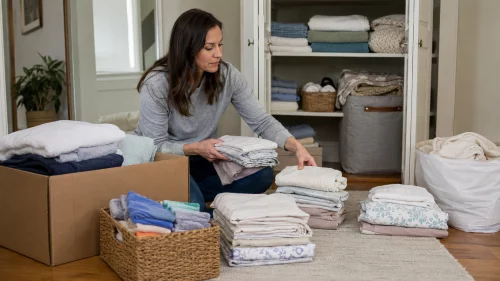 Do not automatically throw away usable linens.
Depending on condition and local acceptance, options may include:
- Donate them.
- Offer them to someone who can use them.
- Repurpose them as cleaning cloths.
- Check local textile-reuse programs.
- Ask animal shelters whether they currently accept towels or blankets.
What If Linen Closet Organization Becomes a Larger Decluttering Project?
Sometimes the closet is only the beginning. You may discover:- Excess bedding
- Old towels
- Broken storage shelves
- Unused household products
- Boxes stored elsewhere in the house
- Multiple closets that need attention