Should You Repair or Remove an Old Deck?
 Not every damaged deck needs complete demolition.
Repair may make sense when the primary structure remains sound and problems are limited to:
- Several deck boards
- Isolated railing damage
- Loose fasteners
- Minor stair problems
- Surface deterioration
- Rot
- Structural movement
- Failed framing
- Severe insect damage
- Significant ledger deterioration
- Unsafe stairs
- Multiple failing components
How Much Does Deck Demolition and Removal Cost in 2026?
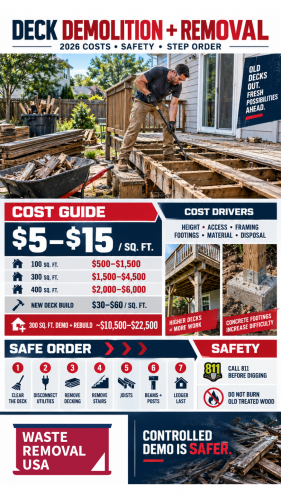
Current national planning data from Angi places professional deck demolition cost at approximately: $5–$15 per square foot That generally includes dismantling and removal of the old material, although quotes and included services vary. Using that range:| Deck Size | Approximate Demolition and Removal Cost |
| 100 sq. ft. | $500–$1,500 |
| 200 sq. ft. | $1,000–$3,000 |
| 300 sq. ft. | $1,500–$4,500 |
| 400 sq. ft. | $2,000–$6,000 |
What Increases the Cost to Demo a Deck?
Several conditions make demolition more difficult.Deck Height
A ground-level platform is substantially easier to dismantle than a second-story deck. Elevated structures may require:- Scaffolding
- Fall protection
- Controlled lowering of material
- Additional workers
Complicated Framing
Multi-level, wraparound, cantilevered, and highly customized decks usually take longer to dismantle.Difficult Access
A deck behind a narrow gate or steep property may make it difficult to move:- Lumber
- Concrete
- Equipment
- Collection containers
Concrete Footings
Removing posts does not necessarily remove the concrete below them. Excavating and breaking footings can add significant labor and heavy debris.Material
Composite boards, treated lumber, natural wood, steel railings, and concrete do not necessarily use the same recycling or disposal route. Sorting can increase labor but may also preserve recycling opportunities.What Does Deck Demolition and Rebuild Cost?
Demolition is only the first part of a replacement project. Current 2026 estimates place professional new-deck construction at approximately: $30–$60 per square foot with a broad national project range of about $4,339–$12,652, depending on size, material, height, labor, and design. For example, using the square-foot planning ranges, a 300-square-foot project might involve approximately:- $1,500–$4,500 for demolition and removal
- $9,000–$18,000 for new construction
Do You Need a Permit to Demolish a Deck?
Possibly. Permit requirements are local. Some jurisdictions require permits for:- Removing an attached deck
- Structural demolition
- Altering the exterior of a building
- Removing or replacing footings
Inspect the Deck Before Demolition Begins
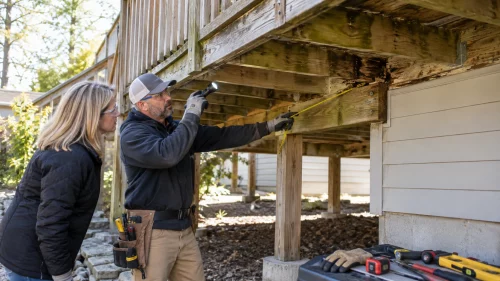 Do not start by swinging a sledgehammer.
Walk around and underneath the deck where it is safe to do so.
Identify:
- Deck boards
- Joists
- Beams
- Support posts
- Footings
- Ledger board
- Stairs
- Railings
- Electrical wiring
- Gas connections
- Plumbing
- Lighting
Disconnect Utilities Before Deck Removal
Outdoor decks may contain more building systems than expected. Check for:- Electrical receptacles
- Lighting
- Low-voltage wiring
- Gas lines for grills
- Outdoor kitchens
- Water lines
- Hot-tub wiring
Call 811 Before Digging Around Posts and Footings
If the project includes excavating:- Concrete footings
- Buried posts
- New deck foundations
- Patio areas
- Detached garages
- Pool equipment
- Outdoor lighting
- Propane systems
What Safety Gear Is Needed for Deck Demolition?
Typical protective equipment may include:- Safety glasses or goggles
- Work gloves
- Hearing protection
- Sturdy work boots
- Long pants
- Long sleeves
- Head protection where falling material creates a hazard
- Appropriate respiratory protection when dust warrants it
- Protruding nails
- Sharp screws
- Rotten boards
- Wasps or other pests
- Unstable railings
- Loose stairs
Be Extra Careful with Elevated Decks
An elevated deck introduces serious fall and falling-object hazards. Removing a railing first may seem convenient, but that also removes the barrier protecting workers at the edge. Likewise, removing the stairs early may eliminate the safest way to enter and leave the work platform. The demolition sequence for an elevated structure should preserve:- Stable working surfaces
- Safe access
- Edge protection or appropriate fall protection
What Tools Are Used for Deck Demolition?
Useful tools may include:- Pry bar
- Deck-board removal tool
- Hammer
- Cat’s paw
- Drill or impact driver
- Socket set
- Reciprocating saw
- Circular saw
- Wrenches
- Pliers
- Wheelbarrow
What Is the Safest Deck Demolition Order?
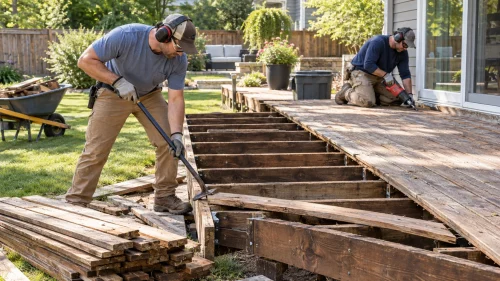 Exact sequencing depends on the structure, but controlled demolition generally works from nonstructural finishes toward the primary supports.
A typical process looks like this:
- Remove furniture and accessories.
- Disconnect utilities.
- Remove selected railing sections when it can be done without creating an uncontrolled fall hazard.
- Remove decking in manageable sections.
- Remove stairs when they are no longer needed for access.
- Remove joists.
- Remove beams.
- Remove support posts.
- Remove or abandon footings as permitted by the project plan.
- Remove the ledger board after the framing it supported has been dismantled.
- Repair the house wall and weather-resistant assembly.
- Clean and inspect the site.
How Do You Remove Deck Boards?
Whenever practical, start by reversing accessible screws or removing fasteners. Boards that remain in reasonable condition may be easier to salvage when removed intact. For stubborn boards:- Use a pry bar or deck-board removal tool.
- Work gradually along the board.
- Watch for hidden fasteners.
- Avoid standing where a loosened board can drop beneath you.
How Should Joists and Beams Be Removed?
Once decking is gone and the remaining structure is stable, joists can be detached from:- Joist hangers
- Ledger connections
- Beams
- Rim framing
Why Should the Ledger Board Come Off Last?
The ledger is the horizontal board connecting many attached decks to the house. Joists may be supported by or connected to it. Removing the ledger while the joists still depend on it can destabilize the remaining framing. Once the deck framing is gone, the ledger can be removed carefully. Then inspect the exposed house wall for:- Rot
- Water intrusion
- Damaged sheathing
- Failed flashing
- Insect damage
What Should You Know About Old Pressure-Treated Deck Lumber?
Older deck framing may contain preservative-treated lumber. EPA says CCA-treated lumber was commonly used in residential decks before manufacturers discontinued most residential CCA uses at the end of 2003. Older weathered wood cannot reliably be identified by color alone. EPA advises that CCA and other preservative-treated lumber should not be burned in residential fires. It also should not be turned into landscaping mulch. Homeowner disposal options vary by jurisdiction, so check local requirements. EPA’s current CCA-treated wood guidance explains safe handling and disposal considerations. When cutting treated wood, minimize dust and wash hands after handling.What About Painted Decks on Older Homes?
If the house or deck dates from before 1978, painted surfaces may contain lead. Sawing, sanding, scraping, or demolition can produce lead-contaminated dust and chips. EPA provides lead-safe renovation guidance for homeowners and contractors working on pre-1978 housing. Paid contractors performing qualifying renovation work generally must comply with the federal Renovation, Repair and Painting Rule unless an exemption applies. Do not dry-sand questionable old coatings and spread dust around the yard.Can Old Deck Boards Be Reused?
Some can. Consider salvaging boards that are:- Structurally sound
- Free from significant rot
- Not badly split
- Appropriate for the intended new use
- Cutting boards
- Food-contact surfaces
- Indoor furniture without appropriate evaluation
- Mulch
- Children’s projects where inappropriate exposure may occur
How Should Composite Decking Be Disposed Of?
Do not assume composite decking belongs in an ordinary wood-recycling pile. Composite boards may contain combinations of:- Wood fiber
- Plastic
- Additives
What About Concrete Deck Footings?
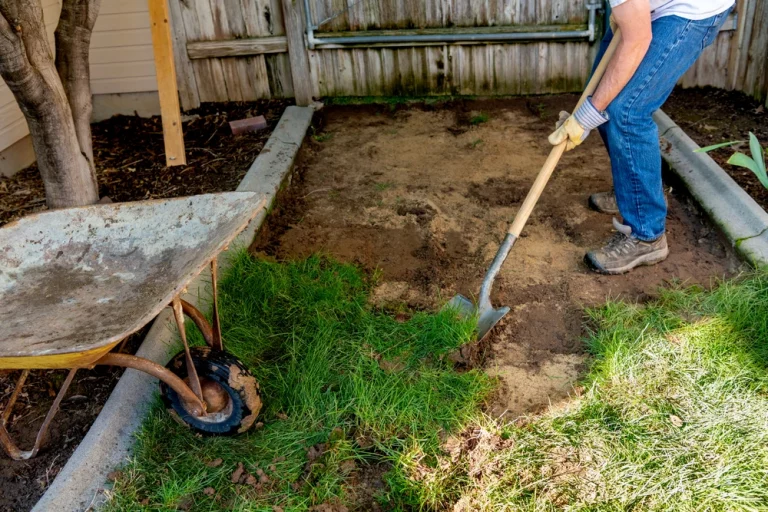
Footings can weigh substantially more than the wood framing above them. If they must be removed, excavation may expose large concrete masses beneath grade. Concrete may need to be:- Dug out
- Broken into manageable sections
- Transported separately
How Do You Manage Deck Demolition Debris?
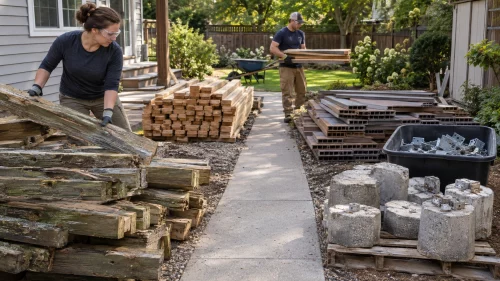 Sort material as it comes down rather than creating one enormous pile.
Possible streams include:
- Reusable lumber
- Untreated wood
- Treated wood
- Composite decking
- Scrap metal
- Concrete
- General construction debris
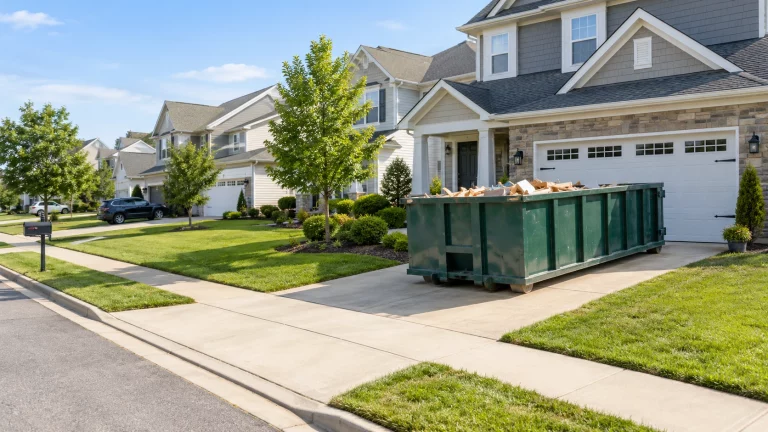
What Size Cleanup Container Works for Deck Removal?
There is no universal size because decks vary significantly in:- Square footage
- Height
- Framing
- Stair construction
- Railings
- Material
How Long Does Deck Removal Take?
A small ground-level deck may be dismantled in a day by an experienced crew. A larger or elevated deck can require several days. Factors include:- Deck size
- Height
- Number of workers
- Fastener condition
- Rot
- Access
- Footing removal
- Debris handling
When Should You Hire a Professional?
Professional deck demolition and removal becomes especially worthwhile when the deck is:- Second-story or highly elevated
- Structurally unstable
- Large or multi-level
- Attached to difficult structural conditions
- Built around utilities
- Above a steep slope
- Connected to extensive concrete work
- Required licensing
- Insurance
- Who obtains permits
- Whether debris removal is included
- How treated lumber is handled
- Whether footing removal is included
- How the house wall will be repaired
Can You Replace a Deck with a Patio?
Yes, depending on the property. After deck removal, a patio may provide a lower-profile outdoor space. However, the site may need:- Footing removal
- Grading
- Drainage improvements
- Excavation
- Base preparation