What Is a Cubic Yard?
A cubic yard is a unit of volume. One cubic yard is the space inside a cube that measures one yard long, one yard wide, and one yard tall. Because one yard equals three feet, one cubic yard equals 3 feet × 3 feet × 3 feet, or 27 cubic feet. Ten cubic yards equals 270 cubic feet. That is why the answer to 10 cubic yards to feet is really a cubic feet conversion, not a straight line measurement. A cubic yard measures three-dimensional space. A foot by itself measures length. If someone searches what is 10 subic yards in feet, they probably mean what is 10 cubic yards in cubic feet. For manual estimating, measure length, width, and height in feet, multiply them together, then divide by 27 to convert cubic feet into cubic yards. CalculatorSoup’s cubic yards calculator uses that same basic idea: length times width times depth, with measurements converted into cubic yards.How Big Is 10 Cubic Yards in Real Life?
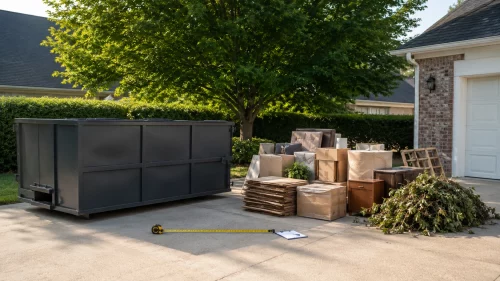 Ten cubic yards is easier to understand when compared to familiar spaces.
In practical terms, 10 cubic yards is roughly equal to:
- About three pickup truck loads
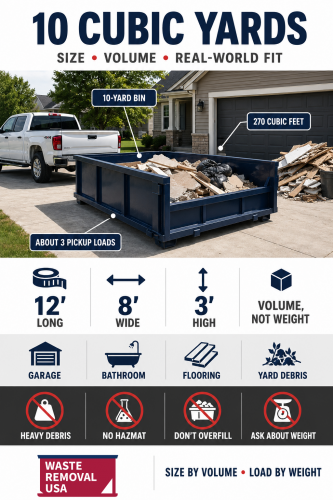
- A pile about 12 feet long, 8 feet wide, and a little under 3 feet high
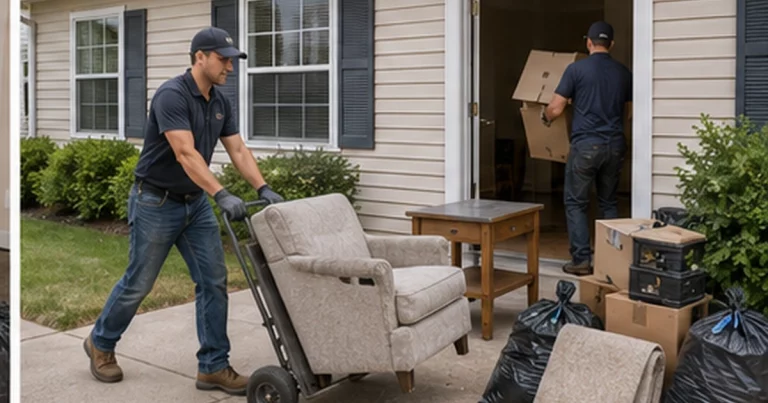
- Enough space for a small garage, attic, or room cleanout
- A compact container for smaller remodeling or yard projects
- 270 cubic feet of usable volume when loaded efficiently
10 Cubic Yards in Feet
The exact conversion is: 10 cubic yards = 270 cubic feet That does not mean the container is 270 feet long. It means the inside space adds up to 270 cubic feet. Different shapes can all equal about 10 cubic yards. For example:- 9 feet long × 10 feet wide × 3 feet high = 270 cubic feet
- 15 feet long × 6 feet wide × 3 feet high = 270 cubic feet
- 12 feet long × 8 feet wide × 2.8 feet high = about 269 cubic feet
What Is a 10-Yard Garbage Container?
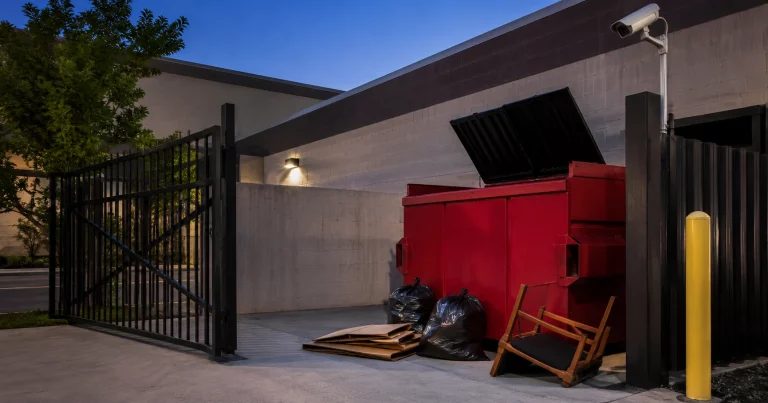
A 10-yard garbage container is a debris container designed to hold up to 10 cubic yards of material. Waste Removal USA’s dumpster sizes page lists a 10-yard container at about 12 feet long, 8 feet wide, and 3 feet high, with capacity of about three pickup loads. Exact dimensions can vary by market and equipment style. A 10-yard container is popular because it is compact. It can usually fit in a residential driveway, is easier to load by hand than taller containers, and provides more capacity than regular curbside trash service. A 10-yard container is often used for:- Garage cleanouts
- Attic cleanouts
- Basement cleanouts
- Small room cleanouts
- Bathroom remodel debris
- Flooring removal
- Carpet and padding
- Yard debris
- Small deck or fence projects
- Heavy debris in limited amounts
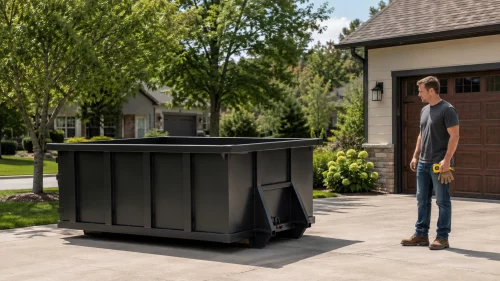
Why Dumpsters Are Measured in Cubic Yards
Garbage containers are measured in cubic yards because debris varies so much by shape and weight. A couch, a pile of branches, drywall scraps, cardboard boxes, carpet rolls, and concrete pieces all fill space differently. Volume gives everyone a standard comparison. A 10-yard container, 20-yard container, and 30-yard container are named for how much space they can hold, not how heavy the load can be. This matters because two projects can fill the same container in completely different ways. A household cleanout may fill the container by volume. A concrete or dirt project may hit the weight limit before the container is full.What Can Fit in 10 Cubic Yards?
A 10-yard garbage container can hold a practical amount of debris for small to medium projects. What fits depends on how bulky the items are and whether you break them down. A 10-yard container may work for:- A single-room cleanout
- A small garage cleanout
- A modest attic cleanout
- Carpet from several rooms
- Small furniture pieces
- Boxes and household clutter
- Bathroom remodel debris
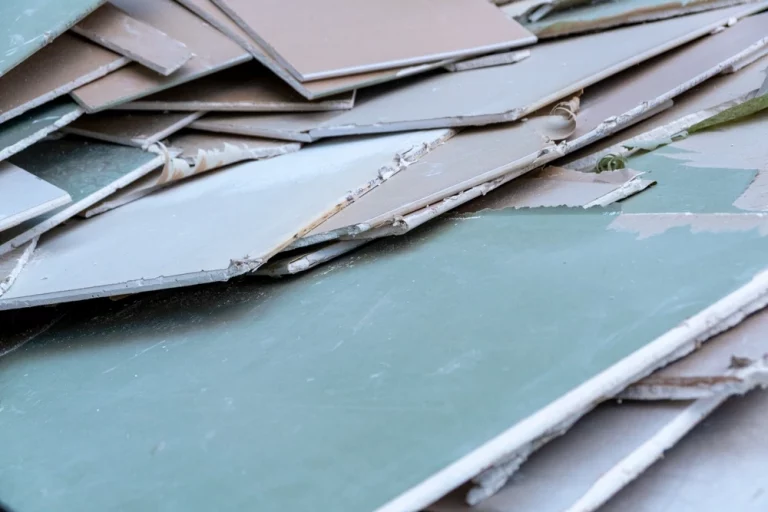
- Drywall from a small repair
- Yard waste from a moderate cleanup
- Small amounts of concrete, brick, dirt, or tile if allowed and weight limits are followed
What Does Not Fit Well in 10 Cubic Yards?
A 10-yard container is not ideal for every job. It may be too small for large, bulky, or multi-room projects. A larger container may be better for:- Whole-home cleanouts
- Estate cleanouts
- Major remodels
- Large kitchen renovations
- Large deck removals
- Multi-room flooring projects
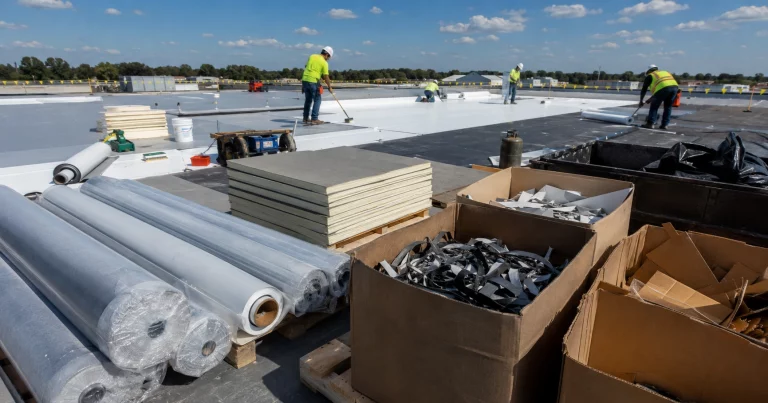
- Full roof tear-offs
- Large furniture cleanouts
- Large construction jobs
- Demolition projects
Volume vs. Weight: The Most Important Difference
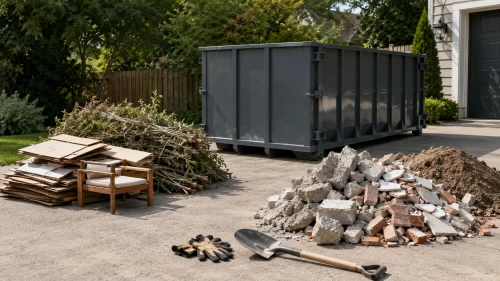 Ten cubic yards describes space. It does not describe weight.
This is one of the most common misunderstandings. A 10-yard container full of cardboard is very different from a 10-yard container full of dirt, concrete, brick, plaster, or shingles. Heavy materials can exceed safe hauling limits long before the container looks full.
Light materials include:
- Cardboard
- Packaging
- Clothing
- Household junk
- Small furniture
- Yard trimmings
- Dry leaves
- Dirt
- Concrete
- Brick
- Stone
- Tile
- Plaster
- Roofing shingles
- Wet debris
Projects Where 10 Cubic Yards Works Well
A 10-yard garbage container is often a good fit when the project is contained and predictable.Small Cleanouts
A spare room, closet, garage corner, attic area, or basement section can often fit in a 10-yard container if the items are not too bulky.Bathroom Remodels
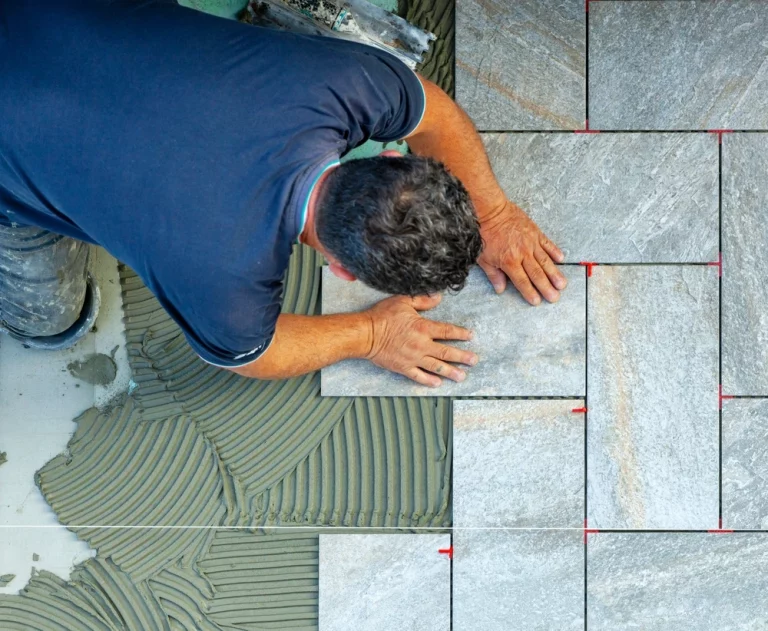
Bathroom remodels generate tile, drywall, fixtures, flooring, vanity pieces, and packaging. A 10-yard container may work for a small bathroom project if heavy material limits are managed.Flooring Removal
Carpet, padding, laminate, and some wood flooring debris may fit well if cut or stacked efficiently.Yard Projects
Branches, shrubs, leaves, mulch, and small outdoor cleanup debris can fit well by volume, but dirt, sod, rock, and stumps may require separate planning because of weight.Heavy-Material Projects
Concrete, brick, dirt, tile, and stone may be appropriate only in limited amounts and only if the provider allows those materials. EPA’s C&D materials guidance identifies concrete, wood, asphalt, gypsum, metals, bricks, glass, plastics, and land-clearing debris as common construction and demolition materials and notes that many materials can be diverted for reuse or recycling.What Should Not Go in a 10-Yard Container?
Some items should not be placed in a standard garbage container, regardless of size. Rules vary by location and provider, but restricted materials often include liquids, chemicals, fuels, oils, pesticides, asbestos-containing materials, batteries, propane tanks, electronics, paint, fluorescent bulbs, medical waste, tires, and pressurized containers. EPA’s household hazardous waste guidance says products such as paints, cleaners, oils, batteries, and pesticides can contain hazardous ingredients and need special care during disposal. It also recommends checking with local environmental, health, or solid waste agencies for HHW options. If you are not sure whether something is allowed, ask before loading it. Removing a prohibited item after it is buried under debris is much harder than separating it at the start.How to Estimate Whether 10 Cubic Yards Is Enough
 Start with the project type, then estimate the debris pile.
Use this simple method:
- Group debris by type.
- Estimate the length, width, and height of the pile in feet.
- Multiply length × width × height.
- Divide by 27.
- Add extra room for irregular shapes and bulky items.
Loading Tips for a 10-Yard Garbage Container
Good loading can make the difference between a container that works and one that runs out of space. Helpful loading tips:- Put flat materials on the bottom.
- Break down boxes.
- Cut long boards when safe.
- Stack similar materials together.
- Keep heavy debris low.
- Do not leave large air pockets.
- Do not load above the top edge.
- Keep prohibited materials separate.
- Avoid placing all weight on one side.
- Save room for last-minute debris.