What Counts as Old or Bad Gasoline?
 There is no single age at which every container of gasoline suddenly becomes unusable. Fuel quality changes with storage conditions, exposure to air and moisture, fuel composition, container condition, and the requirements of the engine or equipment that would use it.
For disposal purposes, the more important question is whether the gasoline is still known to be suitable for its intended use. Treat fuel cautiously when it is contaminated with water, rust, dirt, oil, another chemical, or an unknown substance; when it came from an unknown container; or when you no longer know whether it is appropriate for the equipment.
Do not deliberately smell gasoline, ignite a sample, or pour questionable fuel into an engine simply to test it. If you are unsure whether fuel remains usable, consult the equipment manufacturer or a qualified service professional. If the fuel is unwanted or its condition is uncertain, an approved household hazardous waste program is the safer disposal path.
Is Old Gasoline Household Hazardous Waste?
For homeowners, old gasoline is commonly managed through household hazardous waste programs because gasoline is flammable and requires special care when discarded. The federal regulatory picture is more specific than simply saying that every container of household gasoline is federally regulated hazardous waste. The EPA’s household hazardous waste guidance explains that wastes generated through normal household activities are excluded from the federal Resource Conservation and Recovery Act Subtitle C hazardous-waste program, while states and local governments can impose their own disposal requirements. EPA nevertheless encourages households to use household hazardous waste collection programs rather than dispose of hazardous household products with ordinary trash. That distinction matters because fuel generated by a business is different. Commercial operations, automotive shops, contractors, and gas stations can be subject to federal and state hazardous-waste generator requirements depending on what they generate and in what quantities. A household collection program should not be assumed to accept business-generated fuel unless the program specifically allows it.How to Dispose of Old Gasoline Safely
 If you are trying to learn how to dispose of old gasoline, use this sequence rather than experimenting with a DIY disposal method.
1. Keep the Gasoline Contained
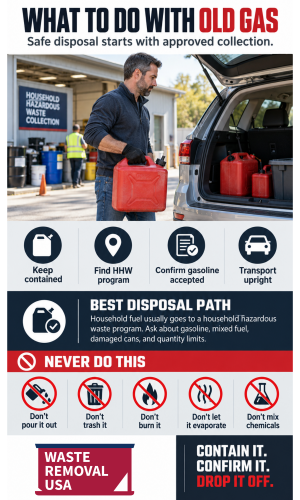
Leave gasoline in its original fuel container when possible, or in a container specifically designed for gasoline. Keep the cap closed when the fuel is not being transferred or used. Never move gasoline into a milk jug, beverage bottle, food container, open bucket, glass jar, or another improvised container. Besides increasing spill and vapor risk, an unlabeled beverage-style container can create a serious poisoning hazard. If the existing container is rusted, cracked, swollen, leaking, or otherwise unsafe, do not casually transfer the gasoline on your own. EPA recommends contacting a local hazardous-materials official or fire department for guidance when a hazardous household product is in a corroding container.2. Find a Household Hazardous Waste Program
Contact your city, county, solid waste district, public works department, environmental agency, or household hazardous waste program. Search specifically for gasoline or flammable-liquid acceptance rather than assuming that a general recycling center will take it. Some communities operate permanent collection facilities. Others schedule collection days or mobile events. Programs may have residency requirements, quantity limits, container rules, appointment requirements, or restrictions on mixed fuels. Call or check the official program instructions before loading gasoline into a vehicle.3. Confirm That the Facility Accepts Gasoline
A facility that accepts motor oil, antifreeze, batteries, or paint does not automatically accept gasoline. Likewise, an automotive store that takes used oil is not necessarily authorized or equipped to take old gasoline. Ask specifically whether the location accepts:- Straight gasoline
- Gasoline mixed with two-cycle oil
- Gasoline contaminated with water or debris
- Unknown or mixed automotive fuel
- Gasoline in damaged containers
- Empty or unwanted gas cans
4. Follow the Facility’s Transportation Instructions
The receiving program should be your primary source for transport requirements. In general, keep the fuel in a compatible gasoline container with the cap secured, keep the container upright, and prevent it from tipping or sliding. Keep gasoline away from cigarettes, flames, sparks, hot equipment, and other ignition sources. Do not leave the fuel in a parked vehicle longer than necessary, and do not make unnecessary stops on the way to the collection site. If the container is leaking or you cannot secure it safely, contact the facility or local fire department before attempting transport.5. Hand It Over Through the Approved Collection Process
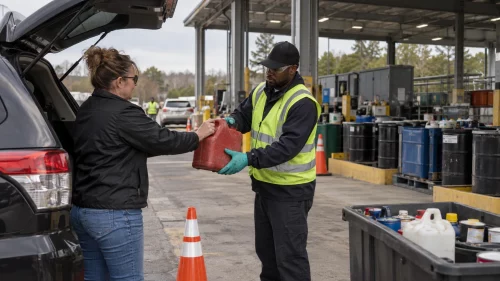
Once you arrive, follow staff directions. Do not pour gasoline into a drain, onto pavement, into another container, or into a collection tank unless facility personnel specifically instruct you to do so. Depending on the program and condition of the fuel, collected gasoline may be managed through fuel blending, energy recovery, hazardous-waste treatment, or another permitted process. The homeowner’s job is not to choose that process but to deliver the material safely to a program authorized to manage it.Where Can You Get Rid of Old Gas?
 The best place to start is your local government rather than a general internet search for a business that might take gasoline.
Household Hazardous Waste Facilities
Permanent household hazardous waste facilities are often the most straightforward option. These programs are designed to accept potentially ignitable, toxic, corrosive, or reactive household products that should receive special handling. EPA recommends checking with your local environmental, health, or solid waste agency for household hazardous waste management options.Household Hazardous Waste Collection Events
If your area does not have a permanent site, it may hold periodic collection events. These events can have strict dates, hours, residency rules, and quantity limits, so confirm the details before transporting fuel.Local Government Transfer Stations
Some transfer stations operate household hazardous waste programs or coordinate with a regional program. Others do not accept gasoline at all. Check the facility’s official material list before visiting.Automotive Businesses
Do not assume an auto parts store, repair shop, dealership, or service center accepts unwanted gasoline. Used-oil collection is common, but gasoline requires different handling. A business may be able to direct you to an approved facility even if it cannot accept the fuel itself.Gas Stations
A normal gas station is not a gasoline disposal site unless it specifically operates an authorized collection program. Do not pour old fuel into station equipment, drains, spill buckets, or trash receptacles. Gas station waste containers are intended for the waste streams the station is authorized to collect, not for customers to discard liquid gasoline. Ask an employee only if the business advertises a specific collection service; otherwise use your local household hazardous waste program.What Not to Do With Old Gasoline
Several disposal ideas that circulate online create unnecessary fire, health, or environmental risk.Do Not Pour Gasoline on the Ground
Gasoline released onto soil can contaminate the property and potentially migrate toward groundwater or surface water. It also creates flammable vapors and can expose people, pets, and wildlife.Do Not Pour It Into a Drain, Toilet, Gutter, or Storm Sewer
EPA advises against pouring household hazardous waste down drains, on the ground, or into storm sewers. Gasoline can create fire and vapor hazards in addition to water-pollution concerns.Do Not Throw Liquid Gasoline in the Trash
A fuel-filled container can leak, release vapors, or ignite during collection, compaction, transfer, or disposal. Even where federal household-waste rules provide an exclusion, state and local rules can be stricter, and EPA encourages use of household hazardous waste programs.Do Not Burn It
Never use unwanted gasoline as a method of starting or feeding a fire. The Consumer Product Safety Commission’s gasoline and fuel-container safety guidance warns that gasoline vapors can ignite and flash back into a fuel container, causing severe burns and a violent flame-jetting event. Burning gasoline is not a safe household disposal method.Do Not Leave It Open to Evaporate
Intentional evaporation releases flammable gasoline vapors and increases the time an open fuel container is exposed to ignition sources, children, animals, weather, and spills. Keep fuel containers closed and use an approved collection program instead.Do Not Mix It With Other Chemicals
Do not combine old gasoline with oil, paint thinner, solvents, pesticides, antifreeze, household cleaners, or other wastes in an attempt to simplify disposal. EPA specifically advises against mixing household hazardous wastes because incompatible products may react, ignite, explode, or make the waste harder to manage. If gasoline is already mixed with another material, tell the receiving facility exactly what you know about the mixture.Can You Mix Old Gas With Fresh Gas and Use It?
Do not assume that adding fresh gasoline or a fuel additive makes degraded or contaminated gasoline safe for an engine. Fuel stabilizers should not be treated as a universal way to restore unknown or contaminated gasoline. Water, rust, debris, phase separation, incorrect fuel mixtures, or chemical contamination can create problems that fresh fuel does not solve. If you know exactly how the gasoline was stored and are considering using it instead of discarding it, follow the fuel and equipment manufacturer’s guidance. If you do not know what is in the container or whether it is compatible with the engine, do not experiment with valuable equipment simply to avoid a disposal trip. For truly unwanted or questionable gasoline, approved collection is the clearer option.How to Handle Old Gasoline Before Disposal
Gasoline safety depends heavily on controlling vapors and ignition sources. CPSC advises consumers to keep gasoline and portable fuel containers in cool, well-ventilated storage areas and away from ignition sources. It specifically warns against storing gas cans inside a house or basement or near appliances and other sources that could ignite vapors. Keep children and pets away from stored fuel. Keep caps closed. Do not smoke near gasoline. Do not use heaters, flames, or other obvious ignition sources around a spill or open container. If gasoline spills substantially, leaks in an enclosed area, or creates an immediate fire or vapor hazard, leave the danger area and contact the fire department or emergency services rather than improvising a cleanup.How to Transport Old Gasoline for Disposal
Transportation should be planned before you move the fuel. Use a gasoline-compatible portable fuel container in good condition. CPSC requirements for consumer portable fuel containers address child resistance and flame-mitigation features, and current containers are designed specifically for storing and dispensing liquid fuels. Before the trip:- Confirm that the destination will accept the gasoline.
- Ask whether it requires a particular container or quantity limit.
- Close the container securely.
- Keep the container upright.
- Secure it so it cannot tip or slide.
- Keep it away from ignition sources.
- Avoid transporting unrelated passengers, children, or pets with hazardous material when another arrangement is practical.
- Go directly to the facility rather than leaving gasoline in the vehicle during errands.
What to Do With Old Gasoline Mixed With Oil
Gasoline mixed with two-cycle oil, used motor oil, diesel, water, or another liquid should not automatically be poured into a used-oil collection tank. Tell the household hazardous waste facility what the gasoline is mixed with. Some programs accept mixed fuel, while others separate it from used oil because the material is more volatile and may require different processing. Waste Removal USA also explains how to handle ordinary lubricant in its guide to disposing of motor oil. Gasoline should not be treated as if it were interchangeable with used engine oil.What About Gasoline From a Business or Gas Station?
Household disposal guidance does not automatically apply to commercial waste. EPA regulates hazardous-waste generators based on the type and quantity of hazardous waste they generate. Ignitable hazardous waste carries the federal waste code D001 when it meets the regulatory definition for ignitability. Businesses should make the appropriate waste determination and comply with applicable federal and state requirements. A repair shop, contractor, landscaping company, marina, generator-service business, or gas station should follow its applicable hazardous-waste requirements rather than use a residential drop-off program without authorization. That can include proper identification, storage, container management, accumulation requirements, and delivery to an authorized facility. State rules can be more stringent than federal requirements.How to Dispose of an Old Gas Can
Gasoline disposal and gas-can disposal are two separate decisions. A container that appears empty can still contain residue or flammable vapor. EPA warns that even empty containers that held household hazardous products can continue to pose hazards because chemicals remain behind.Do Not Intentionally Vent the Can for Days
Leaving a gasoline can uncapped to “air out” intentionally releases vapors and conflicts with CPSC guidance to keep portable fuel containers closed when they are not in use. Instead, ask the household hazardous waste program whether it accepts the unwanted container along with the gasoline or what preparation it requires.Do Not Rinse It Out
Rinsing a gasoline can simply creates contaminated rinse water that also needs proper management. Do not pour water, detergent, solvent, or another chemical into the can in an attempt to make it safe for recycling.Do Not Cut, Drill, Crush, or Burn It
A can with residual vapor can ignite if a spark or flame is introduced. Do not puncture, grind, saw, flatten, or burn an old gas can as a DIY disposal step.Check Local Trash and Recycling Rules
Some local programs may accept certain completely empty fuel containers under specific preparation rules; others direct gasoline containers to household hazardous waste. Plastic and metal cans should not be placed in curbside recycling solely because of their material. Follow the local program’s instructions rather than assuming an “empty” can is ordinary packaging.What to Do With a Damaged or Leaking Gas Can
A leaking container changes the situation because moving the fuel can increase spill and vapor risk. Keep people away from the area and eliminate nearby flames, smoking, and other obvious ignition sources. Do not bring a leaking can into a home or occupied indoor space. Do not pour the gasoline into an improvised container. Contact your household hazardous waste program, fire department, or local hazardous-materials authority and explain that the container is damaged or leaking. EPA recommends getting local guidance for deteriorating hazardous-product containers rather than improvising a transfer. If there is an active significant spill, strong vapor accumulation, fire, or immediate danger, contact emergency services.Planning Gasoline Disposal During a Larger Cleanup
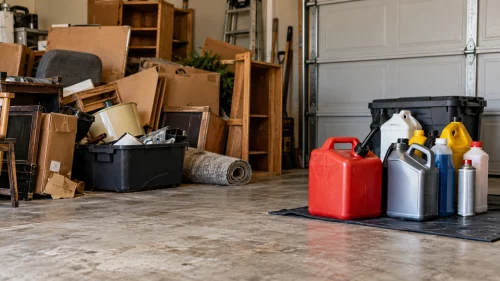
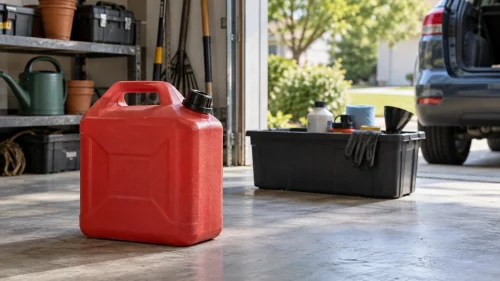 Old gasoline often turns up during garage, shed, estate, foreclosure, and property cleanouts along with paint, pesticides, propane cylinders, batteries, automotive fluids, and other materials that require separate handling.
Sort questionable chemicals before loading ordinary debris. Do not put gasoline, fuel cans containing residue, or other flammable liquids into a general cleanup container.
Waste Removal USA’s household chemical disposal guide explains how to separate common hazardous household products, while its guide to materials requiring special disposal can help you identify materials that need another outlet before a cleanup container arrives.
For garages filled with ordinary bulky waste after hazardous materials have been separated, the Waste Removal USA garage cleanup guide can help you organize the remaining debris.