What Counts as Tree Debris?
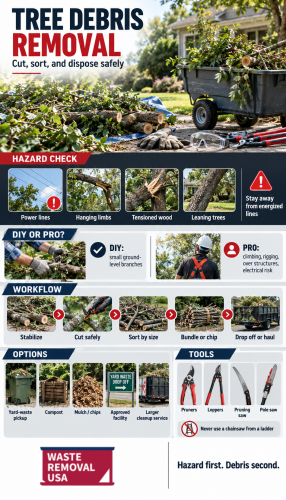 Tree debris includes woody and leafy material created by pruning, storms, tree removal, landscaping, and property clearing.
Common examples include:
- Small twigs
- Tree branches
- Large limbs
- Brush
- Leaves attached to branches
- Trunk sections
- Logs
- Bark
- Cut saplings
Why Is Tree Branch Clean Up More Difficult Than It Looks?
Branches are awkward rather than exceptionally heavy. They:- Interlock with one another.
- Take up substantial volume.
- Have sharp cut ends.
- Can contain thorns.
- Can scratch vehicles.
- Are difficult to stack efficiently.
- May exceed curbside length or diameter limits.
What Commonly Creates Debris From Trees?
Several common projects produce tree debris.Routine Pruning
Seasonal pruning can generate small to medium branches, twigs, and leafy material.Storm Damage
Wind, ice, lightning, and heavy snow can leave:- Broken limbs
- Hanging branches
- Split trunks
- Fallen trees
- Bent branches under tension
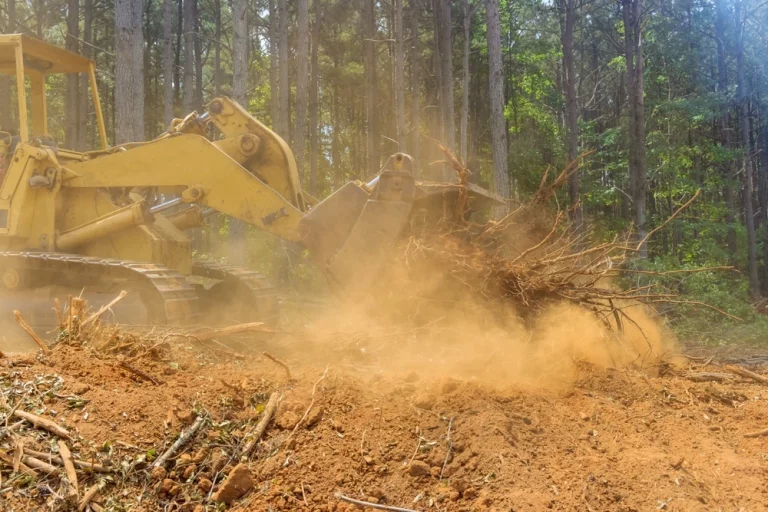
Tree Removal
Removing a complete tree can generate:- Crown material
- Large limbs
- Trunk sections
- Smaller branches
- Brush
Landscape Clearing
Overgrown properties may produce mixed woody vegetation including:- Brush
- Saplings
- Vines
- Branches
- Small trees
Should You Cut the Branches Yourself?
Small, accessible branches can often be reasonable DIY work. Professional help becomes more appropriate when the job involves:- Large hanging limbs
- Branches over a house
- Branches over vehicles
- Damaged trunks
- Leaning trees
- Broken tops
- Large dead branches
- Climbing
- Rigging
- Electrical lines
- Branches under significant tension
Never Perform DIY Tree Work Near Power Lines
Treat every overhead electrical conductor as energized unless the utility confirms otherwise. OSHA guidance for tree work around electricity establishes specialized line-clearance requirements and identifies 10 feet as a critical minimum approach distance for many lower-voltage overhead systems. See OSHA’s line-clearance tree-trimming guidance. For a homeowner, the practical rule is simpler: Do not prune, cut, pull, drag, or climb into branches that are contacting or close to power lines. Also stay away from:- Downed wires
- Trees touching downed wires
- Fences energized by fallen conductors
- Branches lying across electrical equipment
What Tools Are Appropriate for Small Tree Limb Removal?
Match the tool to the branch.Hand Pruners
Useful for small stems and branches.Loppers
Long handles provide additional leverage for somewhat larger branches.Pruning Saw
A pruning saw works well on branches that are too large for loppers but can still be safely reached from the ground.Pole Saw
Pole saws extend reach but become harder to control. Keep yourself outside the expected fall path.Chainsaw
Chainsaws are appropriate only for operators who understand the equipment, cutting forces, kickback hazards, and the behavior of the wood being cut. CDC recommends appropriate protective equipment including:- Eye protection
- Hearing protection
- Work gloves
- Chainsaw-resistant leg protection
- Boots covering the ankle
- Head protection where falling material is a risk
Should You Use a Chainsaw From a Ladder?
Avoid combining unstable access with chainsaw operation. University of Minnesota Extension specifically advises never using a chainsaw while on a ladder and never using one to reach above your shoulders. If a limb cannot be safely reached from stable ground with appropriate equipment, that is a strong sign that professional tree service is the safer choice. A ladder can also be struck or displaced when the cut branch falls.Watch for Branches Under Tension After a Storm
Storm-damaged limbs can behave like loaded springs. A branch may be:- Bent underneath another tree
- Twisted
- Pinched
- Hung in another branch
- Supporting weight
- Pressed against the ground
How Do You Properly Remove a Large Branch From a Healthy Tree?
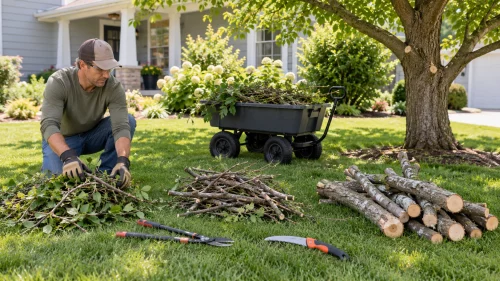 For an accessible branch that can safely be pruned from the ground, use the three-cut method.
First Cut: Undercut
Make a shallow cut on the underside of the branch outside the branch collar. This helps prevent bark from tearing down the trunk.Second Cut: Remove the Weight
Move farther out on the branch and cut through it from above. The main branch falls away, leaving a short stub.Third Cut: Remove the Stub
Make the final cut just outside the branch collar. Do not cut flush against the trunk. Do not leave a long unnecessary stub. The University of Minnesota’s tree-pruning guidance provides additional information about branch collars and proper cuts.Should You Seal a Tree Branch After Cutting It?
Usually, no. The source article recommended applying pruning sealer after removing a limb. That is not standard guidance for most pruning cuts. Trees respond to wounds by forming their own protective boundaries and growing new tissue around the wound. Routine wound dressings generally do not:- Stop decay
- Speed normal closure
- Cure disease
When Is the Best Time to Remove a Tree Limb?
There is no single season that applies to every tree and every reason for pruning. Dormant-season pruning is often useful because:- Branch structure is easier to see.
- Some disease risks may be lower.
- The tree is not actively producing leaves.
- Broken limbs
- Hanging branches
- Storm damage
- Dead branches over occupied areas
- Limbs obstructing critical access
When Should You Hire a Certified Arborist?
Use a qualified arborist when the project requires more than basic ground-level trimming. Good reasons include:- Large mature trees
- Major limb removal
- Structural defects
- Storm damage
- Tree preservation concerns
- Suspected disease
- Significant decay
- Large deadwood
- Cabling or support questions
- Difficult rigging
- Branches over structures
How Do You Clean Up Tree Branches After Cutting?
Once branches are safely on the ground, organize them before moving them. Start by separating:- Small brush
- Medium branches
- Large limbs
- Logs
- Leaves and fine debris
- Chipped
- Composted
- Reused
- Collected curbside
- Taken to a drop-off facility
- Hauled with a larger cleanup project
What Is the Best Way to Dispose of Tree Branches?
There is no single best method. The most practical options are usually:- Municipal yard-waste collection
- Local brush pickup
- Yard-waste or composting drop-off
- Chipping
- Home composting for appropriately sized material
- Reuse as woody landscape material
- Transport to an approved facility
- Larger-volume cleanup service
Can Tree Branches Go in Yard-Waste Pickup?
Often, yes—but only within local limits. EPA recognizes brush and branches as yard trimmings, and many communities offer curbside organics or yard-trimming collection. Rules can specify:- Maximum branch diameter
- Maximum branch length
- Maximum bundle size
- Maximum bundle weight
- Approved containers
- Collection days
- Whether twine must be used
- Whether bags are allowed
Can You Put Tree Branches in Regular Trash?
It depends on the local collection system. Some communities prohibit woody yard debris from ordinary household trash. Others accept very small quantities if material fits entirely inside the container. Still others have seasonal rules or separate organics collection. Do not assume branches are universally prohibited from trash collection. The safest approach is to check the local rules before setting material at the curb.Can Tree Branches Be Composted?
Smaller woody material can be composted. EPA includes tree trimmings, twigs, and woody yard material among compostable organic materials. See EPA’s home composting guidance. Large whole branches break down very slowly. They work better when:- Chipped
- Shredded
- Cut into smaller pieces
Can Tree Branches Be Turned Into Mulch?
 Yes.
Chipping is one of the most useful ways to manage clean woody debris.
Wood chips can potentially be used for:
- Paths
- Tree rings
- Landscape beds
- Erosion control
- Compost carbon
Should You Rent a Wood Chipper?
Small chippers can be useful for appropriate homeowner projects, but they are powerful machines. Read and follow the equipment manufacturer’s requirements. Never:- Reach into the feed chute.
- Push material with your hands beyond permitted procedures.
- Wear loose clothing around moving equipment.
- Allow children near the machine.
- Feed material larger than the machine’s rating.
Can You Burn Tree Branches?
Possibly, but only where local law and conditions allow it. Burning rules can depend on:- City or county ordinance
- State regulations
- Fire season
- Burn bans
- Air-quality restrictions
- Required permits
- Property size
- Weather
- Painted lumber
- Treated lumber
- Construction debris
- Household trash
Can Tree Debris Be Recycled?
Yes. EPA reports that yard trimmings are commonly:- Composted
- Chipped
- Mulched
How Do You Handle Storm Tree Debris?
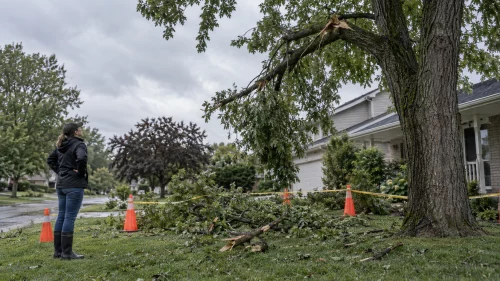
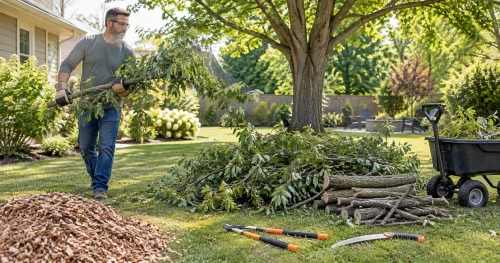 Storm cleanup starts with safety, not cutting.
Before touching debris:
- Look for power lines.
- Look for leaning trees.
- Look for hanging branches.
- Identify material under tension.
- Keep people away from unstable areas.
- Photograph significant property damage when insurance may be involved.
- Check for local emergency debris instructions.
- Vegetative debris
- Construction material
- Appliances
- Household hazardous material
How Should Branches Be Stacked for Storm Pickup?
Follow your local emergency-management instructions. When curbside vegetative collection is offered, branches may need to be placed:- Near the public right-of-way
- Away from mailboxes
- Away from utility equipment
- Away from fire hydrants
- Away from drainage structures
- Separate from construction debris
What if a Tree Falls Across the Yard?
A complete fallen tree is different from an ordinary branch pile. Evaluate:- Power-line involvement
- Structure damage
- Root-ball movement
- Trunk tension
- Hung limbs
- Access
- Diameter
How Can You Make Hauling Tree Branches Easier?
Branches take up less space when they are organized. For manual hauling:- Cut long branches into manageable lengths.
- Stack branch tips in the same direction.
- Separate heavy limbs.
- Keep thorny material isolated.
- Use a tarp or suitable yard cart for small brush.
- Wear gloves.
- Do not overload yourself.
Can You Haul Tree Branches in a Pickup Truck?
Yes, when the material can be transported securely and legally. Keep branches from:- Obstructing the driver’s view
- Extending dangerously from the vehicle
- Falling onto the roadway
- Covering lights or the license plate
- Whether it accepts branches
- Maximum sizes
- Hours
- Fees
- Residency requirements
What If You Have Too Much Tree Debris for a Pickup Truck?
Large trimming or landscape projects can produce more debris than repeated personal-vehicle trips can reasonably handle. For larger cleanup projects, compare:- Municipal bulk pickup
- Yard-waste drop-off
- Arborist hauling
- Chipping
- Appropriate on-site cleanup capacity
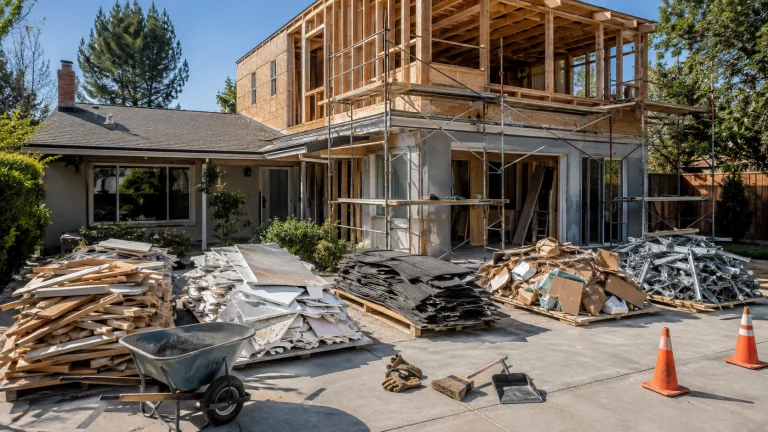
Should Branches Be Mixed with Other Renovation Debris?
Keep clean tree debris separate when practical. A pile containing only:- Branches
- Brush
- Leaves
- Clean wood chips
- Drywall
- Plastic
- Roofing
- Metal
- Household trash
What Does Professional Tree Debris Removal Usually Include?
Service scope varies. A tree company may quote:- Cutting only
- Cutting and chipping
- Cutting and hauling
- Complete cleanup
- Stump grinding separately
- Is hauling included?
- Is chipping included?
- Are logs included?
- Is stump work separate?
- Will chips remain on the property?
- Is final raking included?
What Determines Tree Limb Removal Cost?
Professional pricing depends on risk and complexity more than simple branch count. Important factors include:- Limb diameter
- Limb height
- Tree condition
- Access
- Nearby structures
- Electrical hazards
- Rigging requirements
- Equipment access
- Emergency service
- Debris hauling
Can You Get Free Tree Debris Removal After a Storm?
Sometimes. Following major declared disasters or severe local storms, communities may establish temporary vegetative-debris pickup. FEMA notes that local governments often manage disaster debris placed at the curb under locally announced collection procedures. That does not mean free storm cleanup is universally available. Check:- City
- County
- Township
- Emergency management agency
- Public works department