How Much Does Shed Removal Cost in 2026?
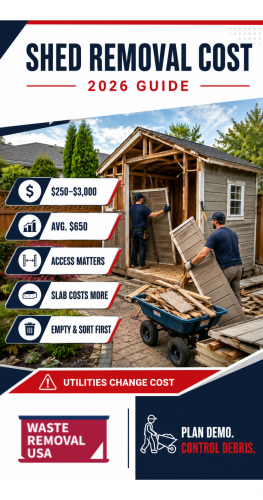
Current 2026 pricing puts professional shed removal at approximately $250 to $3,000, with an average around $650. Pricing commonly runs about $3.50 to $11.50 per square foot, although very small projects may still be subject to a contractor’s minimum charge. Current shed removal prices from Angi provide examples such as:| Shed Size | Typical 2026 Removal Range |
| 6 × 8 feet | About $170–$550 |
| 10 × 12 feet | About $420–$1,380 |
| 10 × 16 feet | About $560–$1,840 |
| 12 × 24 feet | About $1,000–$3,300 |
What Is Included in Shed Demolition and Removal Cost?
 A complete shed demolition and removal cost usually covers more than breaking the structure apart.
Depending on the contractor and quote, the project may include:
- Emptying or preparing the structure
- Controlled demolition or deconstruction
- Removing the roof
- Taking down walls and framing
- Removing doors and windows
- Separating reusable or recyclable materials
- Loading debris
- Transporting debris
- Disposal fees
- Removing loose fasteners
- Basic final cleanup
What Is the Difference Between Shed Demolition and Shed Removal?
Shed demolition means dismantling or tearing down the structure. Shed removal normally includes the teardown plus getting the resulting material off the property. That distinction matters because debris handling can represent a significant portion of the final price. Current 2026 estimates show disposal-related costs alone can range from several hundred dollars to well over $1,000 for larger projects. A low demolition quote may therefore not be the lowest total price if loading, hauling, disposal, or site cleanup are charged separately. When comparing estimates, ask whether each quote includes:- Demolition
- Labor
- Equipment
- Loading
- Hauling
- Disposal
- Foundation work
- Cleanup
What Factors Affect Shed Removal Cost the Most?
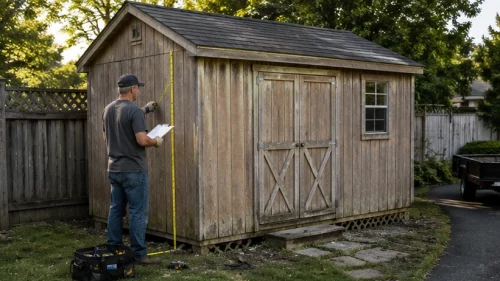 The largest shed removal cost factors are size, construction material, foundation type, condition, accessibility, disposal requirements, and whether utilities or hazardous materials are involved.
Two sheds with exactly the same footprint can have very different removal prices.
For example, an 8 × 10 lightweight shed sitting on blocks near a driveway may be relatively straightforward to dismantle. The same-size structure built from heavy lumber on a concrete slab behind a fenced yard can require substantially more labor.
Understanding the major cost drivers helps you estimate where your project will fall within the typical range.
How Does Shed Size Affect Removal Cost?
Larger sheds usually require more labor and create more debris. A small garden shed may be dismantled relatively quickly, while a large workshop-style structure can contain substantially more:- Roofing
- Wall sheathing
- Framing lumber
- Siding
- Flooring
- Doors
- Windows
- Insulation
- Electrical components
- Shelving
How Much Does Garden Shed Removal Cost?
Garden shed removal cost usually falls toward the lower portion of the national range when the structure is small, empty, easy to access, and sitting on blocks, skids, gravel, or another simple base. A small garden shed might cost only a few hundred dollars to remove professionally. The price increases when the shed:- Has a concrete slab
- Is packed with stored items
- Sits behind narrow gates
- Contains extensive shelving
- Has electricity
- Has significant rot
- Contains suspect hazardous materials
- Is built from heavy framing
Does a Metal Shed Cost More to Remove?
Metal shed removal cost varies, but metal structures can sometimes cost more to dismantle than simple wood or lightweight plastic sheds. Large sheet-metal panels can be sharp and awkward to handle. Rusted edges and deteriorated fasteners can also slow the work. However, metal has an advantage: some components may be recyclable. The final cost depends on whether the shed is:- Thin-gauge prefabricated metal
- Heavy steel construction
- Bolted together
- Welded
- Anchored to concrete
- Rusted or structurally unstable
How Does a Concrete Foundation Affect Shed Removal Cost?
A concrete slab can increase the cost of shed removal substantially. Once the shed itself is gone, the slab may need to be broken, separated, loaded, transported, and disposed of. HomeGuide currently places complete shed and concrete-pad removal at approximately $1,200 to $3,500 in many cases. Concrete adds cost because it is:- Heavy
- Labor-intensive to break
- Difficult to move manually
- Sometimes reinforced
- Often subject to separate disposal rules
Does Shed Condition Affect the Cost?
Yes, although not always in the way homeowners expect. A deteriorated shed may look easier to knock down, but serious rot, fire damage, unstable framing, or a sagging roof can make demolition more dangerous. An unstable structure may require slower work to avoid an uncontrolled collapse. OSHA’s demolition safety guidance emphasizes that demolition introduces hazards from unknown structural conditions, previous modifications, hidden materials, and unexpected weaknesses. Professional workplace requirements differ from a homeowner DIY project, but the underlying safety principle is useful: do not assume a deteriorated structure is automatically easier or safer to demolish. If walls are leaning or the roof is collapsing, avoid entering the shed unnecessarily.How Does Backyard Access Affect Shed Removal Prices?
Accessibility can make a major difference in shed removal prices. A shed beside a driveway allows tools, carts, trailers, or equipment to get close to the structure. A shed at the back of a fenced property may require every piece of debris to be carried manually. Costs can rise when:- The gate is narrow.
- There is no vehicle access.
- The yard is steep.
- The shed sits behind landscaping.
- Materials must be carried through a garage.
- Equipment cannot reach the structure.
- Stairs separate the shed from the street or driveway.
Does Removing the Shed Contents Cost Extra?
Often, yes. A shed full of lawn tools, shelves, paint cans, furniture, scrap wood, chemicals, bicycles, and other belongings takes longer to prepare and can substantially increase debris volume. Clearing the shed yourself before demolition may reduce labor and disposal costs. Sort the contents into:- Keep
- Donate
- Sell
- Recycle
- Special handling
- Approved debris
Do Utilities Increase Shed Demolition Cost?
They can. Some sheds are more like small workshops and may have:- Electrical service
- Lighting
- Receptacles
- Water
- Drainage
- Gas
- Heating equipment
Do You Need a Permit to Tear Down a Shed?
Maybe. Permit requirements are local, and small detached sheds may be treated differently from larger structures, utility-connected buildings, or sheds on permanent foundations. Do not assume that every shed requires a demolition permit, but do not assume small structures are automatically exempt either. Before work begins, contact the local building or permitting department and ask:- Is a demolition permit required?
- Does shed size matter?
- Does a concrete slab change the requirement?
- Does utility service need separate approval?
- Are there inspection requirements?
- Are there historic-property restrictions?
- Are there disposal documentation requirements?
Should You Check for Buried Utilities?
Yes, especially if the project will disturb the slab, footings, anchors, posts, or soil. A shed may have underground electrical service, water piping, irrigation, drainage, gas, or other buried lines nearby. Do not begin excavation simply because the visible shed has already been demolished. If the project involves digging, follow applicable local utility-marking requirements before breaking ground. This becomes especially important if you plan to remove concrete footings or excavate for a replacement structure immediately afterward.Could an Old Shed Contain Asbestos?
Possibly, but age alone cannot confirm whether a shed contains asbestos. Older roofing, siding, cement board, flooring, insulation, mastics, and other building products may contain asbestos. The EPA states that you cannot reliably determine whether a material contains asbestos just by looking at it. If suspect material will be disturbed during renovation or demolition, EPA recommends having it sampled by a properly trained and accredited asbestos professional. Review the EPA’s guidance for homeowners dealing with suspected asbestos materials before disturbing unfamiliar materials. Do not use a generic construction date such as “before 1980” or “before 1990” as proof that asbestos is or is not present.What About Lead Paint on an Old Shed?
Old painted wood or metal can also present a lead concern. If the shed or its painted components date from before 1978, lead-based paint may be present. Demolition methods that crush, sand, grind, scrape, or saw painted materials can create dust. Review the EPA’s lead-safe renovation guidance for DIYers before disturbing older painted materials. Do not burn painted demolition wood. If you are uncertain about the coating or material, identify the issue before demolition rather than after the debris has already been mixed together.Can You Tear Down a Shed Yourself?
A small, simple shed may be a reasonable DIY project for an experienced homeowner. DIY becomes less appropriate when the shed is:- Large
- Structurally unstable
- Connected to utilities
- Built on substantial concrete
- Close to another structure
- Difficult to access
- Heavily framed
- Contaminated with chemicals
- Suspected of containing asbestos
- Covered with old lead-containing coatings
- Damaged by fire or severe weather
What Is the Safest Way to Demolish a Small Shed?
Controlled deconstruction is usually safer than simply trying to knock the entire structure over. The exact sequence depends on how the shed was constructed, but a typical approach begins with emptying the structure and disconnecting utilities. Then removable components may be taken out before the main framing. The general concept is to work in manageable sections and avoid creating unsupported walls or roof sections that can fall unpredictably. Common tools may include:- Screwdrivers and drivers
- Pry bars
- Claw hammer
- Adjustable wrench
- Pliers
- Reciprocating saw where appropriate
- Utility knife
- Shovel
- Wheelbarrow or cart
Should You Use a Sledgehammer to Tear Down a Shed?
A sledgehammer can be useful for certain demolition tasks, but it should not be the primary strategy. Uncontrolled impact creates more broken debris and makes it harder to preserve reusable materials. It can also cause:- Walls to collapse unpredictably
- Nails to become exposed
- Sharp fragments to fly
- Adjacent structures to be damaged
- Hidden utilities to be struck
Can a Shed Be Deconstructed Instead of Demolished?
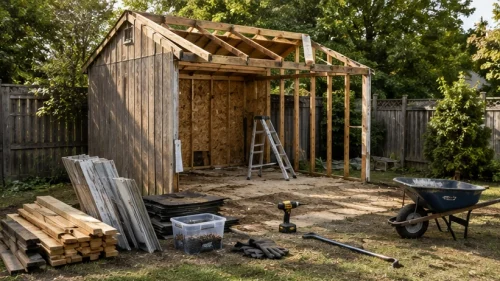 Yes.
Deconstruction means taking the shed apart carefully enough to preserve usable components.
This can make sense when the structure contains:
- Good framing lumber
- Reusable metal siding
- Sound roofing panels
- Doors
- Windows
- Shelving
- Hardware
- Fixtures
Can You Get a Shed Removed for Free?
Sometimes, but usually only when the structure itself has reuse value. If a shed is still in good condition, you can offer it for free to someone willing to move or dismantle it. This works best with:- Portable sheds
- Prefabricated metal sheds
- Small wood sheds in good condition
- Structures built on skids
- Sheds with reusable panels or framing
- Dismantling
- Transportation
- Property damage
- Utilities
- Cleanup
How Can You Reduce Shed Removal Cost?
The most reliable cost savings come from reducing labor and disposal volume without making the project less safe. You may be able to save money by:- Emptying the shed yourself.
- Removing loose shelving.
- Donating usable contents.
- Selling a reusable shed.
- Separating recyclable metal.
- Salvaging doors and windows.
- Comparing several detailed estimates.
- Scheduling work when access conditions are good.
- Leaving a sound slab in place if it will be reused.
- Planning debris handling in advance.
How Do You Compare Shed Removal Estimates?
Get several estimates when the project is large enough that pricing differences matter. Provide each contractor with the same basic information:- Shed dimensions
- Photos
- Construction material
- Foundation type
- Condition
- Utility connections
- Shed contents
- Access route
- Whether the slab is staying
- Desired final site condition
- Permits
- Utility coordination
- Demolition
- Labor
- Equipment
- Loading
- Disposal
- Concrete
- Site cleanup
- Taxes or fees
How Should Shed Demolition Debris Be Sorted?
Shed removal can create several different material streams. Common debris includes:- Lumber
- Plywood
- OSB
- Roofing
- Metal siding
- Vinyl or plastic panels
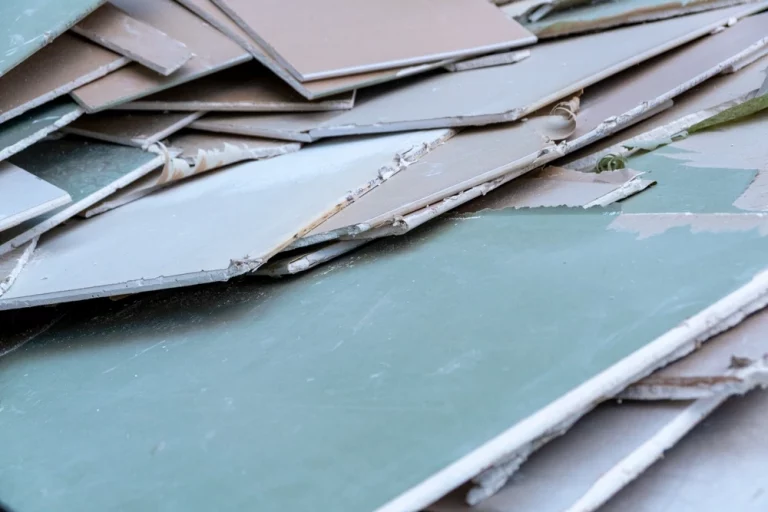
- Drywall
- Concrete
- Nails and fasteners
- Windows
- Doors
- Insulation
What Size Cleanup Container Works for Shed Demolition?
The right size depends on the shed dimensions, construction method, foundation, contents, and how compactly the materials can be loaded. A very small garden shed may fit within a compact cleanup option once materials are taken apart. A 10-yard cleanup container can be suitable for some small shed projects. A larger heavily framed shed may require more capacity. A 20-yard container may be more appropriate when the demolition produces substantial wood, roofing, siding, and interior material. Concrete deserves special attention because it is extremely dense. Weight limits can be reached long before a container appears full. Describe the project materials before arranging service so the correct loading requirements can be established.Why Does Debris Weight Matter?
Volume is only part of removal planning. Wood framing, metal panels, roofing, and concrete can create very different load weights even if they occupy similar amounts of space. Concrete slabs and footings are particularly heavy. Do not keep loading dense material simply because there is empty space remaining. Exceeding weight limits can increase disposal cost and create transportation issues. Separating concrete from lighter shed material may make the project easier to manage.How Much Does Concrete Shed Pad Removal Cost?
There is no single concrete-pad price because thickness, reinforcement, access, size, and local disposal rates all affect the job. Current shed removal data places complete shed-and-slab projects around $1,200 to $3,500 in many cases. Separate concrete demolition is often priced by square foot or total project scope. A thin unreinforced pad accessible to equipment may be relatively straightforward. A thick reinforced slab surrounded by fencing and landscaping can be substantially more expensive. Before removing the pad, decide what will replace the shed. A usable slab may work for:- A new shed
- Patio seating
- Storage
- Outdoor equipment
- Another permitted accessory structure
What Should the Site Look Like After Shed Removal?
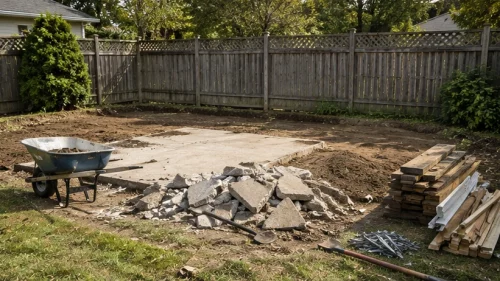 Clarify this before the project starts.
“Remove the shed” may mean different things to different contractors.
Possible final conditions include:
- Shed removed but slab left in place
- Shed and foundation removed
- Debris cleared
- Nails and sharp material picked up
- Soil roughly leveled
- Area graded
- New topsoil installed
- Grass reseeded
- Site prepared for another structure
Should You Remove a Shed or Repair It?
Removal is not always the most economical choice. A shed may be worth repairing when:- The framing remains structurally sound.
- Roof damage is localized.
- Siding can be repaired.
- Doors need adjustment rather than replacement.
- The foundation is stable.
- The shed is still useful.