Why Pallet Removal Matters in a Warehouse
Pallets are part of daily warehouse operations, but unmanaged pallets create problems quickly. They take up floor space, slow down forklifts, block dock doors, create trip hazards, interfere with fire lanes, and make inventory areas harder to manage. A strong pallet removal system can help:- Keep aisles and exits clear
- Improve loading dock efficiency
- Reduce clutter around receiving
- Support safer forklift movement
- Prevent pest harborage
- Reduce fire and housekeeping concerns
- Recover value from reusable pallets
- Separate scrap from usable inventory
- Reduce avoidable disposal
- Make cleanup easier during busy seasons
Start With a Pallet Audit
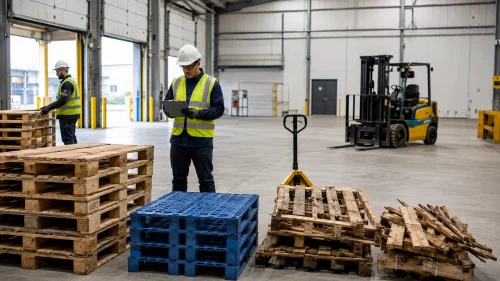 Before arranging pickup, recycling, or disposal, walk the facility and count what you have. A pallet audit does not need to be complicated. It should answer a few practical questions.
Track:
- How many pallets are usable
- How many are broken
- How many belong to vendors
- How many are wood, plastic, or metal
- How many are standard sizes
- How many are odd sizes
- Where pallets are piling up
- How often new pallets arrive
- Whether pallets are clean or contaminated
- Whether there is a return program
Sort Pallets by Condition
The fastest way to improve pallet management is to sort pallets into clear categories. Useful categories include:- Reusable in-house
- Returnable to vendor
- Repairable
- Resalable
- Recyclable
- Scrap or disposal
- Contaminated or special handling
Know the Main Pallet Types
Most pallet removal decisions depend on material type.Wood Pallets
Wood pallets are the most common. They can often be reused, repaired, dismantled, chipped, ground, or recycled into other wood products. EPA’s wood material-specific data reports that wood pallet recycling was estimated at 3.1 million tons in 2018, usually by chipping for uses such as mulch or bedding material.Plastic Pallets
Plastic pallets are often used in food, pharmaceutical, retail, and closed-loop distribution systems. They can be durable and washable, but recycling options depend on the plastic type and local processors. Plastic pallets should not be mixed casually with wood scrap.Metal Pallets
Metal pallets are less common but may be used in industrial, heavy-duty, or specialized settings. They are heavy, durable, and often recyclable through metal channels if separated properly.Export Pallets
Export pallets may need special attention. USDA APHIS explains that wood packaging material such as pallets, skids, crates, and dunnage used in international trade must meet ISPM 15 treatment and marking requirements when applicable. If your warehouse handles imports or exports, do not mix compliant export pallets with random scrap unless your shipping team confirms they are no longer needed.Reuse Pallets Before Removing Them
The most efficient pallet is often the one you never have to remove. If pallets are still safe and compatible with your operations, reuse should come before disposal. Reuse options include:- Returning pallets to vendors
- Reusing pallets for outbound shipments
- Keeping standard pallets near receiving
- Assigning pallets to specific departments
- Using pallets for temporary staging
- Setting aside clean pallets for seasonal overflow
- Creating a controlled pallet exchange system
Repair Pallets When It Makes Operational Sense
Pallet repair can be worthwhile if the pallet is a standard size, frequently used, and not heavily damaged. Repair may involve replacing deck boards, removing protruding nails, reinforcing stringers, or reworking damaged corners. Repair makes sense when:- The pallet size is useful
- Damage is minor
- Labor is available
- The repaired pallet will be reused quickly
- The pallet is not contaminated
- Repairs meet your safety and load requirements
Recycle Scrap Pallets When Possible
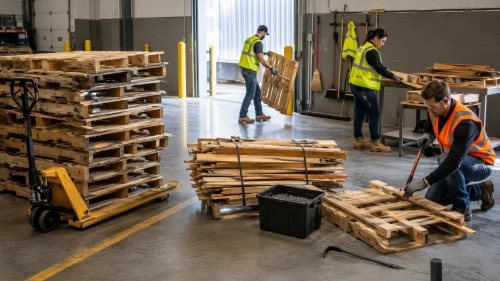 Recycling is often the best path for pallets that cannot be reused or repaired. EPA’s non-hazardous materials and waste management hierarchy places source reduction and reuse above recycling, but recycling remains preferable to disposal when reuse is no longer practical.
Wood pallet recycling may involve repair and resale, dismantling, grinding, chipping, mulch production, animal bedding where allowed, or energy recovery in some systems. Plastic and metal pallets follow different recycling paths. Keep them separate so they can be evaluated correctly.
Set Up a Pallet Staging Area
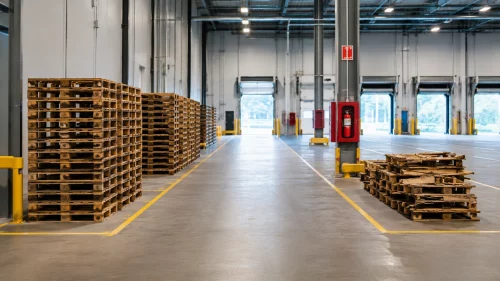 Pallet removal becomes easier when pallets have one assigned place. A staging area prevents loose pallets from spreading throughout the warehouse.
A good pallet staging area should be:
- Clearly marked
- Away from exits and fire equipment
- Near loading access
- Large enough for expected volume
- Separated from active pick paths
- Protected from rain if pallets must stay dry
- Easy for forklifts or pallet jacks to access
- Organized by pallet type or condition
Schedule Pallet Removal Before It Becomes Urgent
Pallet removal works best on a schedule. Waiting until pallets block operations turns a routine task into an emergency. Scheduling options include:- Weekly pickup
- Monthly pickup
- Seasonal cleanup
- Pickup after major deliveries
- Pickup after inventory resets
- Pickup when a set pallet count is reached
- One-time removal after a warehouse cleanout
Use the Right Equipment
Moving pallets by hand is slow and can cause injuries. Use the equipment that matches the volume and layout. Common tools and equipment include:- Pallet jacks
- Forklifts
- Stackers
- Work gloves
- Eye protection
- Nail pullers
- Pry bars
- Banding or straps
- Gaylords or bins for scrap pieces
- Trailers or trucks
- On-site debris containers, when appropriate
Protect Fire Lanes, Exits, and Dock Areas
Pallet clutter often appears around docks because that is where pallets arrive and leave. But dock areas are also where traffic, forklifts, trailers, pedestrians, and emergency access overlap. Keep pallets away from:- Exit doors
- Fire extinguishers
- Electrical panels
- Sprinkler risers
- Emergency eyewash stations
- Walkways
- Forklift charging areas
- Trailer landing zones
- Customer pickup areas
- Dock edges
Watch for Contaminated or Treated Pallets
Not every pallet should be reused, donated, or recycled casually. Some pallets may be contaminated with oils, chemicals, food residue, pests, mold, or unknown materials. Set aside pallets that are:- Oil-stained
- Chemical-stained
- Moldy
- Pest-damaged
- Wet and rotting
- Covered in unknown residue
- Used for hazardous materials
- Structurally unsafe
- Marked for a closed-loop return system
Selling, Donating, or Giving Away Pallets
Good pallets may have value, especially if they are standard size, clean, and available in consistent quantities. Before offering pallets, confirm size, condition, quantity, material type, pickup access, nails, markings, and whether the pallets are treated or part of a vendor return system. Do not donate unsafe pallets with broken boards, exposed nails, contamination, or rot.Pallet Removal for Small Businesses
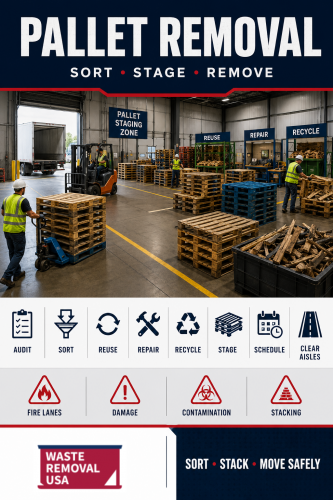 Small businesses may not generate enough pallets for a formal recycling program, but they still need a plan. Keep only the pallets you can use soon, return vendor pallets whenever possible, stack usable pallets neatly in one spot, remove damaged pallets, offer clean extras locally, and schedule removal before pallets block operations.
If pallet debris is part of a broader cleanup involving shelving, packaging, old fixtures, or renovation material, construction debris removal can help with general project sorting.
Pallet Removal for Warehouses and Distribution Centers
Larger warehouses need a more structured system. Pallets should be treated as part of inventory flow, not random waste. A warehouse pallet program may include:- Return agreements with vendors
- Separate storage for standard and odd-size pallets
- Repair rules
- Pickup schedule
- Forklift-accessible staging lanes
- Scrap pallet bins
- Recycling partner
- Quality checks before reuse
- Metrics for pallet accumulation
- Supervisor responsibility by shift