Demolition

How to Get Rid of Storage Unit Stuff: A Practical Cleanout and Decluttering Guide

Benjamin Ehinger Benjamin Ehinger Benjamin Ehinger is a Florida-based content writer with 18 years of experience, specializing in dumpster rental and waste removal industry content. His strong research skills allow him to present clear, practical information on topics like pricing, container sizing, and job planning. 11 min read
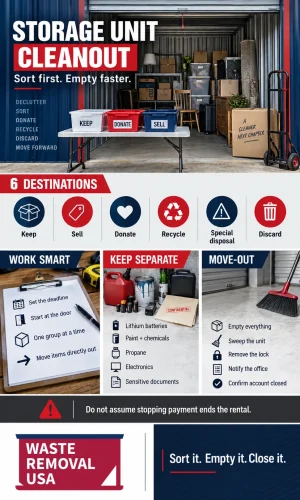
The easiest way to get rid of storage unit stuff is to decide where unwanted belongings will go before you begin emptying boxes. Create separate destinations for items you will keep, sell, donate, recycle, dispose of, or handle through a special collection program. If your real goal is to stop paying for the unit altogether, work backward from the facility’s move-out requirements and deadline. Give yourself enough time to remove everything, deal with bulky or restricted items, sweep the unit, remove your lock when required, and confirm that the rental has actually ended. Most importantly, do not assume that simply leaving the unit behind cancels the agreement. If you no longer want the space, formally close it according to your rental contract and applicable state law.

How Do You Start Cleaning Out a Storage Unit?
Get Rid of Storage Unit Stuff Start by determining what success looks like. Are you trying to:
  • Completely empty the unit?
  • Move into a smaller unit?
  • Reduce your monthly storage costs?
  • Find a few important belongings?
  • Organize everything you intend to keep?
If you want to eliminate the unit completely, find out:
  • Your next billing date
  • Required move-out notice
  • Access hours
  • Move-out procedures
  • Whether the unit must be swept
  • What happens to your lock
  • Whether a final inspection is required
Then choose a cleanout date several days before the deadline. Waiting until the final afternoon leaves very little room for unexpected problems such as bulky furniture, rejected donations, facility access limitations, or special-disposal materials.

Do You Need to Inventory Everything First?

Not necessarily. Creating a detailed spreadsheet of every item can make sense when the unit contains:
  • Valuable collections
  • Business inventory
  • Estate property
  • Important records
  • Items belonging to multiple family members
For an ordinary cluttered unit, documenting every extension cord and coffee mug can slow the project unnecessarily. Instead, begin with a quick assessment. Identify:
  • High-value items
  • Important documents
  • Sentimental belongings
  • Large furniture
  • Electronics
  • Hazardous or restricted materials
  • Obvious trash
Then start sorting.

What Is the Best Way to Declutter a Storage Unit?

Sorting a Storage Unit During a Cleanout A practical declutter storage unit system uses six categories:
  1. Keep
  2. Sell
  3. Donate
  4. Recycle
  5. Special disposal
  6. Discard
The extra categories matter. A four-box system that sends everything into keep, sell, donate, or trash can accidentally put:
  • Electronics
  • Batteries
  • Chemicals
  • Paint
  • Propane cylinders
into the wrong waste stream. Waste Removal USA’s decluttering tips can help when deciding what is genuinely worth keeping.

Work From the Door Toward the Back

For a packed storage unit, do not immediately pull everything into the hallway or parking area. Many facilities restrict how much space tenants can occupy outside their units, and blocking access can interfere with other customers. Instead:
  1. Create a working area near the entrance.
  2. Remove obvious trash first.
  3. Pull out one group of boxes or furniture.
  4. Make decisions.
  5. Move each item directly toward its next destination.
  6. Continue toward the back.
This prevents the cleanout from becoming a second pile outside the unit.

How Do You Clean Out a Storage Unit Full of Junk?

If the unit contains years of accumulated belongings, focus on volume first. Start with easy decisions such as:
  • Empty cardboard boxes
  • Broken inexpensive furniture
  • Obsolete packaging
  • Obviously damaged household goods
  • Items you already know you do not want
Removing clear discards creates room to sort the harder items. Then tackle one category at a time:
  • Clothing
  • Furniture
  • Kitchen items
  • Decorations
  • Tools
  • Books
  • Electronics
  • Documents
Avoid jumping randomly from box to box. Visible progress helps keep a large storage unit clean up moving.

What Should You Do with Sentimental Items?

Sentimental belongings often take the longest. Do not begin the entire project with family photographs, children’s artwork, or inherited possessions unless those are specifically why you opened the unit. Handle straightforward material first. When you reach sentimental belongings, ask:
  • Would I display or use this now?
  • Do I have another similar item?
  • Is the memory important, or the object itself?
  • Is there a family member who genuinely wants it?
  • Am I paying monthly storage costs primarily to keep this item?
Photographing an object can sometimes preserve the memory without preserving the physical item. But there is no requirement to discard meaningful belongings simply to follow a decluttering rule. The goal is intentional storage.

Sell Valuable Items Early

Selling can offset some storage expenses, but only when it does not extend the rental for months. Prioritize items with enough value to justify the effort. Possible examples include:
  • Quality furniture
  • Collectibles
  • Tools
  • Sporting equipment
  • Working electronics
  • Antiques
Photograph the item and list it promptly. Set a deadline. For example: If this has not sold by Sunday, it gets donated. Without a deadline, a “sell” pile can become another long-term storage category.

Don’t Assume You Can Hold a Sale at the Storage Facility

Your facility may prohibit:
  • Garage-sale-style activity
  • Customer transactions
  • Blocking drive aisles
  • Business activity
  • Large numbers of visitors
Check the rental agreement or ask the facility before inviting buyers onto the property. For bulky items, you may need to arrange a pickup that complies with the facility’s access policies. Donation is useful for belongings that another person can reasonably use. Possible candidates include:
  • Clean clothing
  • Functional furniture
  • Household goods
  • Tools
  • Working small appliances
  • Books
Call or check the organization’s current guidelines first. Do not assume every charity accepts:
  • Mattresses
  • Large furniture
  • Older electronics
  • Damaged upholstered items
  • Exercise equipment
A donation center is not an alternative disposal facility for broken belongings.

How Do You Get Rid of Broken Furniture and General Junk?

First determine whether the material has another recovery option. Depending on local programs, you may be able to separate:
  • Scrap metal
  • Cardboard
  • Certain plastics
  • Appliances
  • Electronics
from ordinary unwanted household goods. For a large amount of accepted general cleanup material, Waste Removal USA’s local cleanup options can reduce repeated disposal trips. If you expect a significant amount of material, plan the removal before cleanout day so unwanted belongings do not simply get shifted from the storage unit into your garage. Waste Removal USA’s home cleanout guide offers additional strategies for large-volume cleanups.

What Storage Unit Items Need Special Disposal?
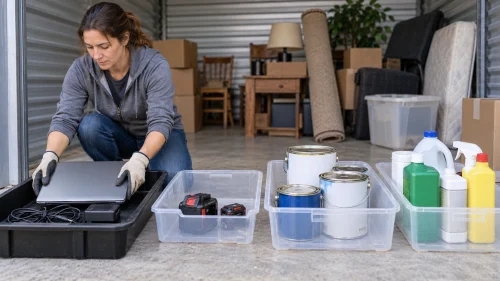
Separating Special-Disposal Items From Storage Unit Junk Storage units can contain years of forgotten products that should not be treated like ordinary household junk. Watch for:
  • Paint
  • Solvents
  • Pesticides
  • Automotive fluids
  • Fuels
  • Cleaning chemicals
  • Propane cylinders
  • Batteries
  • Electronics
EPA explains that paints, cleaners, oils, batteries, pesticides, and similar products may fall under household hazardous waste guidance. Do not:
  • Pour liquids onto the ground.
  • Dump chemicals into storm drains.
  • Mix unknown chemicals together.
  • Place leaking containers into an ordinary cleanout load without verifying the rules.
Your local solid-waste authority can identify appropriate collection programs.

What Should You Do with Lithium Batteries?

Pay particular attention to rechargeable batteries. They may be inside:
  • Laptops
  • Cordless tools
  • Cameras
  • Tablets
  • Vacuums
  • Toys
  • Portable electronics
EPA says lithium-ion batteries and devices containing them should not go into household trash or ordinary municipal recycling. They can become damaged or crushed during collection and processing, creating a fire hazard. EPA’s used lithium-ion battery guidance recommends specialized battery recycling or household hazardous-waste collection. For loose batteries being transported, EPA recommends isolating terminals with nonconductive tape or placing individual batteries in separate plastic bags. Do not crush, puncture, bend, or dismantle a swollen or damaged lithium battery.

How Should You Handle Old Electronics?

Old electronics may still contain:
  • Personal data
  • Rechargeable batteries
  • Recyclable metals
  • Components restricted from ordinary disposal in some areas
Before selling, donating, or recycling computers and other data-containing devices:
  1. Back up anything you want.
  2. Remove personal information appropriately.
  3. Check for batteries requiring separate handling.
  4. Find an appropriate reuse or recycling program.
EPA provides current electronics donation and recycling guidance. Waste Removal USA also explains how to get rid of old computers.

What Should You Do With Personal Documents?

Do not throw boxes of sensitive paperwork directly into general cleanup material. Look for:
  • Tax records
  • Bank statements
  • Medical information
  • Social Security information
  • Account numbers
  • Old identification
  • Loan documents
Some documents need to be retained. Others should be securely shredded. The FTC’s current document-retention and shredding guidance explains which common records may need to be kept and which can be destroyed. For a large volume of sensitive records, a secure document-destruction service may be more practical than a home shredder.

What About Moldy or Water-Damaged Belongings?

Storage units sometimes experience:
  • Moisture
  • Condensation
  • Roof leaks
  • Flooding
  • Pest problems
Evaluate affected belongings before disturbing large amounts of contaminated material. Some hard nonporous items may be cleanable. Porous materials with substantial mold or water damage can be harder to salvage. Wear appropriate protection and avoid aggressively shaking or brushing heavily mold-contaminated material inside an enclosed unit. If the unit has extensive mold, sewage contamination, chemicals, or other significant hazards, professional cleanup may be more appropriate. Document possible facility-related water damage before discarding valuable property if an insurance or liability issue may exist.

Can I Abandon My Storage Unit?

Do not assume that simply walking away ends your responsibility for the unit. A storage rental is governed by:
  • Your rental agreement
  • Facility policies
  • Applicable state law
Self-storage lien laws differ by state. The Self Storage Association maintains a state-by-state lien-law resource, reflecting how much procedures can vary. If rent goes unpaid, state law may allow the facility to assert a lien against stored property and, after required procedures, sell or otherwise dispose of eligible contents. But the details involving:
  • Notice
  • Timing
  • Sale
  • Vehicles
  • Personal records
  • Remaining proceeds
can differ. Do not use abandonment as a shortcut for cleaning out the unit.

What Happens if You Just Stop Paying for a Storage Unit?

Stopping payment can create more problems than simply completing the move-out. Depending on the contract and applicable law, consequences may include:
  • Continued rent
  • Late fees
  • Loss of access
  • Lien enforcement
  • Sale or disposal of belongings
  • Collection activity for unpaid balances
The facility cannot necessarily auction the unit immediately. It generally must follow applicable state lien procedures. However, relying on that process means giving up substantial control over your belongings and potentially creating additional charges. If you cannot afford the unit, contact management before defaulting. Ask what options are available for properly surrendering or closing it.

How Do You Get Rid of a Storage Unit Properly?
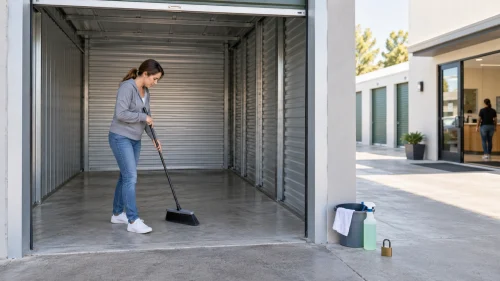
Empty and Clean Storage Unit Move-Out If by “how to get rid of a storage unit” you mean ending the rental, follow the facility’s actual move-out procedure. A typical process may include:
  1. Provide required notice.
  2. Remove every belonging.
  3. Remove trash.
  4. Sweep the floor.
  5. Remove your lock if required.
  6. Leave the door or unit as instructed.
  7. Notify the office.
  8. Confirm the account has been closed.
Do not assume that an empty unit automatically terminates billing. Get confirmation. Save any:
  • Email
  • Receipt
  • Move-out confirmation
  • Account statement
showing that the rental ended.

How Do You Leave a Storage Unit Clean?

Facilities generally expect tenants to return an empty unit without loose debris. After removing everything:
  • Sweep the floor.
  • Remove tape and packaging.
  • Collect small hardware.
  • Remove your shelving if it belongs to you.
  • Check corners.
  • Look behind the door.
  • Remove your lock when required.
Do not leave behind:
  • Broken furniture
  • Boxes
  • Chemicals
  • Appliances
  • Trash bags
because you assume the facility will throw them away. Leaving unwanted property can violate the rental agreement or create additional charges.

How Do You Prevent Needing Another Storage Unit?

Before moving everything you kept into your home, ask why the original unit became necessary. If the answer was temporary—such as moving, remodeling, or an estate cleanout—the storage problem may already be solved. If the unit gradually became overflow storage, create limits. Try:
  • Giving each category a fixed storage area
  • Using clearly labeled bins
  • Avoiding duplicate purchases
  • Reviewing seasonal items annually
  • Donating unused belongings promptly
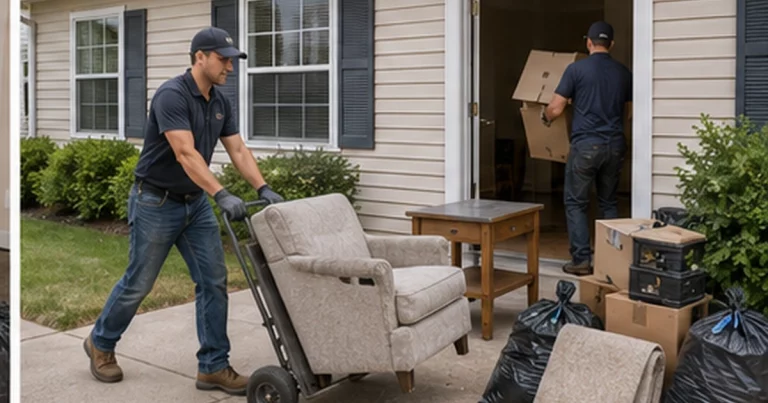
Waste Removal USA’s guide to minimizing clutter can help keep cleared belongings from rebuilding elsewhere. The most effective storage system is not one that fits unlimited belongings. It is one that makes it obvious when you have reached the available space.

Empty the Storage Unit with a Destination for Everything

The easiest way to clean out a storage unit is to avoid creating an enormous undecided pile. Know what you are keeping, where donations are going, which belongings are worth selling, where electronics and batteries belong, and how accepted general cleanup material will leave the property. Then work systematically from the front of the unit toward the back. If your goal is to stop paying for storage, treat the facility’s move-out requirements as part of the cleanout—not an afterthought. Emptying the space and formally ending the rental are two separate steps. Waste Removal USA can help plan removal of accepted ordinary household material from larger storage-unit cleanouts while batteries, electronics, chemicals, fuels, propane cylinders, sensitive documents, and other specialized materials follow their appropriate handling routes.

Frequently Asked Questions

Find answers to common questions