How Much Does It Cost to Remove a Hot Tub in 2026?
 Current national planning ranges look approximately like this:
| Hot Tub Removal Project | Typical 2026 Cost |
| General professional removal | $150–$800 |
| Common average | About $400 |
| Inflatable spa | $120–$300 |
| Above-ground hot tub | $250–$500 |
| In-ground hot tub | $400–$1,100+ |
| Removal labor where billed hourly | $100–$200 per hour |
What Determines Hot Tub Removal Cost?
The biggest pricing factors are usually:- Type of hot tub
- Access
- Empty weight
- Required disassembly
- Electrical work
- Surrounding decking or concrete
- Disposal requirements
- Labor rates
- Hauling distance
- Site restoration
How Much Does Above-Ground Hot Tub Removal Cost?
A conventional above-ground spa commonly costs around: $250–$500 to remove under relatively normal conditions. This range generally assumes the hot tub can be:- Drained
- Safely disconnected
- Accessed without major demolition
- Moved or cut apart
- Loaded reasonably close to its location
- Narrow gates
- Stairs
- Steep yards
- Retaining walls
- Deck railings
- Interior doorways
- Long carrying distances
Why Does In-Ground Hot Tub Removal Cost More?
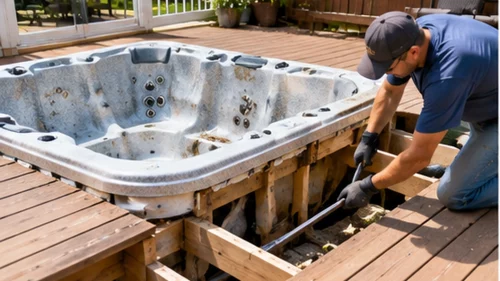 In-ground spa removal is closer to a small demolition project than simply moving a large appliance.
The spa removal cost can rise because workers may need to remove:
- Concrete
- Tile
- Decking
- Framing
- Plumbing
- Electrical components
- Surrounding landscaping
- Backfilled
- Regraded
- Replanted
- Repaved
- Rebuilt as a deck
- Converted into another outdoor feature
What About Jacuzzi Removal Cost?
Homeowners frequently search for jacuzzi removal cost, but Jacuzzi is a brand name rather than a separate removal category. Pricing is primarily determined by:- Freestanding versus built-in design
- Size
- Weight
- Access
- Construction
- Utility connections
How Heavy Is an Empty Hot Tub?
Many conventional hot tubs weigh approximately: 400–1,000 pounds empty depending on size and construction. Large units can weigh even more. Filled tubs weigh several thousand pounds because of the water. That is why a hot tub should be properly drained before anyone tries to relocate or dismantle it. Do not attempt to slide, tip, lift, or structurally dismantle a tub that still contains significant water.How Does Access Affect Hot Tub Removal Pricing?
Access can be more important than the tub itself. Lower-cost situations generally have:- Wide gates
- Flat terrain
- Nearby driveway
- Open patio
- No overhead obstructions
- Stairs
- Narrow gates
- Fences
- Enclosed patios
- Roof decks
- Interior installations
- Steep slopes
- Limited machine access
Does a Hot Tub Have to Be Removed in One Piece?
No. An unwanted hot tub is frequently dismantled. A typical spa can contain:- Acrylic or similar shell material
- Fiberglass reinforcement
- Wood or composite framing
- Foam insulation
- Pumps
- Heater
- Plumbing
- Electrical components
- Metal hardware
What Happens During Professional Hot Tub Removal?
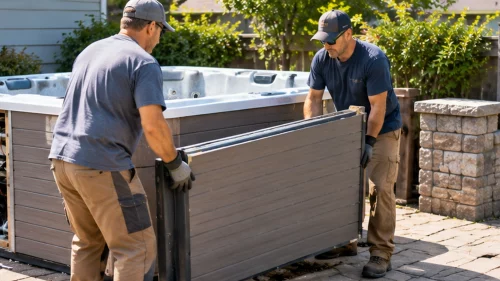 A typical removal may involve:
1. Site Assessment
The crew evaluates:- Tub dimensions
- Access route
- Stairs
- Gates
- Deck construction
- Disposal needs
2. Draining
The tub must be emptied according to local requirements.3. Electrical Disconnection
Power must be safely disconnected before dismantling begins.4. Access Preparation
Railings, gates, or removable panels may need temporary adjustment.5. Removal or Disassembly
The spa is either moved intact or dismantled into manageable sections.6. Loading
The shell, frame, pumps, and other approved components are transported from the property.7. Disposal or Recycling
Materials are taken to appropriate receiving facilities.8. Basic Cleanup
The immediate work area is cleared of loose removal debris. Site restoration may be a separate service.How Should You Disconnect Electricity Before Removal?
Electrical safety deserves more attention than simply flipping a switch. Hot tubs may use:- Plug-connected 120-volt service
- Hardwired 240-volt circuits
- Disconnect panels
- GFCI protection
- Stop using the spa.
- Shut off its electrical supply.
- Verify that the equipment is no longer energized.
- Have hardwired electrical connections properly disconnected.
How Should You Drain a Hot Tub Before Removal?
Do not automatically direct hot tub water into a street or storm drain. Spa water can contain:- Chlorine
- Bromine
- Salt
- Cleaning chemicals
- Other treatment products
- Dechlorinated
- Discharged to sanitary sewer
- Allowed to infiltrate on-site
- Handled another approved way
What Does Hot Tub Disposal Cost Include?
A complete quote may include:- Labor
- Dismantling
- Carrying
- Transportation
- Disposal fees
- Basic cleanup
- Electrician
- Deck demolition
- Concrete demolition
- Crane service
- Permit fees
- Landscaping repair
- Backfilling
- Regrading
Can a Hot Tub Be Recycled?
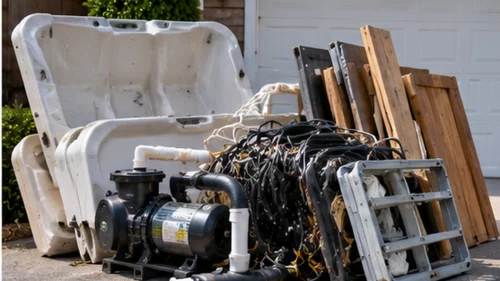 Parts of one may be recyclable.
Potentially recoverable components can include:
- Metal
- Pumps
- Motors
- Wiring
- Certain plastic components
- Some framing materials
- Hot tub shells
- Fiberglass
- Pumps
- Motors
- Treated wood
- Composite panels
Can You Sell or Give Away an Old Hot Tub?
If it still works, reuse should be considered before demolition. Options include:- Selling it locally
- Offering it free for removal
- Asking a spa dealer about trade-in possibilities
- Donating it where a recipient actually wants and can safely install it
- Age
- Leaks
- Pump condition
- Heater condition
- Electrical requirements
- Cover condition
- Move
- Wire
- Install
- Repair
Can You Remove a Hot Tub Yourself?
Sometimes. DIY removal is most realistic when the spa is:- Above ground
- Already disconnected
- Easily accessible
- Going to be dismantled
- Located close to the loading point
- Heavy work gloves
- Eye protection
- Hearing protection
- Long sleeves
- Work boots
- Reciprocating saw where appropriate
- Pry bar
- Screwdrivers
- Wrenches
- Dolly
- Moving straps
When Is DIY Hot Tub Removal a Bad Idea?
Professional removal is usually more practical when:- The tub is in-ground.
- Electrical work is uncertain.
- A deck must be demolished.
- Access requires lifting over obstacles.
- The spa is indoors.
- The shell must remain intact.
- Concrete must be removed.
- You cannot safely handle large sections.
How Much Can DIY Removal Save?
DIY avoids some labor charges, but it is not free. Possible costs include:- Saw blades
- Protective equipment
- Tool rental
- Trailer rental
- Transportation
- Disposal charges
- Electrical work
- Cleanup capacity
Does a Hot Tub Need a Permit to Be Removed?
A simple freestanding spa removal often does not require the same approval as a construction project, but local rules vary. Permits or inspections become more plausible when the work includes:- Permanent electrical alterations
- Structural deck changes
- In-ground demolition
- Concrete removal
- Major excavation
- Plumbing modifications
Can You Use an On-Site Cleanup Container for Hot Tub Removal?
Potentially. Once properly dismantled, approved sections of an old hot tub may fit into an on-site cleanup container along with other accepted renovation material. A 10-yard cleanup container may work for some hot tub and small renovation projects, depending on the materials and local service rules. However, confirm acceptance before loading:- Fiberglass shell pieces
- Foam
- Pumps
- Motors
- Electrical components
- Treated wood
What If the Hot Tub Is Built Into a Deck?
Expect more labor. The crew may need to:- Remove deck boards
- Cut framing
- Remove railings temporarily
- Protect structural components that remain
- Stay
- Be repaired
- Be partially removed
- Be completely demolished
What If the Hot Tub Is Indoors?
Indoor spa removal can become significantly more complicated. Potential issues include:- Door width
- Hallways
- Stairs
- Flooring protection
- Wall clearance
- Ventilation
- Permanent plumbing
- Structural framing
What Happens After an In-Ground Spa Is Removed?
Do not treat the remaining hole as an afterthought. The site may need:- Utility termination
- Concrete removal
- Drainage correction
- Clean fill
- Compaction
- Topsoil
- Grading
- New hardscape
How Do You Estimate Hot Tub Removal Cost Near You?
For a meaningful hot tub removal cost near me estimate, request at least two or three local quotes using the same information. Provide:- Dimensions
- Approximate model
- Above-ground or in-ground installation
- Photos
- Access width
- Stairs
- Deck information
- Whether it is drained
- Whether electrical service is disconnected
- Whether the spa can be cut apart
- Labor
- Demolition
- Hauling
- Disposal
- Travel
- Cleanup