Why Driveway Damage Happens
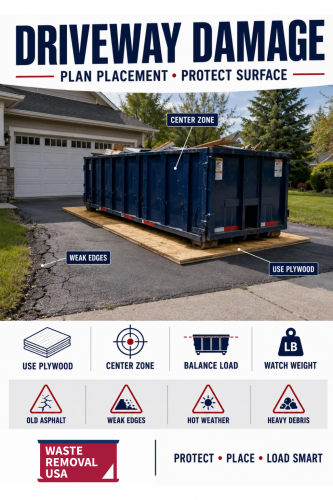
A dumpster can damage a driveway because it concentrates a lot of weight onto a few contact points. Even before it is filled, the container has its own weight. Once debris is added, the load can increase quickly. Damage is usually caused by a mix of:- Heavy weight
- Small pressure points
- Metal contact with the driveway surface
- Dragging or shifting during placement
- Overloading
- Weak driveway edges
- Existing cracks
- Heat, cold, or moisture
- Poor base support under the driveway
What Type of Driveway Is Most at Risk?
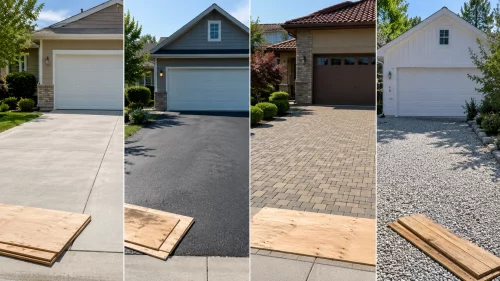 Different driveway materials respond differently to dumpster placement.
Concrete Driveways
Concrete driveways are generally strong, but they can still crack or chip. Risk increases when the slab is thin, old, already cracked, or missing proper base support. Edges are usually more vulnerable than the center because they have less surrounding support. Concrete damage may appear as surface chips, corner cracks, widened existing cracks, or broken edges. A container placed on a stable center section with protection underneath is less likely to cause problems.Asphalt Driveways
Asphalt is more flexible than concrete, but it is also more vulnerable to dents, ruts, and impressions. Hot weather increases the risk because asphalt can soften. FHWA pavement research connects asphalt rutting resistance to high-temperature binder performance, which supports the practical point that heat and heavy loading matter for asphalt performance. A loaded dumpster placed directly on hot asphalt can leave marks, depressions, or skid damage, especially if the driveway is older or recently paved.Paver Driveways
Paver driveways can look strong but still shift under concentrated weight. Individual pavers may settle, separate, or become uneven if the base below them is not designed for heavy loads. If a dumpster must be placed on pavers, protection and weight distribution are especially important.Gravel Driveways
Gravel usually handles heavy loads better because it can shift instead of crack. However, a dumpster can create ruts, sink into soft areas, or displace gravel. Repairs are often easier than concrete or asphalt repairs, but regrading may be needed after pickup.When Driveway Damage Is Most Likely
Driveway damage is more likely when several risk factors happen together. High-risk situations include:- Old asphalt in hot weather
- Recently poured concrete
- Existing cracks or broken driveway edges
- Sloped driveways
- Paver surfaces
- Thin or poorly supported concrete
- Heavy debris such as concrete, brick, dirt, tile, or roofing material
- No plywood or boards under the container
- A container placed near the driveway edge
- Dragging during placement or removal
- Overfilling beyond safe limits
Does Dumpster Size Affect Driveway Damage?
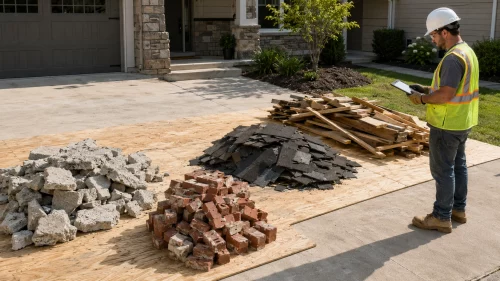 Dumpster size matters, but debris weight matters more. A smaller container filled with concrete can be harder on a driveway than a larger container filled with cardboard, cabinets, or light household clutter.
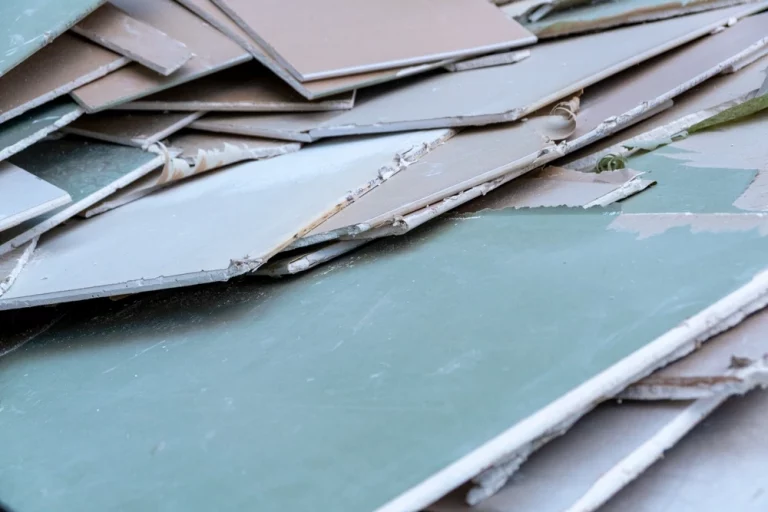
Heavy materials create more pressure. Concrete, brick, asphalt, dirt, sod, roofing shingles, tile, plaster, and wet debris can add weight quickly. EPA construction and demolition material guidance includes concrete, asphalt concrete, steel, wood, drywall and plaster, brick and clay tile, and asphalt shingles among common C&D material categories. Those materials should be planned carefully because they vary widely in weight and disposal requirements.
For heavy material projects, ask about weight limits before loading. Do not fill a container with dense material just because there is still open space at the top.
How to Protect Your Driveway From Dumpster Damage
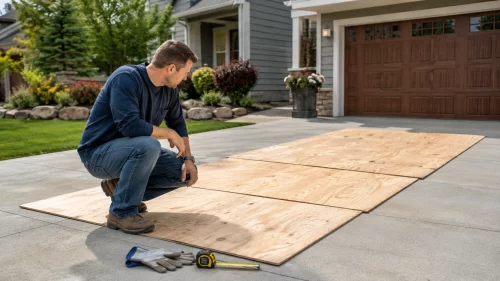 The best protection is to spread the weight and prevent direct steel-to-driveway contact.
Use Plywood or Boards
Place thick plywood sheets or sturdy boards under the dumpster’s contact points before it is lowered. This spreads weight across a wider area and helps reduce scuffs, cracks, and indentations. Some municipalities require this kind of protection for public pavement. Savannah’s dumpster permit rules state that the applicant is responsible for protecting paved surfaces and that three-quarter-inch plywood is required under runners when a container is placed on pavement. For a residential driveway, plywood or boards should be placed where the wheels, skids, or runners will sit. Confirm placement with the driver before delivery.Choose the Strongest Location
The center of a driveway is usually stronger than the edges. Avoid cracked areas, thin sections, decorative borders, steep slopes, drainage covers, soft ground, and spots near the street apron if they appear weak.Keep the Load Balanced
Load debris evenly instead of piling everything on one side. Uneven weight can increase pressure on one contact point and make the container harder to pick up safely.Avoid Overloading
Do not exceed weight limits. Overloading increases driveway stress, pickup difficulty, and safety risk. Heavy debris should be loaded according to the provider’s instructions.Avoid Dragging
A dumpster should be carefully lowered, positioned, and picked up. Dragging metal across concrete, asphalt, or pavers can cause scratches, gouges, or surface tearing.Should You Put the Dumpster on the Street Instead?
 Street placement can reduce driveway risk, but it may create permit issues. Many cities require approval before placing a dumpster, storage container, materials, or equipment in a public street, alley, sidewalk, or other right-of-way. New Orleans, for example, states that a permit is required before placing construction dumpsters in the public right-of-way. Savannah also requires a dumpster or container permit before placement on city right-of-way.
Before choosing the street, check:
- City or county permit rules
- HOA rules
- Street width
- Parking restrictions
- Fire hydrants
- Mailbox access
- Traffic sightlines
- Storm drains
- Pickup and delivery access
- Required cones, reflectors, or lighting
What About New Driveways?
New driveways need extra caution. Fresh concrete and new asphalt may look finished before they are ready for heavy loads. The timeline depends on material, thickness, weather, installation quality, and contractor guidance. If your driveway was recently poured, paved, sealed, patched, or resurfaced, ask the installer before placing a heavy dumpster on it. When in doubt, choose a different placement area or delay delivery.Is Driveway Damage Cosmetic or Structural?
Not every mark is serious. Some driveway damage is cosmetic, while other damage may need repair. Cosmetic issues may include:- Light scuffs
- Minor surface marks
- Temporary discoloration
- Shallow impressions
- Small scratches
- Deep cracks
- Broken concrete sections
- Crumbled edges
- Asphalt ruts
- Paver settling
- Surface tearing
- Drainage changes
Who Is Responsible if a Dumpster Damages the Driveway?
Responsibility depends on the provider’s terms, homeowner preparation, placement instructions, existing driveway condition, and whether protection was used. Many companies limit responsibility for driveway surfaces because residential driveways vary so much in strength, thickness, age, and condition. Before delivery, ask:- Do you provide boards or should I supply them?
- Where will the contact points be?
- Are you comfortable placing it on this surface?
- What driveway protection do you recommend?
- What are the weight limits?
- What does your damage policy say?
- Can the container be placed somewhere safer?
Common Mistakes That Increase Driveway Damage
Avoid these mistakes:- Placing a dumpster directly on asphalt in hot weather
- Skipping boards or plywood
- Choosing a cracked or sloped area
- Placing the container close to the driveway edge
- Loading all heavy material on one side
- Mixing dense debris without checking weight limits
- Assuming a new driveway can handle heavy loads
- Waiting until after delivery to think about protection
- Forgetting to photograph the driveway first