Start by Looking at Why the Dirt Is Bare
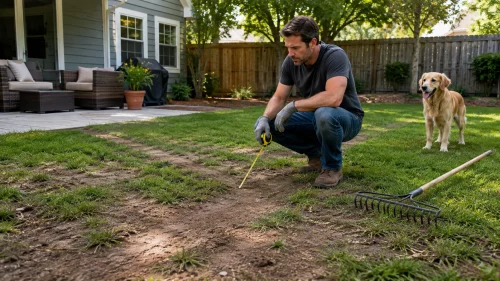 Before covering the dirt, figure out why the area failed. If you cover a drainage problem, digging problem, or shade problem without fixing it, the new surface may not last.
Walk the yard after a rain and look for:
- Standing water
- Mud near gates or doors
- Worn dog paths
- Fence-line digging
- Shaded areas where grass will not grow
- Low spots
- Compacted soil
- Tree roots
- Areas where dogs urinate often
- Places where mulch or gravel washes away
1. Wood Chips or Shredded Mulch
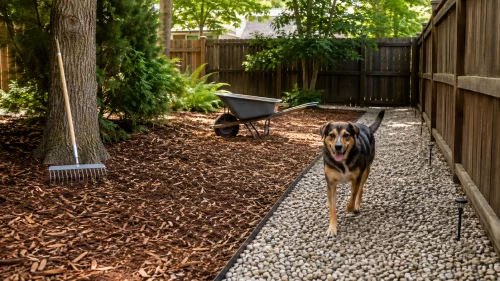 Wood chips and shredded mulch are usually the cheapest and easiest way to cover dirt in a dog-friendly backyard. They reduce mud, soften the ground, and can be refreshed as dogs kick material around.
Use mulch in:
- Shaded areas
- Around trees
- Fence lines
- Dog paths
- Play zones
- Bare garden edges
- Muddy spots near gates
2. Pea Gravel for High-Traffic Areas
Pea gravel is a good option for dog runs, side yards, and fence paths where grass and mulch do not survive. It drains better than bare soil and does not turn into mud the way dirt does. Pea gravel works best when installed over a prepared base. Remove debris, level the area, add landscape fabric if appropriate, edge the space, and spread the gravel evenly. Rounded pea gravel is usually more comfortable than sharp crushed stone. Good uses include:- Dog runs
- Side-yard paths
- Gate areas
- Potty zones
- Around outdoor kennels
- Muddy strips beside patios
3. Decomposed Granite for a Firm Surface
Decomposed granite is another budget-friendly option for high-use areas. It creates a firmer surface than pea gravel when compacted, which can make it useful for paths, patios, and dog traffic lanes. Use decomposed granite where you want:- Less mud
- A natural look
- A firmer walking surface
- Better drainage than bare dirt
- A low-profile path
4. Pavers and Stepping Stones
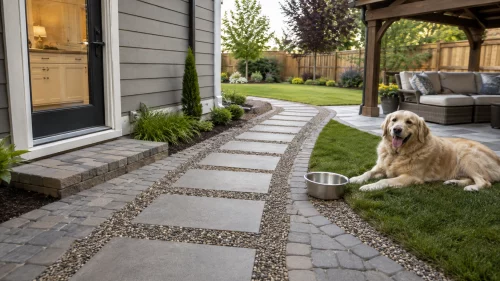 Pavers are not always the cheapest option for a full yard, but they are affordable when used strategically. A few stepping stones or a narrow paver path can solve the worst mud problems without covering the whole backyard.
Use pavers:
- From the door to the yard
- Around gates
- Near water bowls
- Along dog paths
- Under outdoor furniture
- Around a small patio
- Near a shed or storage area
5. Artificial Turf in Small Zones
Artificial turf can be expensive across an entire yard, but it can be useful in small dog zones. It gives a grass-like look where real grass will not survive and can reduce muddy paw prints near doors or patios. For dogs, choose turf designed for pet use, with good drainage and a base that allows urine to pass through. Poor installation can trap odor, hold moisture, or create drainage problems. Artificial turf works best for:- Small patios
- Dog potty areas
- Muddy door zones
- Townhome yards
- Shaded grass-failure areas
- Small play zones
6. Tough Groundcover Plants
Some yards need living groundcover instead of hardscape. This can work if your dog traffic is light to moderate. Heavy running, digging, and fence pacing will destroy many plants. Possible groundcover options depend on climate, sun, soil, and local invasiveness concerns. Always check plant safety before installing anything your dog may chew. ASPCA’s toxic and non-toxic plant database can help you screen plants before planting. ASPCA toxic and non-toxic plants Groundcovers may work in:- Lightly used corners
- Between stepping stones
- Around patios
- Decorative areas dogs do not dig
- Partial-shade garden edges
7. Outdoor Rugs for Temporary Coverage
Outdoor rugs are a good short-term fix for parties, patios, renter-friendly spaces, and temporary mud control. They are not a full yard solution, but they can cover ugly dirt quickly. Use outdoor rugs:- Under patio furniture
- Near a back door
- On a covered patio
- For a weekend gathering
- Over a small worn area
- In a temporary dog rest zone
8. Straw or Pine Straw for Short-Term Mud Control
Straw and pine straw can be useful when you need a cheap temporary cover. They are common after seeding, during seasonal yard work, or when you need to cover mud quickly. They are not as durable as gravel, pavers, or a deep mulch layer. Dogs may scatter straw, carry it inside, or dig through it. Use it as a temporary patch, not a permanent dog-run surface.Prepare the Area Before Covering Dirt
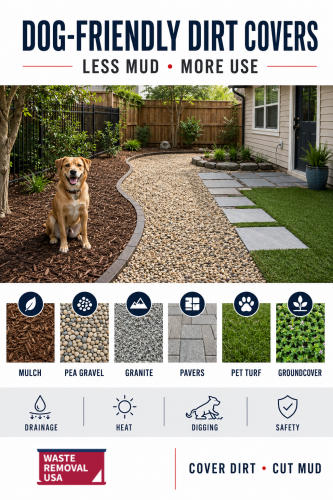 Even cheap backyard fixes work better with preparation.
Before installing ground cover:
- Remove trash, rocks, and old debris.
- Pull weeds and dead plants.
- Level obvious bumps and holes.
- Fix low spots where water collects.
- Add edging where loose material may spread.
- Check drainage direction.
- Keep material away from door thresholds.
- Plan where removed dirt, old mulch, or rock will go.
Think About Drainage First
Mud is usually a drainage problem as much as a surface problem. If water flows toward the dog area, any cover will wear down faster. Improve drainage by:- Filling low spots
- Redirecting downspouts
- Adding stepping stones through wet areas
- Using gravel in dog paths
- Keeping mulch from blocking drains
- Sloping soil away from the house
- Avoiding heavy watering in dog zones
Keep Dog Safety in Mind
A cheap backyard cover is not a good choice if it creates a safety problem. Dogs may chew, dig, swallow, roll, or lie on whatever you install. Avoid or use caution with:- Cocoa mulch
- Sharp gravel
- Splintery wood
- Treated lumber scraps
- Loose nails or metal edging
- Toxic plants
- Small stones for dogs that eat rocks
- Black surfaces that get hot
- Poorly draining artificial turf
- Chemical-treated materials
Maintenance for Dog-Friendly Ground Covers
Every ground cover needs upkeep. The lowest-cost material may not stay cheap if you must replace it constantly. Basic maintenance includes:- Rake mulch back into place.
- Add fresh mulch when spots thin out.
- Rinse turf or pavers after pet waste.
- Pick up solid waste daily.
- Replace scattered gravel.
- Pull weeds before they spread.
- Check for odors after rain.
- Keep shaded areas from staying wet.
- Repair digging spots quickly.