What Does Basement Cleaning Actually Include?
 Basement cleaning can mean several different levels of work. At the simplest level, it may involve clearing light clutter, removing ordinary trash, dusting shelves, sweeping or vacuuming floors, and wiping accessible surfaces. That type of project is closer to a deep house cleaning than a full property cleanout.
A more involved basement cleanout includes decisions about everything stored in the space. Boxes, furniture, exercise equipment, old electronics, shelving, leftover remodeling materials, holiday decorations, and broken household items may need to be sorted into keep, donate, recycle, special-handling, and discard categories.
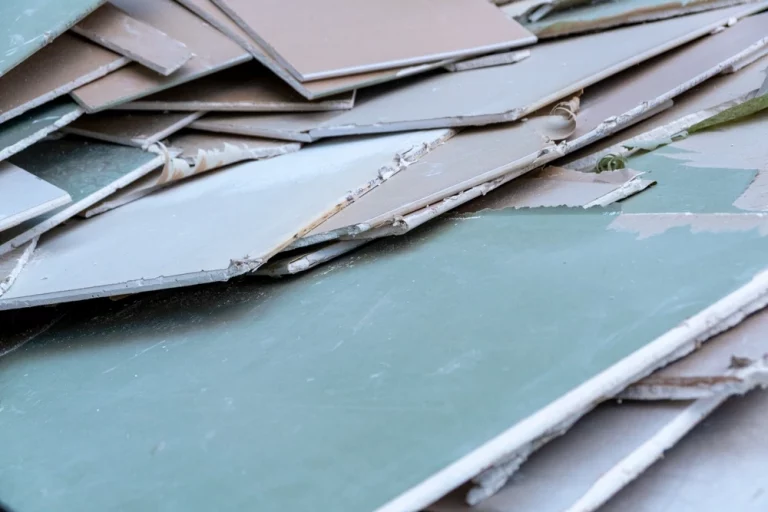
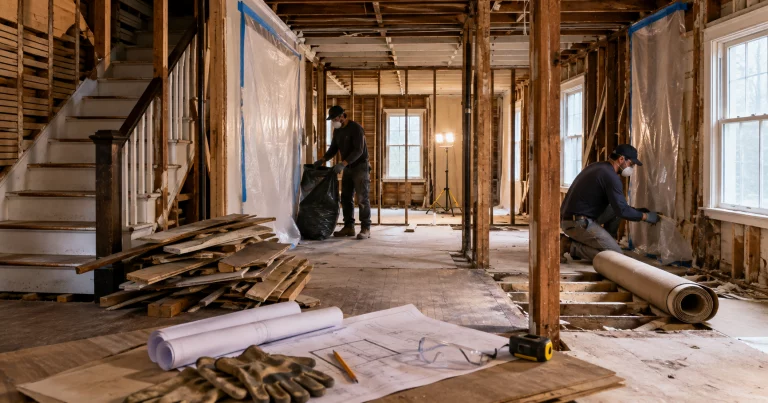
The most intensive projects may involve damaged drywall, wet carpet, moldy belongings, pest contamination, sewage exposure, or materials left after flooding. Those conditions are not simply “extra cleaning.” They can change the safety procedures, labor, protective equipment, disposal route, and total cost.
Before comparing basement cleaning services cost, ask exactly which of these tasks are included in the estimate.
How Much Does Basement Cleaning Cost in 2025 and 2026?
There is no single national basement cleaning price because the term covers very different jobs. Current 2026 data in Angi’s deep-cleaning cost guide puts professional deep cleaning at about $180 to $375 for a typical project, with a room-specific basement benchmark around $260. That can provide a useful starting point for a mostly empty basement that needs detailed cleaning, but it does not represent a full cleanout filled with stored belongings. Once hauling and disposal are added, the price can rise. Current 2026 national hauling cost data from Angi places a typical general removal project around $241 on average, with the actual price changing according to volume, weight, material type, access, labor, and local disposal fees. Those numbers should be treated as reference points rather than promises. Basement cleanout service prices in 2025 and 2026 can fall below or far above them depending on the condition of the space. A lightly cluttered basement with a few boxes is fundamentally different from a packed basement containing furniture, appliances, heavy debris, or damaged materials. Water damage creates an even bigger divide. Flood cleanup, sewage contamination, extensive mold, drying, and damaged building-material removal belong in a separate category from ordinary basement cleaning and can increase costs substantially.What Is the Difference Between a Basement Cleanout and Basement Cleaning?
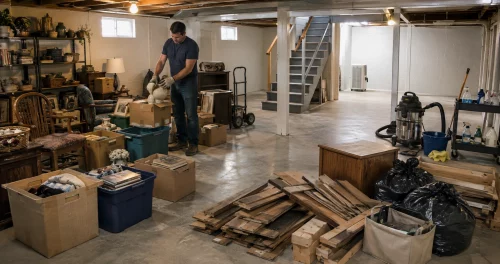 A basement cleanout focuses on removing unwanted belongings and debris. Basement cleaning focuses on the surfaces and condition of the space after clutter is moved.
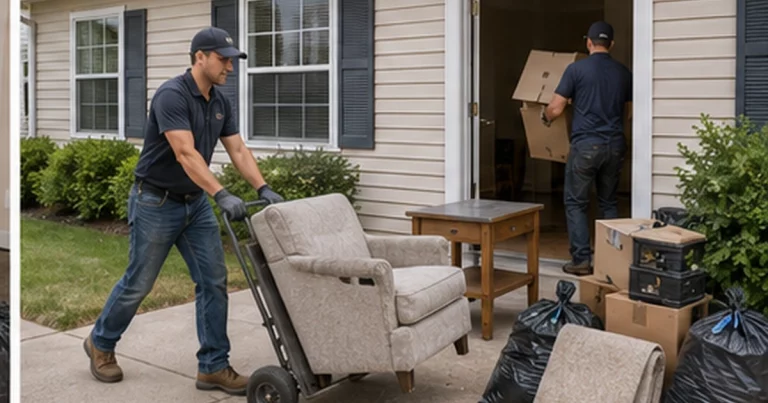
A cleanout may include sorting stored items, carrying furniture upstairs, moving appliances, dismantling shelving, loading debris, recycling eligible materials, and preparing unwanted items for disposal. Once the floor and walls are accessible, cleaning can begin.
Cleaning may include vacuuming, sweeping, dusting, wiping surfaces, cleaning baseboards, removing cobwebs, and addressing ordinary dirt or grime. Deep cleaning may go further into corners, shelving, unfinished surfaces, windows, and areas that have not been accessible for years.
These services may be bundled, but homeowners should never assume they are. A quote that covers labor to empty the basement may not include detailed surface cleaning afterward.
What Is Basement Cleaning and Sanitizing?
Basement cleaning and sanitizing is more specialized than normal cleaning when contamination is present. Sanitizing may be appropriate after certain water events, pest activity, sewage exposure, or other conditions where microorganisms are a concern. The condition of the basement determines what should happen next. The EPA’s flood-cleanup guidance for indoor air and health explains that dirty or contaminated surfaces should be cleaned before disinfectants or sanitizers are applied. Cleaning products must also be used according to their labels and should never be mixed because dangerous vapors can result. Mold requires a different approach than simply spraying a disinfectant. EPA mold-cleanup guidance for homeowners emphasizes that moisture control is essential. The leak, seepage, or humidity problem must be corrected, and mold must be physically cleaned or affected porous materials removed when they cannot be adequately cleaned. This is why basement cleaning and sanitizing cost can vary so widely. Routine cleaning with an added disinfecting step is not comparable to cleanup after sewage, extensive mold growth, or flooding.How Much Does Basement Cleaning and Sanitizing Cost?
Basement cleaning and sanitizing cost depends on what created the need for sanitizing. If the basement is dry and simply needs detailed cleaning followed by appropriate surface sanitizing, the price may remain relatively close to a normal deep-cleaning project. Costs increase when contamination requires protective equipment, containment, removal of porous materials, drying equipment, repeated cleaning, or specialized remediation. A water-damaged basement may also require removal of drywall, carpet, insulation, baseboards, furniture, or other porous materials. Do not compare a contamination cleanup quote with an ordinary house-cleaning price. They represent different scopes of work. Also ask what “sanitizing” actually means in the estimate. Find out which surfaces are being cleaned, what products or procedures will be used, whether damaged materials are being removed, and whether the source of moisture or contamination has been corrected. If mold is present, cleaning without correcting the water problem is not a complete solution. Mold is likely to return when the underlying moisture source remains.Why Does Basement Cleanout Cost Vary So Much?
The biggest cost drivers are volume, weight, access, labor, material type, and the condition of the basement. Square footage matters, but it is usually less important than how much material is actually inside the space. A 1,200-square-foot basement containing a few storage shelves may be easier to clean than a 500-square-foot basement packed wall to wall. Dense clutter takes longer to sort and can hide heavy or difficult items. Stairs are another major factor. Everything leaving a basement must usually be carried upward through a stairwell, doorway, hallway, or exterior access. Steep stairs, sharp turns, low ceilings, narrow doors, and long carrying distances increase labor. Heavy items also change the job. Large furniture, exercise equipment, appliances, safes, cast-iron fixtures, old construction materials, and dense debris can require more people or different handling methods.How Does the Amount of Clutter Affect Basement Cleanout Prices?
Clutter level is one of the clearest predictors of basement cleanout cost. Light clutter generally means fewer decisions, fewer trips up the stairs, and less material requiring disposal. A moderately cluttered basement may contain boxes, furniture, shelving, decorations, electronics, toys, and years of miscellaneous storage. The work often takes longer because the homeowner must decide what stays before the remaining material can be removed. A heavily cluttered basement creates additional challenges. Walking paths may be limited, items may be stacked unpredictably, and the actual volume may be difficult to estimate until work starts. If the space contains spoiled food, animal waste, needles, chemicals, mold-damaged contents, or other hazards, the project may require specialized handling rather than an ordinary cleanout. Waste Removal USA’s decluttering tips can help homeowners establish clear sorting categories before removal begins so reusable belongings do not accidentally become part of the debris pile.Does Basement Size Determine the Cost?
Basement size affects cleaning cost, but it does not determine it by itself. For cleaning-only work, square footage can be useful because a larger floor and wall area usually means more surfaces to clean. For a cleanout, volume matters more. A large unfinished basement with open floors may be fast to clear, while a small finished basement filled with tightly packed belongings may require much more labor. Layout also matters. Separate rooms, built-in shelving, mechanical areas, low ceilings, crawlspace sections, and narrow stairways can make a smaller basement slower to work in than a larger open one. When requesting an estimate, provide both the approximate basement size and an honest description of how full it is.Why Are Basements More Labor-Intensive to Clean Out?
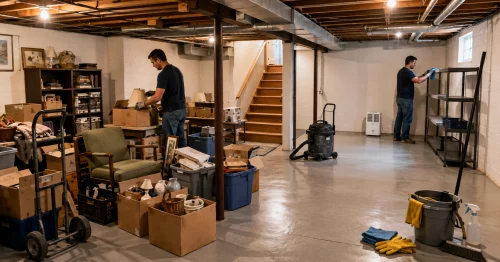 Basements combine heavy lifting with vertical movement. Furniture, boxes, appliances, and debris usually have to be carried upstairs rather than directly through a garage door or ground-level entrance.
Limited natural light can also slow sorting and removal. Older basements may have low ceilings, uneven floors, narrow stairs, exposed pipes, or mechanical equipment that reduces maneuvering room.
Dust and moisture can add another layer. Items stored directly on concrete may be damp or deteriorated. Cardboard boxes can collapse after absorbing moisture, and old carpet or drywall becomes significantly heavier when wet.
A clear walking path should be established before large items are moved. Do not stack debris on stairs or block the primary exit while sorting.
What Items Increase Basement Cleanout Service Prices?
Bulky, heavy, restricted, or difficult-to-handle items can increase basement cleanout service prices because they require additional labor or a separate disposal route. Common examples include appliances, mattresses, large furniture, exercise equipment, televisions, construction debris, carpet, shelving, tires, paint, chemicals, batteries, propane cylinders, and damaged building materials. Household hazardous waste needs particular attention. Paints, solvents, cleaners, oils, batteries, pesticides, and compressed-gas cylinders can require special care depending on local rules. Do not place unidentified chemicals, liquid paint, fuel, pesticides, propane cylinders, lithium batteries, or similar restricted materials into an ordinary cleanup load without confirming the proper disposal route first.Can Basement Items Be Donated or Recycled?
Yes. A basement cleanout is easier to manage when reusable belongings are separated before disposal begins. Furniture, household goods, tools, books, toys, decorations, and building materials may have donation or reuse options when they are clean and in usable condition. Metal, cardboard, electronics, and some other materials may also have local recycling programs. Create separate staging areas for keep, donate, recycle, special handling, and approved debris. This prevents useful items from disappearing into a mixed pile and gives you a clearer picture of how much material actually needs disposal. Our guide to planning home cleanouts can help you organize larger basement projects before loading begins.What Does a Cleaning-Only Service Usually Cost?
A cleaning-only service is generally the least expensive option because it does not include removing a basement full of belongings. Current 2026 deep-cleaning data places professional deep cleaning around $180 to $375 for many projects, with approximately $260 given as a basement-specific room benchmark. Actual basement cleaning cost can still change according to square footage, dirt buildup, finished versus unfinished surfaces, stairs, furniture that must be moved, and requested add-ons. Those figures apply to ordinary cleaning conditions. They should not be used to estimate mold remediation, sewage cleanup, flood restoration, pest contamination, or hazardous-material work.What Does a Full Basement Cleanout Cost?
A full basement cleanout combines labor and disposal, so the price depends heavily on how much material leaves the home. Current general 2026 hauling data averages around $241 nationally, but a basement-specific cleanout can cost more when stairs, heavy objects, extensive sorting, or a large debris volume are involved. The most useful estimate is therefore based on the actual contents rather than a generic national average. Photos, videos, approximate item counts, and a description of access can help establish the scope. For homeowners doing the sorting and loading themselves, an on-site cleanup container may provide a more predictable way to manage a larger amount of approved debris. A 10-yard container from Waste Removal USA may work for some smaller basement cleanouts when the material type, volume, and weight are appropriate.When Does a Basement Cleanout Become a Remediation Project?
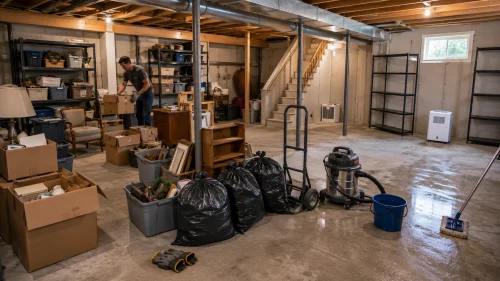 A cleanout becomes something more specialized when the basement contains contamination or damage that cannot be addressed safely through normal cleaning.
Warning signs include sewage, widespread mold, standing water, extensive moisture damage, chemical spills, suspect asbestos-containing materials, significant pest waste, or structural deterioration.
EPA guidance says homeowners can often address a relatively small mold area of less than about 10 square feet, but larger problems, substantial water damage, contaminated water, or uncertain conditions may call for more specialized evaluation and cleanup.
If the basement recently flooded, treat that as a separate project from decluttering. Floodwater can carry microorganisms and chemicals, and materials such as drywall, carpet, insulation, and furniture may need to be removed depending on contamination and how long they remained wet.
Waste Removal USA’s guide to mold in walls can also help homeowners recognize when a moisture problem may extend beyond visible surface cleaning.